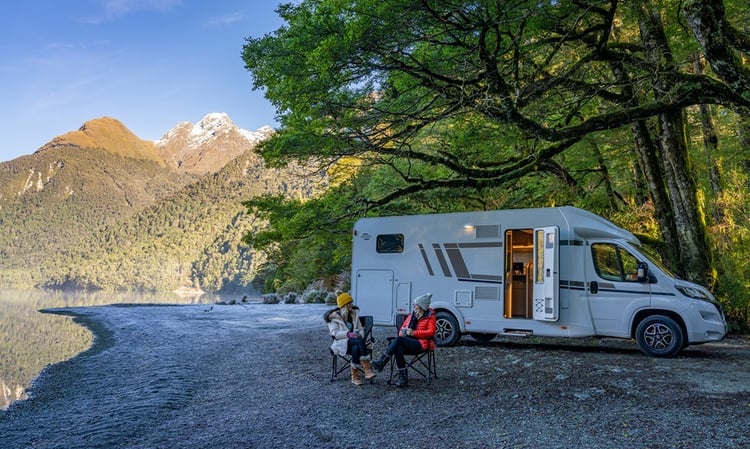
Aotearoa New Zealand is extraordinary, and it stays that way because people choose to care for it.
The concept of kaitiakitanga, or guardianship of the land, runs deep in the culture here – and as a visitor exploring by motorhome, you're in a uniquely good position to embrace it. At first glance, a motorhome might not be the most obvious choice for an eco-friendly journey. It is, after all, a heavy vehicle powered by an internal combustion engine. However, for modern travellers who are increasingly conscious of their eco footprint, a motorhome adventure can actually be one of the most responsible ways to see New Zealand.
This guide explores how to trade mass tourism for a self-contained footprint that supports local ecosystems and respects the Tiaki Promise.
It will tell you how to be a responsible freedom camper, and will also cover key signs that your motorhome company is committed to sustainability.
What are the most important things to consider for a sustainable motorhome trip in New Zealand?
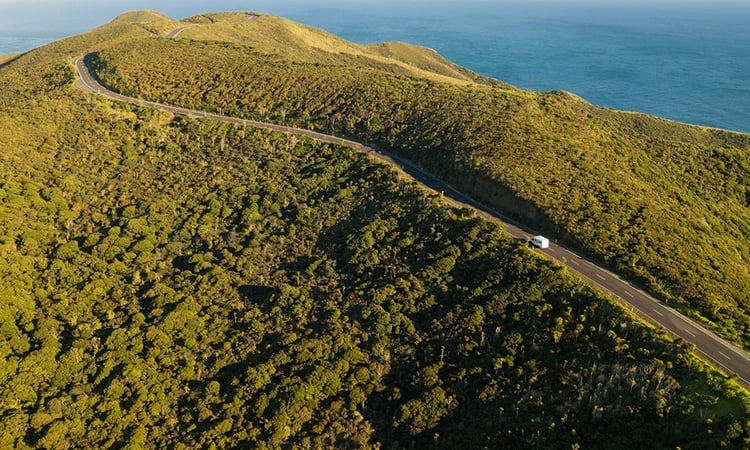
If you’re sold on a road trip adventure and want to do it as sustainably as possible, start by choosing a modern, low-emission vehicle. Aim to travel slowly, use resources mindfully, and spend your money with local businesses.
Get those four things right, and the rest tends to follow.
Start with the right vehicle
Modern fleets built on European vehicle bases – like those used by Wilderness Motorhomes – meet Euro V or VI emission standards, the highest in the automotive industry, and are fuel-efficient at around 11 litres per 100km. That's a big difference compared to older, poorly maintained vehicles.
How you drive makes a real difference, too. Staying at or within the speed limit reduces carbon dioxide emissions, and driving smoothly in traffic – avoiding unnecessary stops and starts – means the engine uses less fuel overall. Slow and steady really does win the race here.
It's also worth thinking about what's in the vehicle before you arrive. Some cheaper rental companies offer the bare minimum on board, which can result in travellers buying extra items they later discard, sending unnecessary waste to New Zealand landfills. A well-equipped motorhome means you arrive ready to go, without any throwaway purchases like bedding, towels, and utensils.
Plan to slow down
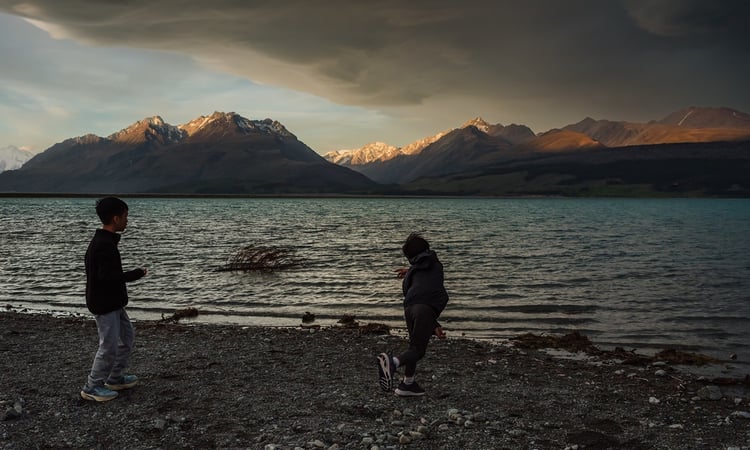
New Zealand is big enough to feel endless, but the most rewarding and sustainable trips are the ones where you’re not in a hurry.
Slow travel means spending more time in fewer places: getting to know a region, walking its trails, eating at its local spots, and genuinely connecting with a place rather than passing through it.
The practical upside means you’ll drive fewer kilometres and burn less fuel. The cultural upside is just as real – communities benefit far more from visitors who linger than from those who stop for a photo and move on.
If you're unsure where to slow down, Wilderness has a great collection of itineraries built around exactly this philosophy. Check out our South Island itinerary for inspiration!
Go off the beaten track
Be aware of places where the crowds are taking a toll on the environment. Spots like Milford Sound are iconic, but they carry the weight of enormous visitor numbers. Choosing alternatives like Doubtful Sound offers an experience that’s just as beautiful and less crowded, so a little research to find alternatives to the “hotspots” goes a long way.
It's also worth knowing that some of the country's most-photographed scenes aren't as innocent as they look: the bright purple lupins that draw travel photographers to the South Island are an invasive pest, and trampling through them for a photo op actively contributes to their spread. For information on alternative activities, local visitor centres and the DOC website are good places to start.
Use resources like they’re precious (they are)
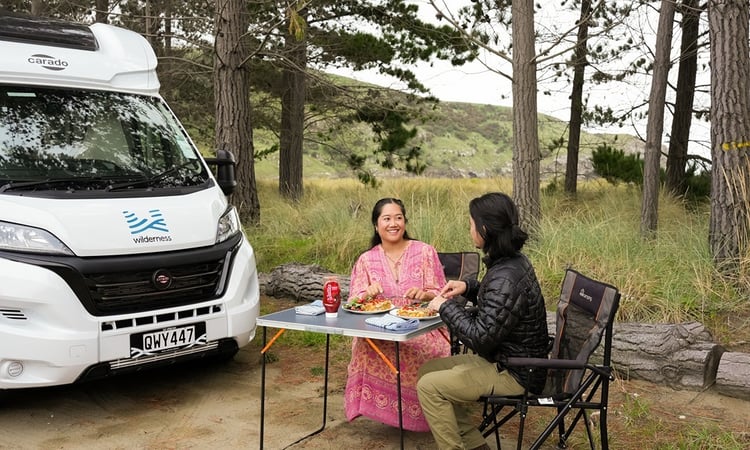
Fresh water is finite, and so is the tank in your motorhome. Small habits add up fast: turn off the tap while scrubbing dishes or shampooing your hair, take shorter showers, and be mindful about how many lights you need to leave on.
Food shopping is another easy win. Rather than a single large supermarket haul at the start of your trip, buy smaller amounts more frequently as you travel. Farmers' markets and roadside stalls are great ways to buy fresh, locally grown food, and they naturally encourage you to buy only what you need.
At the end of your trip, Wilderness bases have donation boxes for any unopened food items, and it's also common to leave extras in a shared area at campgrounds for fellow travellers.
Support local at every opportunity
Where your money goes matters as much as how you travel. Community-owned campgrounds and DOC sites return revenue directly to the regions and the conservation work that keeps New Zealand's landscapes intact. Holiday parks run by locals reinvest in their communities in ways that large chains simply don't.
The same logic applies to food. Choosing a Saturday morning farmers' market over a supermarket chain means your dollars stay in the region, support local growers, and cut down on food miles. Look out for roadside honesty stalls too – they're one of New Zealand's great small pleasures, and as local as it gets.
Want some tips on the best farmers' markets in New Zealand? Check out our blog.
How can you tell if a motorhome company is genuinely committed to sustainability?
"Eco-friendly" is one of the easiest claims for a business to make and one of the hardest for a guest to verify. To suss out who walks the walk, look for verified certifications, clear records of what’s been done, and whether they’re committed to the Tiaki Promise.
Look for certifications that mean something
Not all green labels are equal. Two worth knowing in the New Zealand context are B Corp and Qualmark Gold.
B Corp certification is the more rigorous of the two. To even be considered, a company must undergo a comprehensive evaluation of governance, environmental performance, community impact, staff welfare, and customer practices.
The Qualmark Award, meanwhile, is awarded to companies that provide quality experiences with a commitment to sustainability. It's assessed by independent auditors who look at environmental practices, health and safety, and business management. Qualmark Gold is the highest tier.
On carbon offsetting, look for named, verifiable programmes rather than vague references to "offsetting our emissions." Wilderness offsets Scope 1 and 2 emissions through Forever Forests, and guests can also offset their journey with a direct tree donation through Trees That Count at booking, with 100% of contributions passed on to the charity.
Learn more about Wilderness’s carbon offsetting scheme and sustainability promise.
Look for actions over mission statements
Any company can write that it "cares deeply about the environment." What separates genuine commitment from greenwashing is specificity – publicly available data, named partners, and a clear record of what's been done and what's planned next.
Look for dedicated sustainability sections on a company's website, named partner organisations, and, ideally, published emissions targets. Wilderness has set a goal of reducing Scope 1-2 emissions by 42% by 2030, and reaching net zero by 2050.
If a company's sustainability page is thin, vague, or hasn't been updated in years, that tells you something, too.
Look for sustainability baked into day-to-day operations
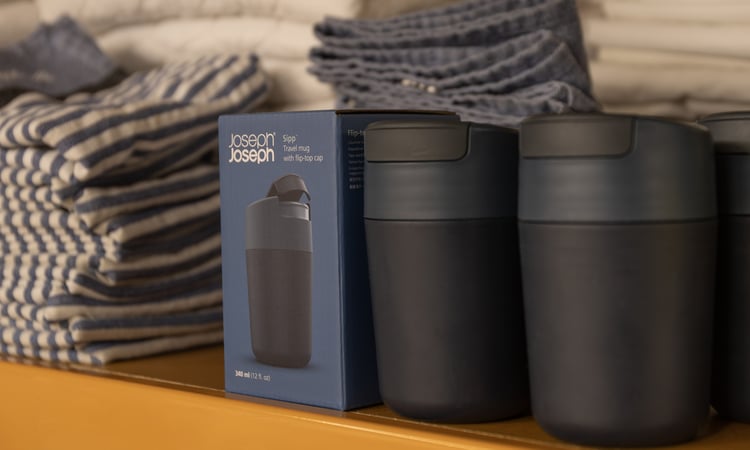
Big-picture commitments matter, but so does what's actually happening in the workshop and in the vehicle you're handed the keys to. Ask: does this company use environmentally friendly cleaning products? Do they repair parts rather than replace them? What happens to vehicles when they age out of the fleet?
For example, Wilderness follows a "repair-first" policy and partners with Tyrewise to responsibly repair and recycle tyres. We also supply reusable coffee cups and refillable product containers in every motorhome, and use eco-friendly cleaning products.
These are the kind of granular, operational details that mean a company that has genuinely built sustainability into how it runs, rather than one that has bolted a green policy onto business as usual.
Look for cultural alignment and the Tiaki Promise
This one is less obvious but arguably the most telling signal of all. New Zealand has a national framework for responsible tourism called the Tiaki Promise, and the companies that have committed to it are worth paying attention to.
What is the Tiaki Promise?
In te reo Māori, tiaki means to care for, to protect. The Tiaki Promise encourages visitors to travel with manaakitanga (hospitality, kindness, respect) and kaitiakitanga (guardianship) at the centre of everything they do.
It encourages four key behaviours:
-
Protect nature – give wildlife space, tread lightly, leave no trace.
-
Keep New Zealand clean – take your rubbish with you, use designated dump stations, and recycle where possible.
-
Be prepared – look out for yourself and others, be prepared for New Zealand's changeable conditions.
-
Drive carefully – slow down, stay alert, respect road conditions.
-
Show respect – travel with an open heart, learn about te ao Māori and the stories of the places you visit.
An eco-friendly company knows that sustainability in New Zealand is about recognising that the land, the water, and the living world are taonga (treasures) to be protected. Wilderness has committed to upholding the Tiaki Promise and strongly encourages its guests to do the same.
What does being a B Corp Certified travel company mean for guests?
B Corp is the gold standard for ethical business. For guests, this means peace of mind that your dollars are going towards sustainability, local community impact, and fair wages.
A force for good

At its core, a B Corp Certified company believes business should be a force for good. For a travel company, that means sustainability is woven into how the business is legally structured and how decisions get made every day. The company is accountable not just to its shareholders, but to its guests, its staff, its community, and the environment.
It also means fair wages, health insurance for staff, and inclusive employment practices – for Wilderness, this includes membership of the Pride Pledge, New Zealand's commitment to LGBTQ+ inclusion in the workplace.
Wilderness sits alongside B Corp-certified travel companies like Patagonia, Intrepid Travel, and Exodus Adventure Travels – a community of businesses that have all chosen to be held to the same rigorous standard.
Third-party verified, not self-declared
The key word is independent. Any company can call itself eco-friendly. B Corp certification means an outside body has checked the numbers, asking hundreds of detailed questions about governance, environmental performance, worker welfare, community impact, and customer practices.
To achieve certification, a company must score at least 80 points on the B Impact Assessment – well above the median score of 50 for ordinary businesses. It doesn't stop there either: companies must recertify every three years, and must show tangible progress rather than just maintaining their previous score.
Learn more about Wilderness’s B Corp journey.
Your dollars stay in the community
A lot of travel spend leaks straight out of the regions it passes through, but with a B Corp Certified company, there’s a paper trail showing where it goes.
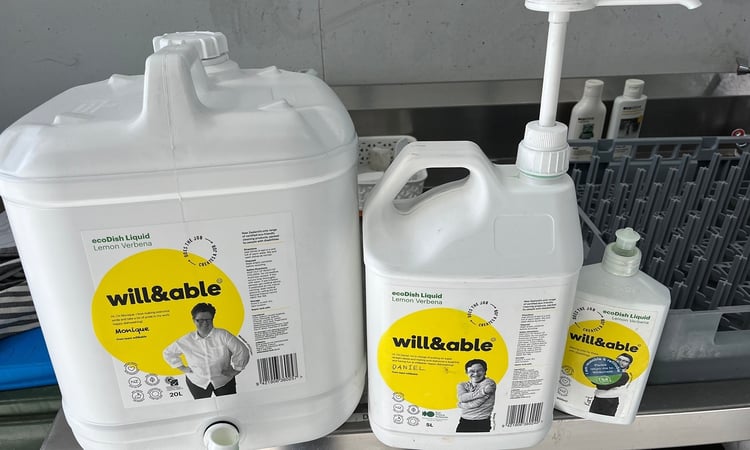
Wilderness has supported the Monte Cecilia Housing Trust since 2018 – an organisation providing families in South Auckland with housing support. We also partner with Will & Able, creating jobs for New Zealanders with disabilities, and with Trees That Count, which funds native tree planting across Aotearoa.
Conservation funding goes directly to the Predator Free Hauraki Coromandel Community Trust, helping restore the birdsong in the forests guests are walking through.
Book a motorhome trip with us, and you're contributing to all of it.
What are the best practices for responsible freedom camping in New Zealand?
Freedom camping is one of New Zealand's great gifts to travellers – waking up beside a river, a lake, or a stretch of coast with no one else in sight. But it's a privilege that depends entirely on people doing it right. That means travelling in a CSC vehicle, staying in designated freedom camping areas, and leaving no trace.
Be certified self-contained
If you’re renting a campervan, check that it has a fixed toilet and a Green Warrant. From June 2026, only Green Warrant-certified vehicles will be allowed to freedom camp, and the fines for infringement are hefty.
Human waste disposed of incorrectly is one of the biggest causes of contaminated waterways, and these rules make sure that Aotearoa’s waterways are kept clean.
Know where you can and can’t park up
Freedom camping doesn’t mean you can just park anywhere. Freedom camping laws vary significantly from region to region.
Some councils actively support responsible freedom camping and provide facilities; others, like Queenstown Lakes District Council, have brought in restrictive bylaws in response to overcrowding. Rules can also change seasonally, so what was fine last summer may not be this year.
The simplest way to stay compliant is to use an app like Campermate, which shows designated freedom camping spots, DOC sites, dump stations, and restricted areas. It gets updated in real time, so check before you park, not after.
Want to know more about where to park your campervan in New Zealand? Check out our handy guide.
Leave no trace
.jpg?width=750&height=450&name=Rorotua-Hamurana%20Springs%20(2).jpg)
When you leave a site, it should look like nobody has been there.
Take all of your rubbish with you, use approved dump stations for grey water and toilet waste, and recycle where facilities are provided.
If you’re going for a walk, stick to established tracks, and make sure to use footwear cleaning stations where you see them. These stations help prevent the spread of diseases like Kauri dieback – a pathogen that spreads through mud carried on footwear and infects the native Kauri trees. It takes a pinhead of soil to spread the disease to a new site, and there is no known cure.
Give wildlife space as well. Don’t touch the birds, and the rule of thumb for seals and sea lions is to stay at least 20 metres back – more if they seem unsettled.
Hold to the Tiaki Promise
For freedom campers, the Tiaki Promise plays out in small daily decisions: parking where you're permitted, walking where you're welcomed, and approaching cultural sites with the respect they deserve.
Wāhi tapu – sacred sites – are found throughout New Zealand, and many are not marked or fenced. Observe rather than approach, and take your cues from signage and local guidance.
Research the places you're visiting, listen, ask questions, and be respectful of people, practices, and land. The summit rock of Mount Taranaki is a good example – visitors are asked to refrain from standing directly on it, but you won’t find a signpost there.
You’ll also see many marae – Māori meeting grounds – as you travel through New Zealand. You are welcome to look from the outside, but do not go in unless you’re invited.
Motorhome travel and freedom camping, at its best, is a way of moving through a place lightly, gratefully, and without leaving a mark.
Want to know more about how to freedom camp in New Zealand? Check out our detailed guide.