Journey to a place where the sun rises first
Somewhere on the East Cape of New Zealand, long before most of the world wakes, the first sunrise breaks across the Pacific Ocean. Watching it from your motorhome — coffee in hand, ocean stretching endlessly ahead — is one of the most memorable ways to begin a day anywhere on earth.
This fifteen-day RV adventure leaves Auckland to explore the Coromandel Peninsula before passing through Tauranga on the way to the country’s remotely beautiful East Cape. This stunning coastline is a place where horses roam freely, and people are content living simply off the land.
You’ll stay in the relaxed towns of Gisborne and Napier before adventuring across the geothermal landscapes of Taupō and Rotorua. Subterranean caves await in magical Waitomo, then surf culture comes to life in quirky Raglan.
Returning to the urban energy of Auckland, you’ll have a night in NZ’s biggest city before your trip comes to an end.
The East Cape is a route made for a Wilderness motorhome — where the freedom to stop, explore and stay longer is all part of the experience.
Auckland to East Cape road trip itinerary highlights
-
Driving Creek Railway
-
Gemstone Bay
-
McLaren Falls Park
-
Ōpiwa Oysters
-
Hicks Bay
-
Anaura Bay
-
Art Deco walking tour
-
Hawke’s Bay Farmers’ Market
-
Otumuheke Stream
-
Redwoods Treewalk
-
Mitai Māori Village
-
Black water rafting tour
-
Wairēinga/Bridal Veil Falls
-
Orbit
-
Auckland Museum
Day 1: Auckland to Coromandel Town
From Auckland’s skyline to Coromandel’s quiet harbour
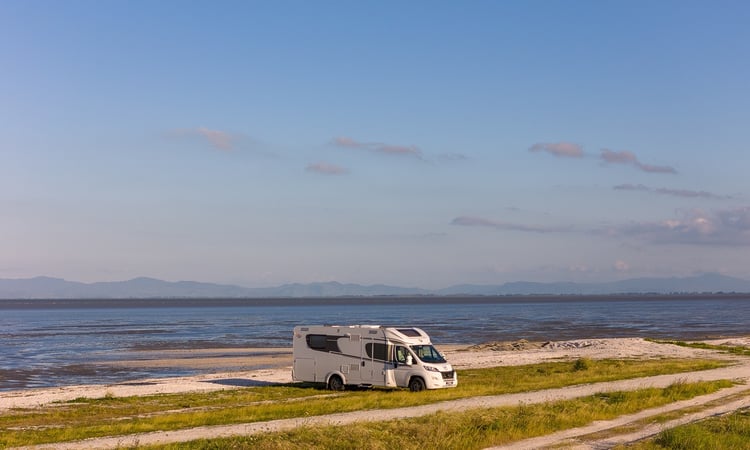
Your New Zealand East Cape road trip begins!
If you've just arrived on a long-haul flight, we suggest spending the night at one of the many hotels around Auckland Airport. Once you're fresh and rested, pick up your motorhome hire and head south towards Hamilton. The multilane motorway of State Highway 1 (SH1) is relatively tame compared to European or American highways, and before long, you’ll be switching to SH2 at Pōkeno.
After changing to SH25, you’ll eventually arrive at the historic town of Thames, once a bustling gold mining centre and now considered the gateway to the Coromandel Peninsula. From here, the road begins to wind gently north along the coastline, with forested hills rising on one side and the sea stretching out on the other.
Coromandel Town is a small harbour settlement about an hour further. It offers a relaxed pace with a creative community and excellent seafood.
|
Travel tip — stock up and make friends with pull-over bays Stock up on groceries and fuel in Thames, as it’s the last spot for "city prices" before you head into the more remote parts of the peninsula. Once you’re on the road, keep an eye out for the pull-over bays; the coastal highway is stunning but very narrow and twisty, and pulling over into a bay to let locals pass is the best way to avoid the stress of a line of traffic forming behind you.
Since you’re in a motorhome, give yourself plenty of extra time – the sharp corners mean you'll be travelling much slower than the GPS suggests, so it’s better to relax and enjoy the coastal views than to rush. |
Things to do in Coromandel Town
-
Visit the Coromandel Gold Stamper Battery — where you can have a go at gold panning and rock crushing.
-
Stroll along the Kauri Block Track — an easy 90min return walk that follows a ridge through regenerating bush.
-
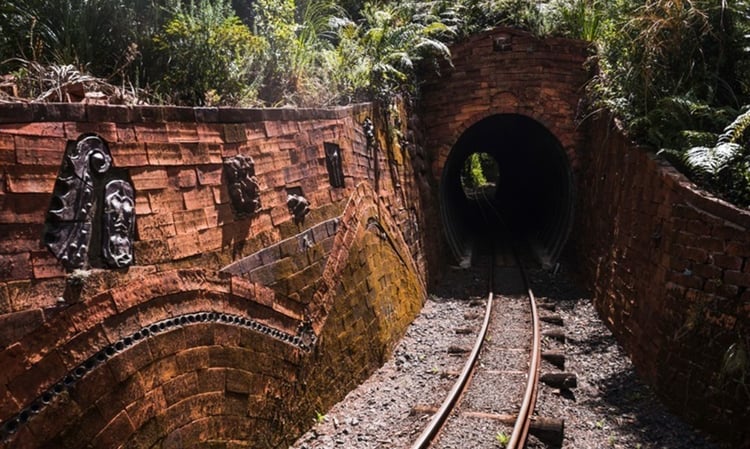
Ride the Driving Creek Railway — on the special narrow-gauge rail lines that climb through regenerating native forest to a lookout with sweeping views across Hauraki Gulf.
-
Take your kids to The Waterworks — a family theme park where water and getting wet are the main attractions.
-
Taste some smoked seafood at The Coromandel Smoking Co. — where salmon, mussels and scallops are all smoked to perfection.
Planning your route? Our guide to the best free travel apps for New Zealand road trips can help you find campsites, fuel stops and attractions along the way.
Distance: 156km
Travel time: 2hr 21min
Route: Auckland to Coromandel Town
Stay: Shelly Beach TOP 10 Holiday Park or Tasman Holiday Parks Coromandel
Resources: Coromandel Town Information Centre
|
A peninsula shaped by gold and forest During the 19th century, the discovery of gold transformed the Coromandel Peninsula almost overnight. Prospectors flocked to the area — and places like Thames and Coromandel Town quickly expanded to support the mining boom.
Although the gold rush eventually faded, the region retained its independent spirit. Today, visitors are drawn by a different kind of treasure — towering native forests, quiet coves and a coastline that rewards slow exploration. |
Day 2: Coromandel Town to Whitianga
Crossing the peninsula
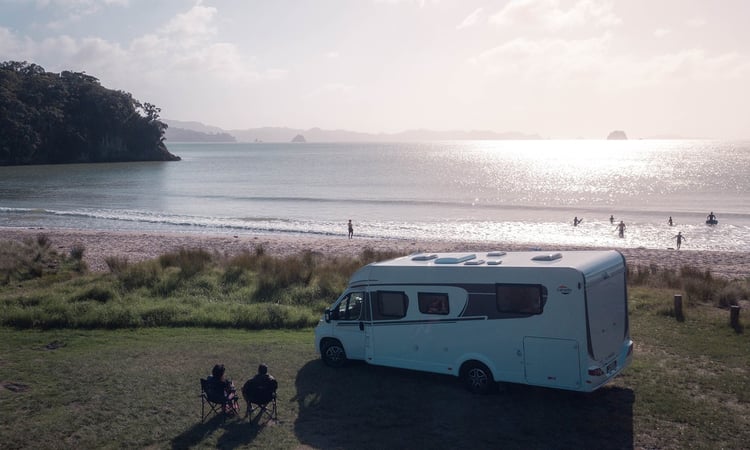
Today’s journey takes you across the spine of the Coromandel Peninsula, trading the calm harbour views of Coromandel Town for the golden beaches of the Pacific.
Leaving town, you’ll drive into Coromandel Forest Park, where dense native bush blankets the hills. The drive is short in distance but rich in scenery, with the winding road revealing glimpses of forest valleys, streams and rugged ridgelines along the way.
As you continue east, the landscape gradually opens out before dropping towards the coast. You may want to detour to one of the popular nearby beaches like New Chums, Whangapoua or Matarangi.
Arriving in Whitianga by Mercury Bay, you’ll have plenty of time to enjoy the lively coastal hub of cafés, restaurants and natural attractions. Slow your evening right down with dinner overlooking the Whitianga Marina.
|
Travel tip — watch the tide If you’re planning to detour to New Chums Beach, check the tide charts before you set off. The walk to New Chums requires crossing a small estuary at the northern end of Whangapoua Beach that can be tricky at high tide. To keep your boots dry and ensure the trek is easy, aim to arrive within two hours of low tide; if the tide is too high, the water can quickly get waist-deep, turning a scenic stroll into a bit of an unintended swim.
It’s one of the most pristine stretches of sand in New Zealand, so timing your crossing right means you’ll have plenty of time to enjoy the beach and still make it back across the channel safely before the water rises again. |
Things to do in Whitianga
-
Explore Cooks Beach — a short passenger ferry ride can take you across the harbour to this beautiful stretch of coastline.
-
Enjoy a relaxing glass-bottom boat tour around Mercury Bay — exploring sea caves, hidden coves and offshore islands.
-
Spend time on idyllic Buffalo Beach — a long stretch of sand right along Whitianga’s waterfront.
-
Walk to Shakespeare Cliff Lookout — a short hike leading to views over Mercury Bay and the Pacific Ocean.
-
Taste fresh seafood in town — Whitianga has a relaxed dining scene with plenty of spots to try local fish and chips or casual waterfront meals.
-
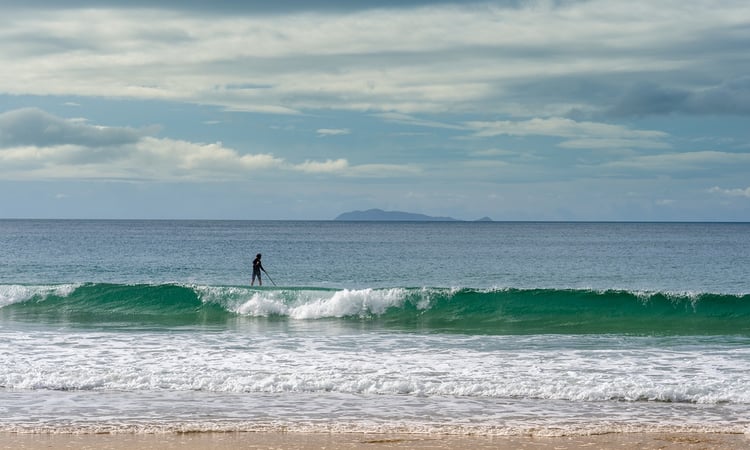
Go snorkelling or swimming at Gemstone Bay — part of the Te Whanganui-A-Hei Marine Reserve that’s known for its clear water and marine life.
Check out our Coromandel Peninsula motorhome holiday guide for more tips.
Distance: 44km
Travel time: 52min
Route: Coromandel Town to Whitianga
Stay: Mercury Bay Holiday Park or Harbourside Holiday Park
Resources: All About Whitianga
|
The story behind Mercury Bay Mercury Bay was named by Captain James Cook, who anchored here in 1769 during his first voyage to New Zealand. Cook’s crew used the bay to observe the transit of the planet Mercury across the sun.
Today, the bay is better known for its beaches and marine life — but its place in the history of exploration remains an important part of the region’s story. |
Day 3: Whitianga to Tauranga
Past hidden coves to a sun-soaked coastline
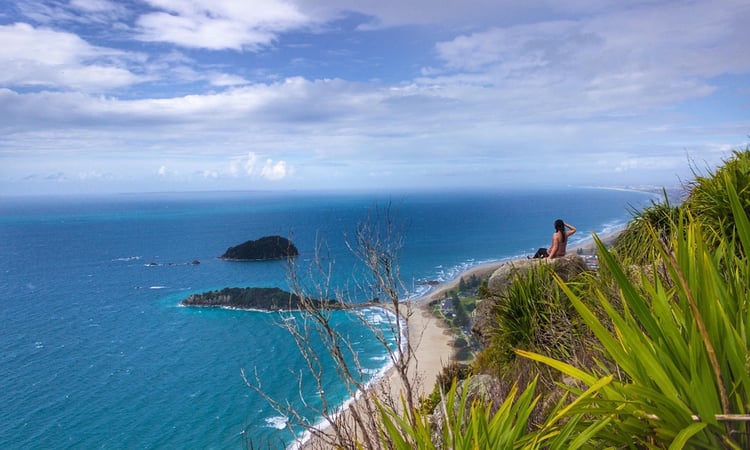
It’s worth setting off early today so you can take your time and enjoy a few stops along the way. Follow the eastern edge of the Coromandel Peninsula, where you can find some of the region’s most famous natural attractions.
Not far from Whitianga are the twin iconic hotspots of Cathedral Cove and Hot Water Beach. Whether you choose to walk a trail, paddle in clear waters or dig your own natural hot pool in the sand, this coastline is about relaxing and enjoying the moment.
The drive then winds through laidback beach communities before reaching Waihi Beach — a long sweep of golden sand that marks the transition into the Bay of Plenty.
Arriving in Tauranga, you’ll notice a shift in pace — a vibrant coastal city with a warm climate, bustling waterfront and easy beach access. It’s the ideal spot to settle in for the evening.
|
Travel tip — time the tides If you’re intending to visit Hot Water Beach, check the tide times in advance. The hot springs are only accessible for a couple of hours either side of low tide, so timing your visit makes all the difference.
Even if you miss the tidal window, the beach itself is still worth a stop. |
Things to do in Tauranga
-
Relax at Mount Maunganui Beach — a wide surf beach that’s much-loved for swimming, sunbathing and walking.
-
Take a dolphin and wildlife cruise — exploring Tauranga Harbour and spotting local marine life.
-
Stroll along Maunganui Road to find a restaurant or bar for dinner.
-
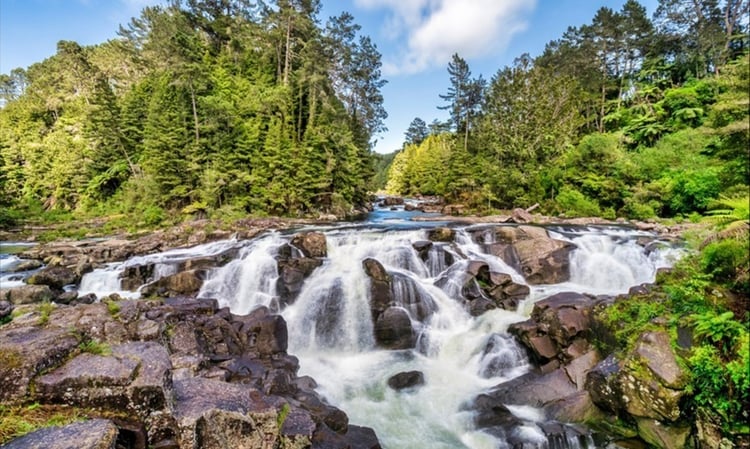
Drive to McLaren Falls Park — a peaceful location just outside Tauranga, where you can walk, kayak or see glow worms after dark.
-
Visit Pāpāmoa Beach — a quieter alternative to Mount Maunganui, with a long stretch of sand ideal for walking.
-
Discover The Elms Te Papa Tauranga — one of NZ’s oldest historic sites that offers insight into early European and Māori history in the region.
Check out our guide to motorhome camping in New Zealand.
|
A region shaped by sun and sea The Bay of Plenty is one of New Zealand’s most productive and sunniest regions — known for fertile land and a long growing season. It’s a major centre for kiwifruit and avocado farming, and you’ll often see orchards stretching across the landscape as you drive through.
Combined with a warm climate and coastal lifestyle, it’s easy to see why this region is a favourite with locals and visitors alike. |
Distance: 166km
Travel time: 2hr 46min
Route: Whitianga to Tauranga
Stay: Tasman Holiday Parks Papamoa Beach or Cosy Corner Holiday Park
Resources: Bay of Plenty Tauranga
Day 4: Tauranga to Whakatāne
An easy coastal drive through the Bay of Plenty
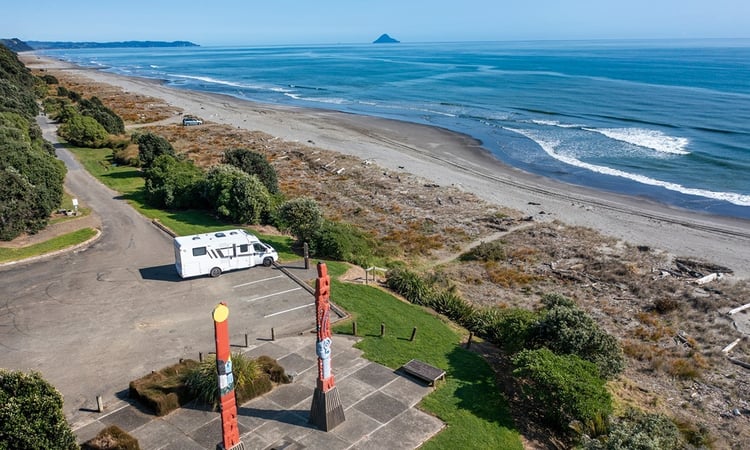
Today is a shorter driving day, giving you time to slow the pace and enjoy the coastline.
You’ll follow the Pacific Coast Highway as it traces a line between fertile farmland and the ocean. This stretch of road is known for its sunshine, orchards and long sandy beaches — with plenty of opportunities to stop along the way.
Pause at Pāpāmoa for some quality beach time, or detour to Te Puke — the kiwifruit capital of New Zealand.
The laid-back coastal town of Whakatāne isn’t far away, with its strong connections to Māori history and culture, as well as easy access to the surrounding beaches and harbour. It’s a relaxing place to settle in for the night and enjoy a quiet seaside evening.
|
Travel tip — take advantage of your short travel day Stop often along the coast as you only have 87km to drive today. Whether it’s a beach walk, a swim or an outdoor lunch, this stretch of road is perfect for enjoying the journey without feeling rushed. |
Things to do in Whakatāne
-
Wander about sunny Whakatāne — a coastal town known for its connection to Whakaari White Island, with strong Māori heritage.
-
Explore Ōhope Beach — consistently ranked as one of NZ’s favourite beaches due to its calm waters and long sandy shoreline.
-
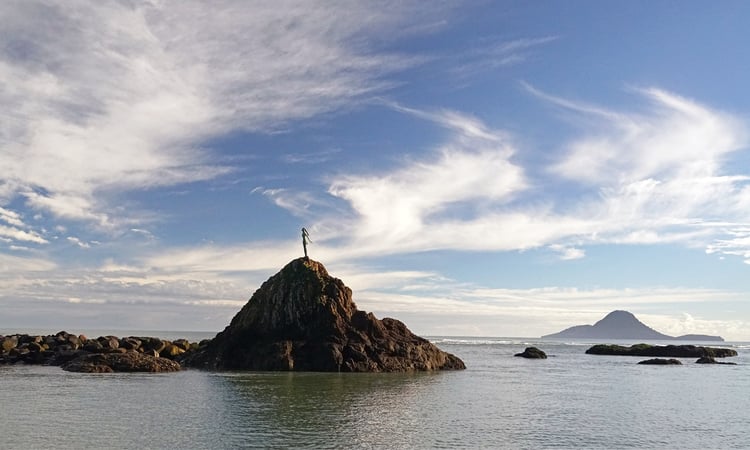
Walk along Whakatāne Heads for coastal views and a chance to see the iconic Lady on the Rock statue overlooking the harbour.
-
Head to a cafe along the Whakatāne River Walk, following the river through town and out towards the harbour entrance.
-
Learn about local history at Te Kōputu a te Whanga a Toi — the Whakatāne Library and Exhibition Centre, which acts as a modern cultural hub sharing stories of the region.
Stock up on food for a couple of nights in the remote East Cape and try cooking a few of our recipes for the road.
Distance: 87km
Travel time: 1hr 5min
Route: Tauranga to Whakatāne
Stay: Riverside Whakatāne Holiday Park or Ōhope Beach TOP 10 Holiday Park
Resources: Whakatāne
|
The story of Wairaka According to Māori tradition, Whakatāne takes its name from the story of Wairaka — a young woman aboard the Mataatua waka (canoe).
While the men were ashore, the canoe began drifting out to sea. Despite cultural expectations that paddling was a role for men, Wairaka took action, paddling the waka back to safety.
Her actions are remembered as a symbol of courage and leadership. Today, Wairaka’s story remains central to Whakatāne’s identity, with her statue overlooking the harbour at Whakatāne Heads. |
Day 5: Whakatāne to Hicks Bay
To the Cape and the rising sun
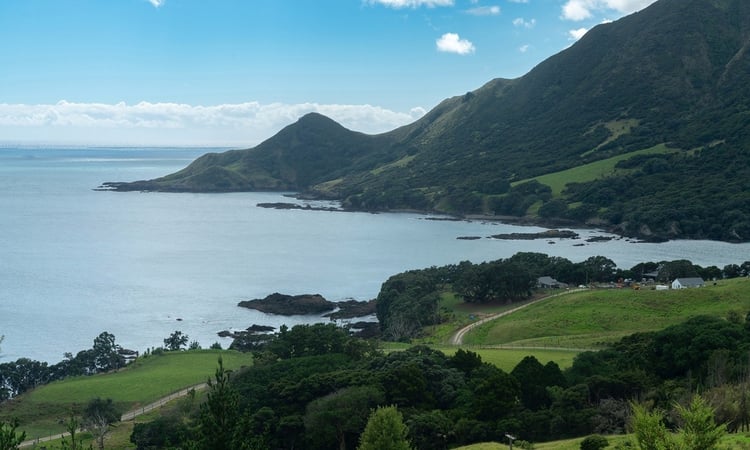
As you say goodbye to Whakatāne, you’ll stay close to the coastline, travelling east through the Bay of Plenty. You’ll notice a feeling of more openness and less development.
The pace of life begins to slow even further, passing through Ōpōtiki. This is the gateway to the East Cape — one of the most remote and culturally rich regions in New Zealand.
The drive becomes the experience as the road winds along rugged coastline, crossing small bridges, weaving between pōhutukawa trees and revealing quiet bays that feel far removed from the country.
It’s not unusual to drive for long stretches without seeing another vehicle. You may even be lucky enough to see a local or two riding horseback, saddleless near the roadside.
Take your time here. Stop often. This part of the journey is all about soaking up a coastline that many travellers never reach.
By late afternoon or early evening you’ll arrive at Hicks Bay, a peaceful coastal settlement surrounded by rolling hills and open ocean. It’s a simple yet beautiful place to spend the night, with the sound of the sea as your white noise.
|
Travel tip — fuel up before heading east Make sure you fill up with fuel in either Tauranga or Whakatāne before continuing toward Ōpōtiki and the East Cape. Petrol stations become limited once you leave the main centres — and distances increase between towns. Download the Gaspy app to find the cheapest fuel.
Stocking up on a couple of days of groceries before leaving Tauranga is also a smart idea. |
Things to do on the way to Hicks Bay
-
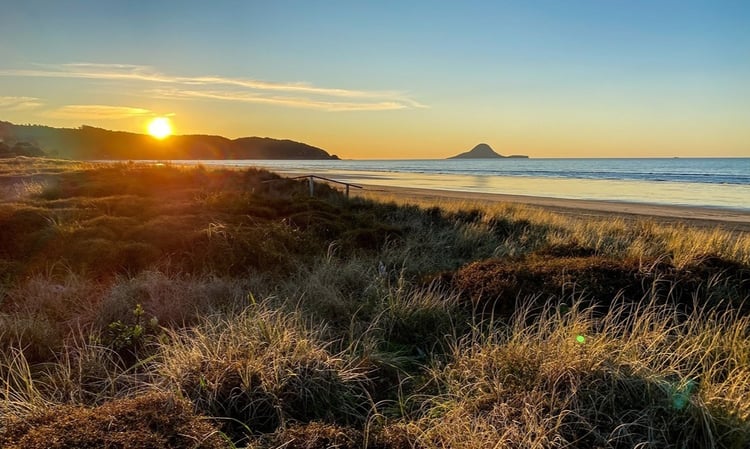
Explore Ōhope Beach — consistently ranked as one of NZ’s favourite beaches due to its calm waters and long sandy shoreline.
-
Have lunch at Ōpiwa Oysters — where you can try an oyster burger.
-
Pause in Ōpōtiki — the last major town before reaching the East Cape, with cafés and a chance to refuel.
-
Relax at Hicks Bay — take a swim and unwind by the ocean while enjoying the peaceful surroundings.
Planning a remote stretch? Our guide to driving a motorhome in New Zealand covers everything from fuel stops to road conditions.
Distance: 191km
Travel time: 2hr 59min
Route: Whakatāne to Hicks Bay
Stay: Lottin Point or Te Araroa Holiday Park
Resources: Explore the East Cape guide
|
One of New Zealand’s most remote coastlines The East Cape is often described as one of the last truly untouched regions in NZ. With a small population and limited development, it offers a rare chance to experience the country’s coastline as it once was.
The area is also deeply significant in Māori culture — with many communities maintaining strong connections to their ancestral land and traditions. Travelling through this region offers a glimpse into a slower, more grounded way of life shaped by the sea and the land.
You may notice marae like Whitianga along this stretch of coastline. Being central gathering places for local Māori communities, they aren’t open to casual visitors. However, they are an important part of the region’s identity and reflect the strong cultural connections that define the magical East Cape. |
Day 6: Hicks Bay to Gisborne
Chasing first light along the East Cape
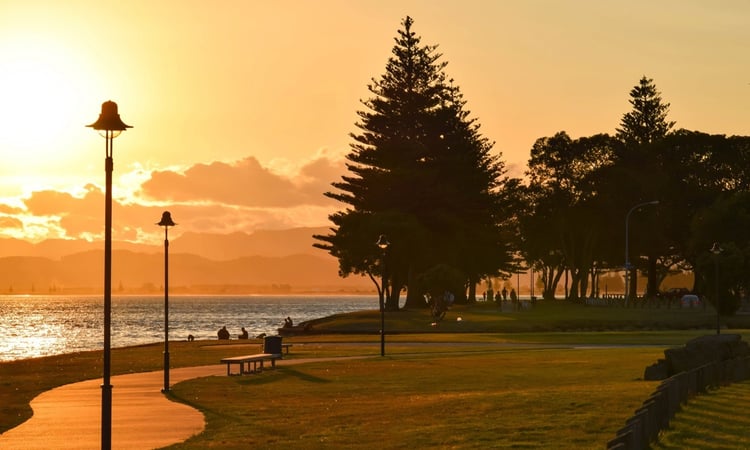
Journey south towards Gisborne and one of the most remote and rewarding stretches of coastline in the country. Winding through small communities, past farmland and near beaches, the ocean feels ever-present.
This part of the East Cape invites you to slow down. There’s no need to rush — some of the best experiences today are the unplanned ones, whether it’s an isolated golden beach, a roadside fruit stall or a conversation with locals in the middle of nowhere.
By afternoon, you’ll arrive in sunny Gisborne, a coastal town known for its surf culture, strong Māori heritage and reputation as one of the first places in the world to see the sunrise. After a long day, walk around town before settling in and reflecting on the adventure so far.
|
Travel tip — wake up early for the first sunrise Plan to leave Hicks Bay at least an hour before sunrise to drive the East Cape Road with time to prepare for the ‘world’s first sunrise’.
The road is tarmac until just after Horoera where it becomes gravel. Although Wilderness motorhomes are suited to gravel if you drive carefully, there can be landslides here after poor weather — and reaching the East Cape Lighthouse may not be possible.
Your best approach is to talk to the manager at your local campground to find out the current state of access. Regardless of how far down East Cape Road you drive, the world’s first sunrise will be spectacular as this is a stunningly remote area of New Zealand. |
Things to do on the way to Gisborne
-
Stop at Te Puia Springs — a small settlement with historic significance and natural hot springs.
-
Try a paua pie from Bakery 22 — a local favourite and a classic East Coast food stop worth aiming for lunch at.
-
Relax at Anaura Bay — arguably the most stunning crescent-shaped beach in the whole of New Zealand.
-
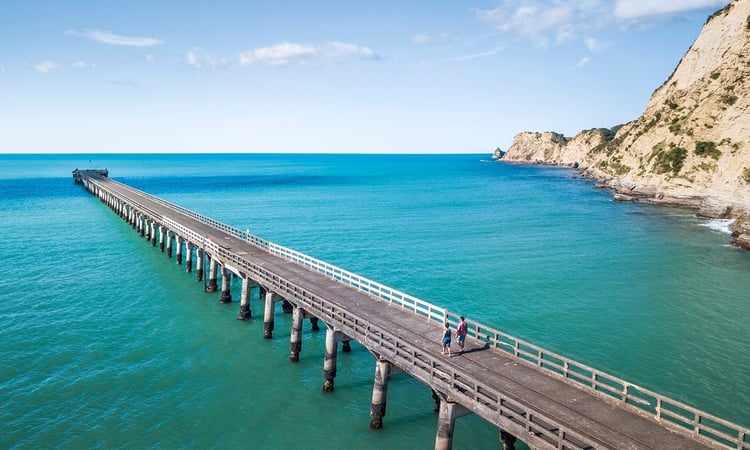
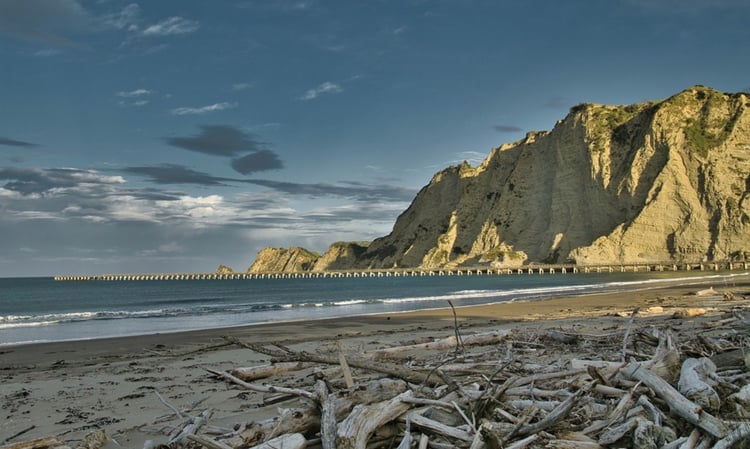
Walk Tolaga Bay Wharf — the longest concrete wharf in the Southern Hemisphere.
-
Take a break at Whangara — the main filming location of the 2002 movie Whale Rider.
-
Visit Tairāwhiti Museum — and learn about the region’s rich Māori heritage, local history and early European encounters.
-
Encounter stingray at Tatapouri — joining a guided experience where you can wade into shallow water and see these incredible creatures up close in their natural environment.
Check out the best North Island fishing spots in Gisborne.
|
Tatapouri Bay, just out of Gisborne, is the land of first light. We loved glamping in one of the canvas tents here. It was amazing — the East Coast is a gem. They do stingray tours, which we unfortunately missed out on as they were fully booked, but they looked like fun.
Melanie Crichton — Wilderness’ Christchurch Detailing Leader |
Distance: 180km
Travel time: 2hr 47min
Route: Hicks Bay to Gisborne
Stay: Gisborne TOP 10 Holiday Park
Resources: Tairāwhiti Gisborne
|
Land of first light Gisborne and the surrounding Tairāwhiti region are often referred to as the land of the first light. It’s their position on the eastern edge of New Zealand, where this coastline is among the first in the world to see the sunrise each day.
The region is also rich in history and culture, being one of the first landing places of Māori voyagers and European explorer Captain James Cook. |
Day 7: Gisborne to Napier
From rugged coastline to Hawke’s Bay vineyards
One of New Zealand’s most celebrated food and wine regions awaits as today’s destination.
Departing Gisborne, you’ll follow the coastline briefly before turning inland through rolling farmland and river valleys. It’s a quieter stretch of highway, where the scenery feels wide open, and the pace remains unhurried.
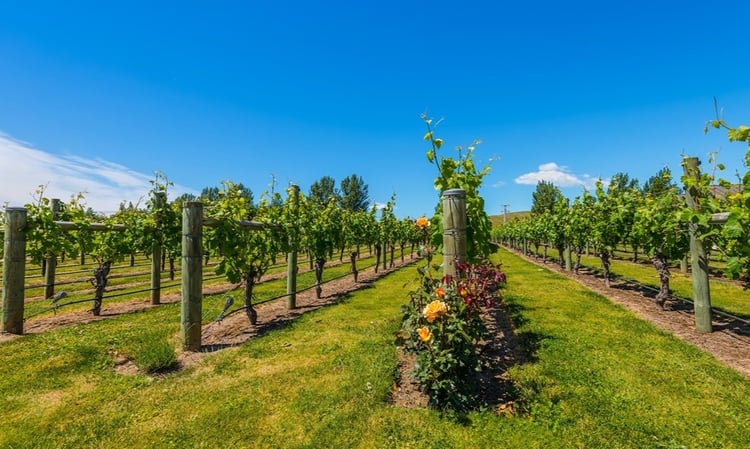
The scenery becomes vineyards, orchards and occasional rows of crops — a sign that you’re approaching Hawke’s Bay, often referred to as the fruit bowl of New Zealand.
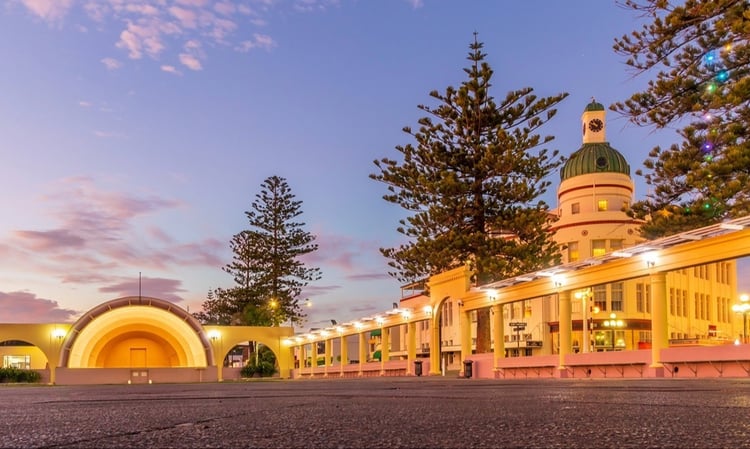
Arriving in the distinctive Art Deco architecture of Napier, this coastal city blends seaside charm with a vibrant eating and drinking scene. Enjoy a relaxing afternoon with a walk along Marine Parade and dinner at one of the city’s many exceptional restaurants.
|
Travel tip — look for roadside produce stalls On the road to Hawke’s Bay, also known as The Bay, watch out for stalls selling fresh fruit and vegetables on the roadside. Depending on the season, you can find everything from apples and stone fruit to avocados and berries — often picked that same day.
It’s a fun way to experience the area’s reputation for quality produce. |
Things to do in Napier
-
Cycle some Hawke’s Bay Trails — an easy network of flat cycling paths connecting wineries, rivers and coastal scenery.
-
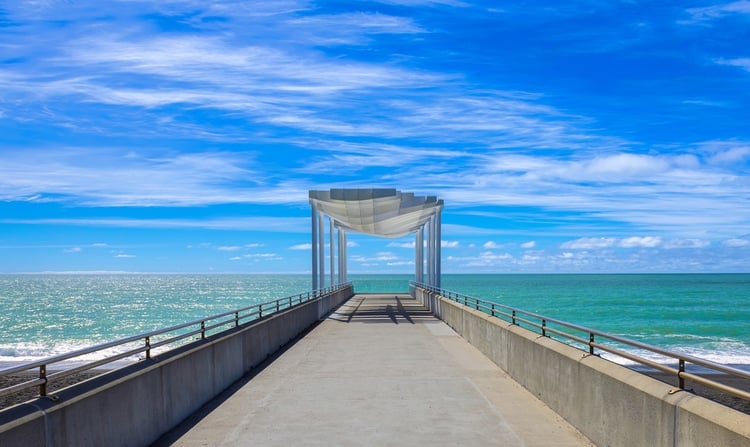
Wander down Marine Parade — a seaside promenade with sculptures, flower beds and a stony beach.
-
Enjoy the local café scene — the Bay is known for its superb coffee and chilled dining spots.
-
Visit Havelock North — a nearby village with boutique shops and access to Te Mata Peak.
-
Go on an Art Deco walking tour to discover the story behind Napier’s unique rebuilt architecture after the 1931 Hawke’s Bay earthquake.
-
Indulge in wineries and cellar doors, where you’ll find some of the country’s best-known vineyards such as Craggy Range and Church Road.
Read through our Napier motorhome holiday guide for plenty more tips.
|
Napier is a lovely Art Deco town. Do an Art Deco walking tour or vintage car tour — and have ice cream along the esplanade. Hire a bike to explore the wineries and cafes. My favourite cafes are Mister D, Milk and Honey, F.G. Smith Eatery or Madam Social for Asian fusion dining in the evening. My favourite wineries are Craggy Range, Elephant Hill, Black Barn, Clearview Estate, Church Road and Mission Estate — to name a few.
Tina Divers – Wilderness’ Rental Sales Consultant |
Distance: 215km
Travel time: 3hr 14min
Route: Gisborne to Napier
Stay: Napier Beach TOP 10 Holiday Park or Te Awanga Point Holiday Park
Resources: isite Napier
|
How disaster shaped a town A powerful earthquake hit Napier in 1931, raising the land and devastating much of the town. What followed was one of the most distinctive rebuilds in New Zealand history. Within just a few years, the city was reconstructed in the architectural style of the time — Art Deco.
These days, Napier is considered one of the best-preserved Art Deco cities in the world, giving it a special character and attracting plenty of tourists. |
Day 8: Napier
A day of coastal delicacies
Take the chance to slow down your travels by staying another night in Napier and enjoying everything Hawke’s Bay has to offer.
Begin the morning with a walk up Bluff Hill to the lookout, where you’ll get panoramic ocean and coastal views. Ease into the day with a local coffee at one of the city’s popular cafés.
Known for its sunshine, fertile land and relaxed lifestyle, Hawke’s Bay is a place where long lunches, scenic bike rides and winery visits naturally fill the day. With your motorhome parked up at the campground, you’re free to explore at your own pace.
If you feel like venturing a little further, nearby Hastings offers a different perspective on the region. Its thriving food scene and close connection to local growers mean artisan producers and weekend markets are common.
|
Travel tip — park up your Wilderness motorhome for the day Napier and the surrounding Hawke’s Bay region are easy to explore without driving long distances. Consider leaving the motorhome at your holiday park and hiring a bike or joining a local half or full day tour.
It’s a relaxed and safe way to enjoy the region — especially if wine tasting is top of your list. |
More things to do in Napier
-
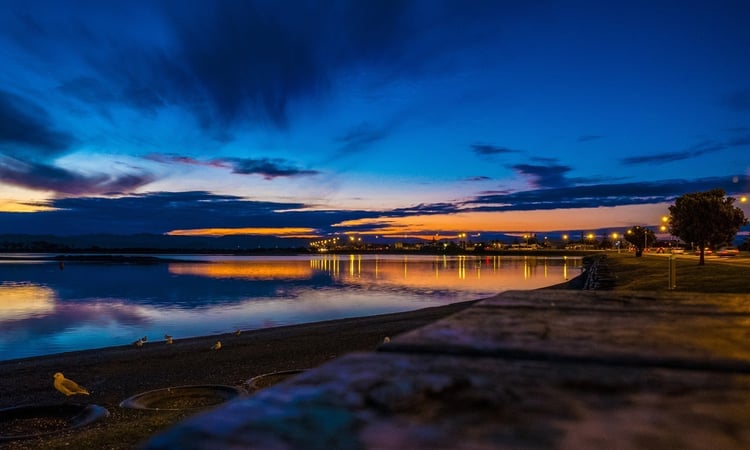
Wander around the point past Napier Port to Ahuriri Beach — one of the city’s best.
-
Treat yourself to ice cream at Rush Munro’s in Hastings — a classic way to end a warm day by the beach.
-
Visit the Hawke’s Bay Farmers’ Market — one of NZ’s best Sunday morning markets for fresh produce, baked goods and artisan foods.
-
Explore the National Aquarium of New Zealand — walk through the underwater tunnel and see sharks, stingray and little blue penguins.
-
Take a vintage car tour of Napier — explore the Art Deco streets in style with a guided tour in a classic car.
-
Discover MTG Hawke’s Bay — a cultural hub with exhibitions covering art, history and local stories.
See where to dine in Napier in our best eats on an NZ campervan holiday blog.
|
Havelock North is only 20 minutes away from Napier, which is a destination in itself with a cool vibe, great shops and cafes. Try Wright & Co. or Hawthorne Coffee Roasters, Mary's, Malo or Pipi Cafe for amazing pizza. If you have time, explore the beaches about an hour’s drive from Napier. The region has a good selection of freedom camping spots. Hawke's Bay is known as the fruit bowl of New Zealand, so there are plenty of roadside stalls with amazingly fresh fruit and vegetables.
Tina Divers – Wilderness’ Rental Sales Consultant |
Resources: Art Deco Napier
|
A land shaped by early Māori settlement The Hawke’s Bay region has long been an important area for Māori — thanks to its fertile land, rivers and coastal resources. Early tribes (iwi) established settlements throughout the region, developing strong connections to the environment.
Many place names, stories and landmarks in the area reflect this deep cultural history, offering insight into the people who have called The Bay home for generations. |
Day 9 — Napier to Taupō
To the great lake
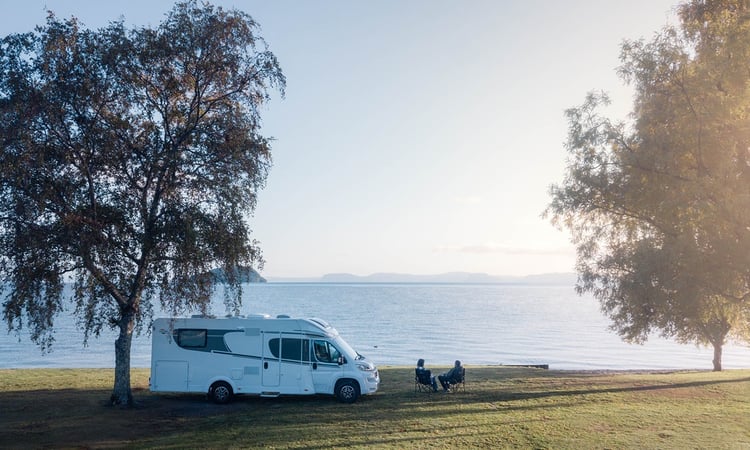
State Highway 5 quickly moves into rolling hill country as you begin the two-hour drive to Taupō. The scenery becomes more rugged and remote, with wide valleys, river gorges and stretches of winding road.
Along the way, you’ll pass through small rural communities before gradually climbing toward the central volcanic plateau.
As you approach Taupō, native bush becomes more prominent, and the presence of geothermal activity begins to shape the environment. The vast Lake Taupō comes into view, having been formed by the largest known volcanic eruption.
|
Travel tip — take a break at a scenic reserve Napier to Taupō is an inland drive known for its winding sections and the need for careful driving, so plan a few stops along the way to refresh and stretch your legs.
Look out for scenic reserves or riverside picnic spots — they’re ideal for relaxing and enjoying the quieter side of the central North Island. |
Things to do in Taupō
-
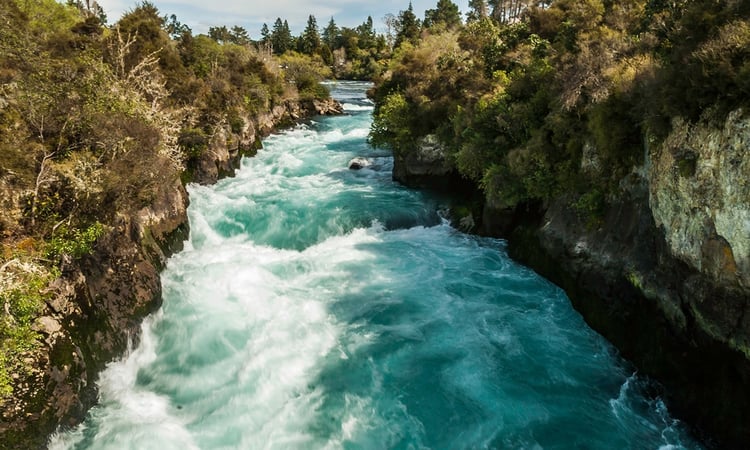
Check out Huka Falls to see powerful turquoise water surge through a narrow gorge just north of town.
-
Cycle or walk some of the Great Lake Pathway and enjoy up close views of Lake Taupō.
-
Take a boat cruise to the Ngātoroirangi Mine Bay Māori Rock Carvings — a cultural highlight accessible only by water.
-
Relax in a free natural hot pool at Otumuheke Stream, where warm geothermal waters flow into the nearby Waikato River.
-
Go skydiving or take a scenic flight above one of New Zealand’s most popular and scenic spots for aerial views.
-
Enjoy lakeside dining — plenty of cafés and restaurants offer views across the water.
Find out why Taupō is one NZ’s best places to visit by campervan.
Distance: 142km
Travel time: 2hr 3min
Route: Napier to Taupō
Stay: Taupō TOP 10 Holiday Park or Motutere Bay TOP 10 Holiday Park
Resources: Love Taupō
|
From a forceful past to a serene present Lake Taupō sits within a massive volcanic caldera that was created by a series of eruptions many thousands of years ago. One of these is considered the most powerful eruption in the world in the last 5,000 years.
Today, the lake’s calm surface hides this dramatic past, while geothermal activity in the surrounding area serves as a reminder of the forces that shaped the land. |
Day 10: Taupō to Rotorua
Into the heart of geothermal New Zealand
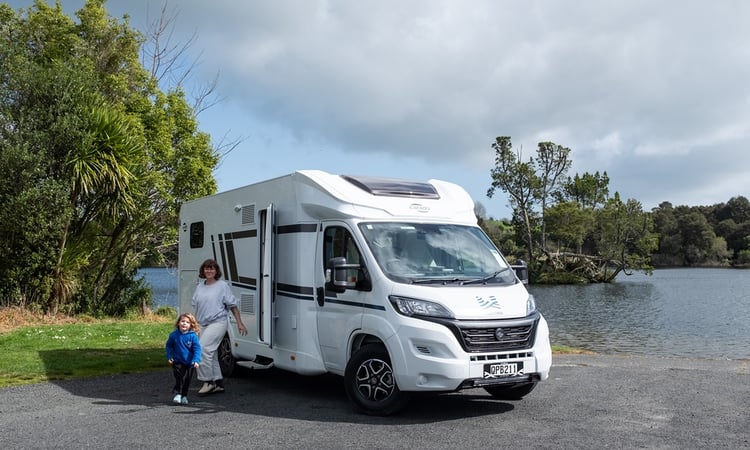
Leaving Taupō, you’ll head north on a short hour’s drive to Rotorua. Here you’ll find steam rising from the ground, mineral-rich pools scattered about and the unmistakable scent of geothermal activity in the air.
This region sits within one of the most active geothermal zones in the country, shaped by underground heat that fuels bubbling mud pools, geysers and hot springs. It’s a fascinating contrast to the coastal and rural landscapes you’ve travelled through so far.
Arriving in Rotorua, you’ll find a place where natural forces and cultural traditions come together. Known for its strong Māori heritage and thermal wonders, Rotorua offers a wide range of experiences, from cultural performances and hāngī feasts to forest walks and lakeside relaxation.
|
Travel tip — prepare your senses Rotorua’s geothermal activity comes with a distinctive sulphur smell, often compared to rotten eggs.
It can be stronger in some areas than others, particularly near thermal parks and lake edges. If it feels a bit overwhelming at first, try opening your motorhome’s windows for fresh air or stepping away from the immediate area for a short walk.
Most visitors quickly get used to it, and it’s a sign you’re somewhere truly unique. |
Things to do in Rotorua
-
Enjoy a special geothermal experience at Te Puia, Wai-O-Tapu Thermal Wonderland or Orakei Korako.
-
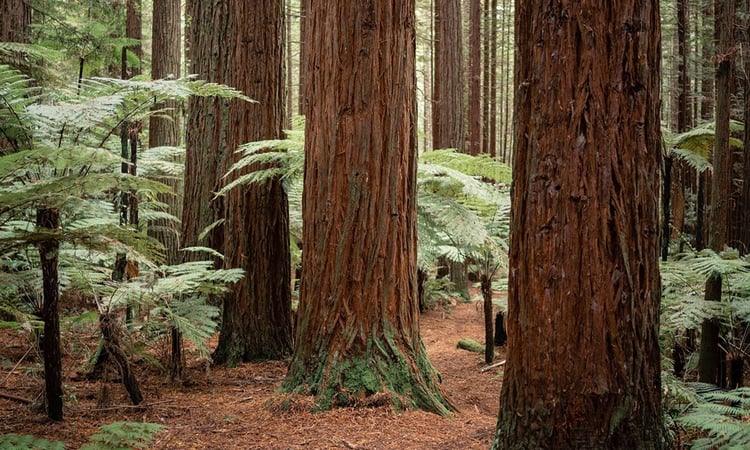
Explore the Redwoods Treewalk suspended high above the forest floor amongst 75m tall giants of the forest.
-
Experience something new at Hell’s Gate, where the healing properties of mud spa live on.
-
Experience a Māori cultural evening at Mitai Māori Village where you can enjoy storytelling, performance and a traditional hāngī meal.
-
Wander Lake Rotorua’s lakefront — take a walk or enjoy views across the water.
-
Ride the Skyline Rotorua gondola and luge for panoramic views and the most fun way to get back downhill.
Read our Rotorua motorhome holiday guide for more great tips on where to stay and eat.
Distance: 80km
Travel time: 58min
Route: Taupō to Rotorua
Stay: Blue Lake Top 10 Holiday Park or Lake Ōkareka Campsite
Resources: Rotorua NZ
|
The story of Ngātoroirangi Rotorua’s thermal environment is closely tied to the story of Ngātoroirangi — a priest who travelled inland from the coast.
While exploring the central North Island, he became stranded on a mountain and called out to his sisters in Hawaiiki for help. They sent fire underground to warm him, which travelled beneath the land and emerged as the geothermal activity seen today.
The hot springs, geysers and steaming ground across the region are said to be the path of this fire, connecting Rotorua to the wider volcanic geography. |
Day 11 — Rotorua
A day of culture and wonder
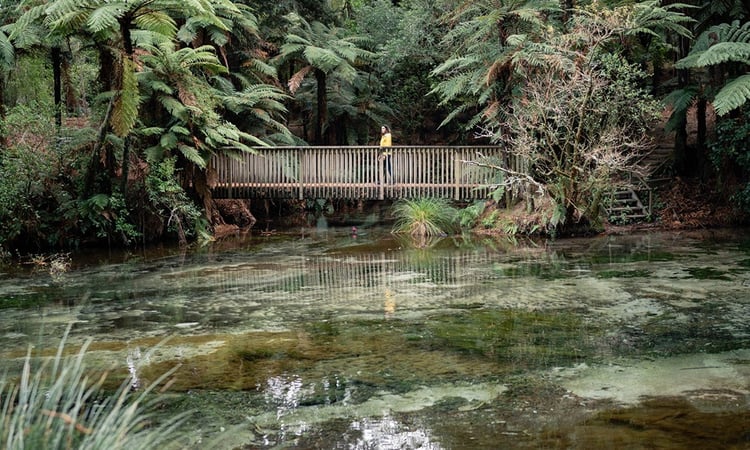
Today is all about exploring Rotorua at your own pace. The city has a wide range of experiences within a short distance, but you’ll still probably want to drive your motorhome between them to get the most out of the day.
Whether you decide to relax in a hot pool, cycle forest trails or visit a living Māori village, this stay-day will give you time to explore some of the local attractions.
|
Travel tip — book activities in advance Rotorua is one of the North Island’s most popular destinations, and some experiences like Māori cultural evenings and spa visits can book out early. If there’s something specific you want to do, it’s worth securing your place ahead of arriving in the city, so you can relax and enjoy the day without needing to plan on the go. Consider using Book Me to lock in your activities and get discounts, too. |
More things to do in Rotorua
-
Experience a guided eco tour to learn more about Rotorua’s natural environment and cultural history.
-
Visit The Living Māori Village Whakarewarewa a geothermal settlement where residents still use natural steam and hot pools in everyday life.
-
Explore Waimangu Volcanic Valley — walking through a geothermal area shaped by one of the world’s most recent volcanic eruptions.
-
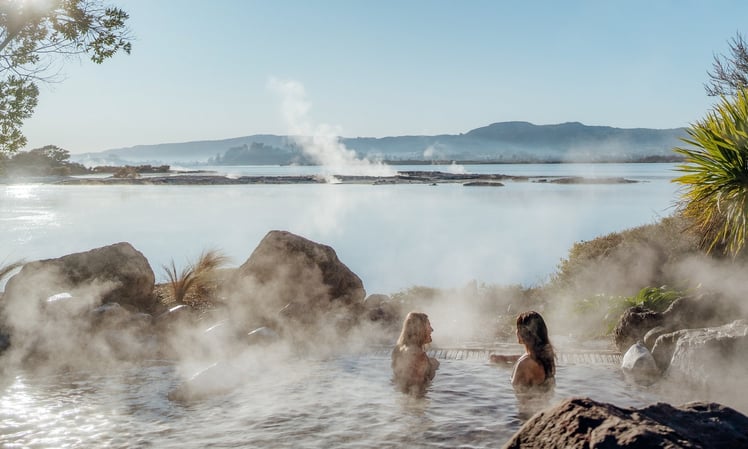
Relax at Polynesian Spa by soaking in mineral-rich hot pools that overlook Lake Rotorua.
-
Mountain bike the Whakarewarewa Forest on world-class trails through native and exotic bush.
-
Try a meal at Stratosfare Restaurant and Bar atop the gondola, offering sweeping views.
Learn about biking Te Ara Ahi in the Rotorua area.
Resources: Rotorua
|
The legend of Hinemoa and Tūtānekai One of the city’s most enduring stories is that of Hinemoa and Tūtānekai, whose connection overcame distance and expectation.
Tūtānekai lived on Mokoia Island in Lake Rotorua, while Hinemoa remained on the mainland. Forbidden from being together, she swam across the lake at night, guided by the sound of his flute.
When she reached the island, she warmed herself in a natural hot spring before revealing herself. Their reunion has become one of New Zealand’s most well-known love stories — deeply connected to Rotorua. |
Day 12: Rotorua to Waitomo
The hidden world beneath the hills
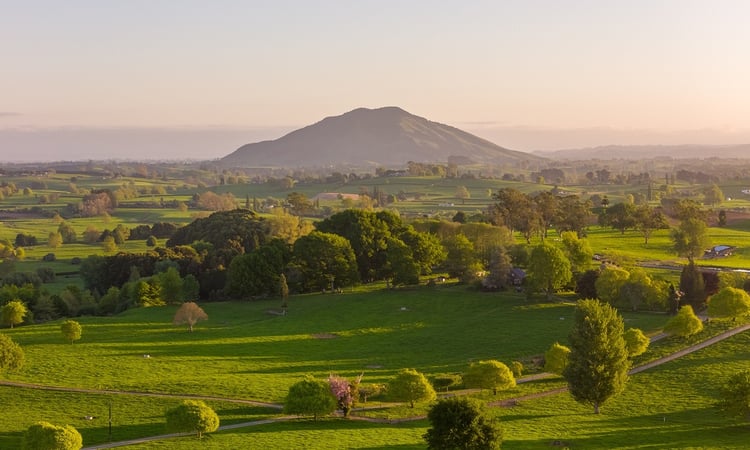
The rolling countryside of the Waikato is on show today while driving through a patchwork of farmland, small rural towns and some quieter backcountry roads. Expect green hills and grazing livestock on your journey to Waitomo.
Beneath these gentle hills lies a vast network of limestone caves, carved over thousands of years by underground rivers — the Waitomo Caves.
Waitomo itself is a small village known for glowworm caves and unique subterranean spaces. With a shorter driving day, you’ll have time to settle in and even explore one of the cave systems in the afternoon or evening.
|
Travel tip — plan a few special rest stops Travelling to Waitomo is less than two hours, so organise your travel day so you can stop at the Blue Spring, the Mangapohue Natural Bridge Walk and the Marokopa Falls Walk. |
Things to do in Waitomo
-
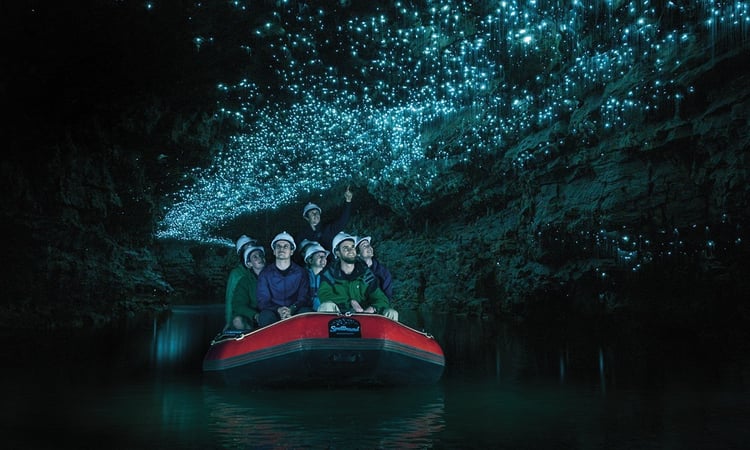
Book an underground experience in the Waitomo Glowworm Caves by boat or via abseil through a different world illuminated by glowworms.
-
Discover Aranui Cave and its intricate limestone formations, including many stalactites and stalagmites.
-
Experience a black water rafting tour floating through subterranean rivers on an inner tube.
-
Enjoy the Ruakuri Walk — a scenic loop track through native forest with limestone outcrops and cave entrances.
-
Eat at the Waitomo Homestead — a peaceful area to relax and take in Waitomo’s rural setting.
Discover why Waitomo is a rewarding winter motorhome holiday destination.
|
The Waitomo Top 10 Holiday Park is a great spot to camp right in the village, and the Huhu Cafe next door is great. I recommend not doing the large cave tours but instead booking with a local operator like Spellbound for a more personalised experience. There’s also no supermarket in Waitomo, so make sure you have enough groceries for your stay.
Tina Divers – Wilderness’ Rental Sales Consultant |
Distance: 139km
Travel time: 1hr 51min
Route: Rotorua to Waitomo
Stay: Waitomo Top 10 Holiday Park or Otorohanga Kiwi Holiday Park
Resources: Waitomo
|
A landscape shaped by time and water The caves of Waitomo formed over millions of years as water slowly dissolved the soft limestone beneath the surface. Underground rivers carved out tunnels and chambers, creating the intricate cave systems you’ll see there now.
Glowworms add another layer to this environment. These tiny organisms produce a soft blue-green light, creating the star-like cave ceilings that make Waitomo famous. |
Day 13: Waitomo to Raglan
A west coast escape
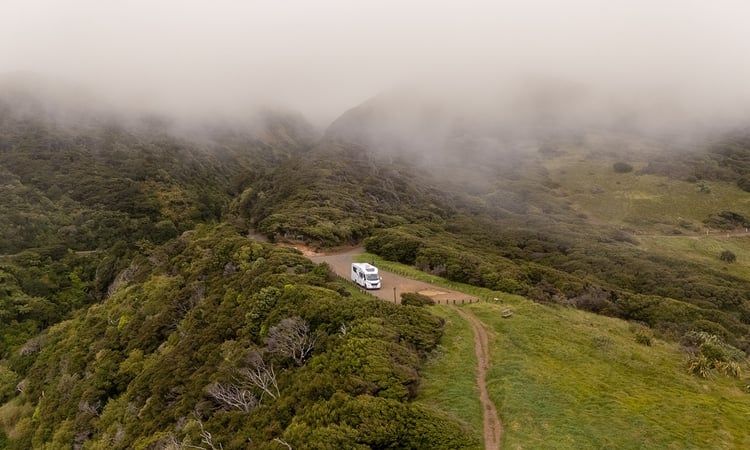
One of the things to do on New Zealand’s North Island is visit a relaxed seaside town with a little more fresh air than the world of underground caves.
The drive west takes you through rolling Waikato farmland before reaching the Tasman Sea.
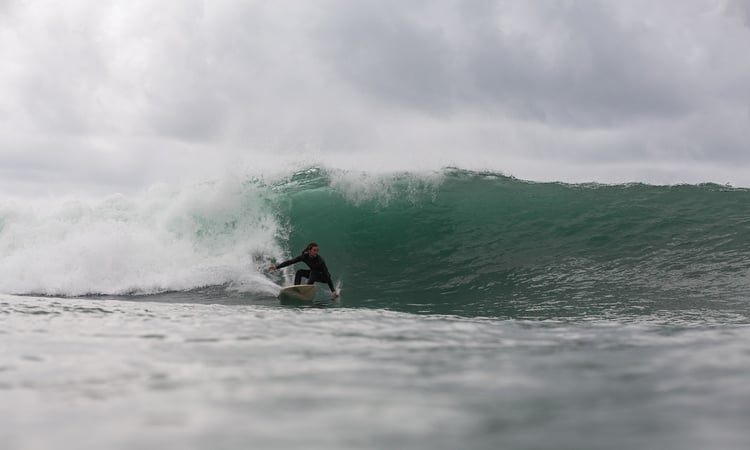
The small town of Raglan has a vibrant creative community, strong surf culture and a distinctly laid-back feel. Cafés spill onto the streets while local galleries showcase regional artists, and the pace of life is as slow as the rhythm of the ocean.
Spend your afternoon exploring the township, walking along the harbour or heading out to the coast to watch surfers riding the long, rolling waves the area is famous for.
|
Raglan township has such a cool vibe, great shops and amazing coffee. My favourite cafe is The Shack. There’s no freedom camping around that area, but you can drive and day-park at the beaches. You’re then best to look at nearby holiday parks.
Tina Divers – Wilderness’ Rental Sales Consultant |
Things to do in Raglan
-
Chill out at Ngarunui Beach — an idyllic spot for swimming, surfing, or just taking in the west coast scenery.
-
Walk to Wairēinga/Bridal Veil Falls on the short forest trail that leads to an impressive 55m waterfall.
-
Wander about Raglan township and browse some boutique shops, art galleries and local markets.
-
Spend some time at The Shack Raglan — a local café known for its excellent coffee and casual ambience.
-
Take in Te Toto Gorge Lookout’s sweeping views of the rugged coastline and expansive farmland.
-
Watch the sunset over the Tasman Sea on a Raglan Boat Charter.
Find out why Te Kopua Beach in Raglan is one of our top five beaches for a campervan holiday.
|
I would recommend visiting Te Toto Gorge Lookout in Raglan. It’s such a pretty drive out there! The views are amazing, but parking is limited during busy periods. The short walk out to the viewing platform is great. I also saw a lot of people parking up and walking to the summit, which I bet has incredible views.
Kate van den Bergh – Wilderness’ Lead designer |
Distance: 99km
Travel time: 1hr 20min
Route: Waitomo to Raglan
Stay: Raglan Holiday Park or Te Kopua Whanau Camp
Resources: Raglan NZ
|
Globally recognised surf town Raglan is well known internationally for its surf breaks, particularly Manu Bay, which is home to one of the longest left-hand waves in the world.
This reputation has helped shape the town’s identity, attracting surfers, artists and travellers seeking a slower, more creative coastal lifestyle. |
Day 14: Raglan to Auckland
Back to the big smoke
It’s time to drive back through rolling Waikato farmland before joining SH1 heading north. Consider stopping in Hamilton for a break to grab a coffee, check out the famous Hamilton Gardens or taste some Zealong tea.
Arriving back in Auckland, you can now reflect on your amazing motorhome adventure. It’s a chance to look back on how much of the North Island you’ve experienced after two weeks on the road.
|
Travel tip — time your arrival into Auckland Traffic can build up on and around Auckland motorways, especially during peak hours. Plan to arrive after the morning work rush and before the late afternoon dash home — so your last day is a little more relaxing. |
Things to do in Auckland
-
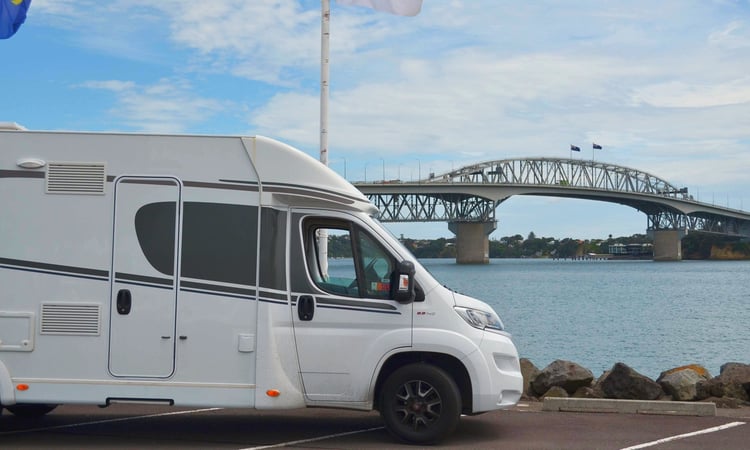
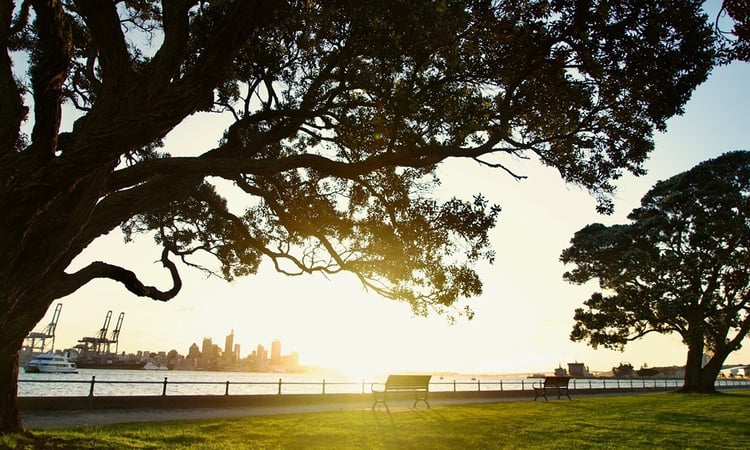
Spend time at the Auckland Viaduct and Waterfront, walking along the harbour and enjoying views of the marina and city skyline.
-
Dine at Orbit, taking in the 360-degree panoramic views from the top of the Sky Tower.
-
Discover Auckland Domain and Auckland Museum — one of the city’s oldest parks, with cultural and historical exhibits.
-
Relax at Mission Bay — a popular beach close to the city centre with popular cafés and views of Rangitoto Island.
-
Walk up central Mount Eden or One Tree Hill — or any of the 48 volcanic cones that shape the city.
-
Plan a night out – the Auckland Theatre Company is a safe bet for great entertainment.
See our Auckland motorhome holiday guide for more advice on what to do in the city.
Distance: 159km
Travel time: 1hr 55min
Route: Raglan to Auckland
Stay: Takapuna Beach Holiday Park or Ambury Regional Park
Resources: Auckland NZ
|
One city — two harbours Auckland is commonly called the City of Sails because of its strong maritime culture and access to two harbours — the Waitematā Harbour to the east and the Manukau Harbour to the west.
This unique geography has helped shape the city’s identity, offering easy access to beaches, islands and coastal landscapes in all directions. |
Day 15: Auckland
Haere rā
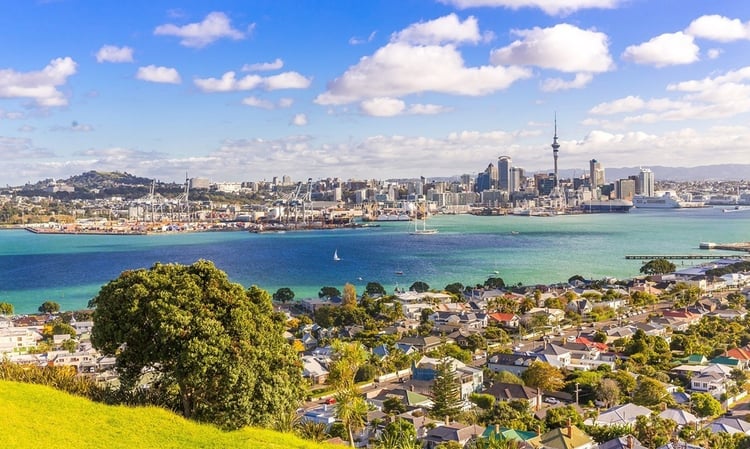
Depending on your departure time, you may get a chance to enjoy a slow morning — perhaps a coffee by the waterfront or a stroll through the city. Then, it’s time to return your Wilderness motorhome and head home.
You’ve experienced a diverse mix of topography — from the remote East Cape coastlines and quiet rural towns to vibrant cities, geothermal areas and world-class food and wine regions. The world’s first sunrise will be a treasured memory for some time to come.
|
Travel tip — returning a motorhome takes time Allow enough time to refuel, drain wastewater, empty the toilet cassette, dispose of rubbish and complete the other checks before returning your motorhome to the depot. Planning ahead will help ensure a smooth and stress-free finish to your trip. |
More things to do in Auckland
-
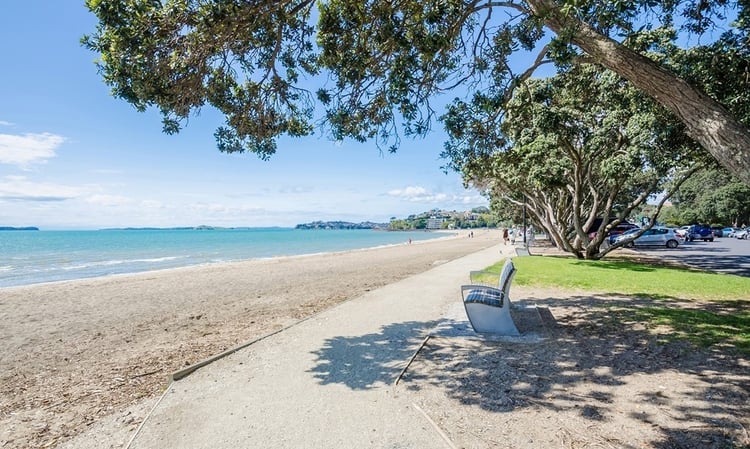
Enjoy breakfast or coffee at a suburban beachside spot — like Takapuna Beach, Mission Bay or Blockhouse Bay Beach Reserve.
-
Go for a short walk in Auckland CBD on K Road or The Lightpath.
-
Pick up a few last-minute souvenirs by exploring the central city shops or local markets
-
Stretch your legs at one of Auckland’s regional or city parks to unwind before a long-haul flight.
Uncover our top ten things to do in Auckland.
Resources: Auckland NZ
|
Haere rā — until we meet again In the Māori world, farewells are often expressed with the phrase Haere rā — meaning goodbye to someone who’s leaving.
However, it carries more than a simple farewell. It acknowledges the journey taken, the experiences shared and the hope that paths may cross again in the future.
As you finish your NZ motorhome adventure, it’s a reminder that while the trip may end, the memories — and the connection to the places you’ve explored — remain. |
This Auckland to East Cape road trip offers plenty of exploring across the central North Island. Now, you just need a motorhome to take you there — book your Wilderness motorhome and experience the East Cape your way.
-
Journey to a place where the sun rises first
Somewhere on the East Cape of New Zealand, long before most of the world wakes, the first sunrise breaks across the Pacific Ocean. Watching it from your motorhome — coffee in hand, ocean stretching endlessly ahead — is one of the most memorable ways to begin a day anywhere on earth.
This fifteen-day RV adventure leaves Auckland to explore the Coromandel Peninsula before passing through Tauranga on the way to the country’s remotely beautiful East Cape. This stunning coastline is a place where horses roam freely, and people are content living simply off the land.
You’ll stay in the relaxed towns of Gisborne and Napier before adventuring across the geothermal landscapes of Taupō and Rotorua. Subterranean caves await in magical Waitomo, then surf culture comes to life in quirky Raglan.
Returning to the urban energy of Auckland, you’ll have a night in NZ’s biggest city before your trip comes to an end.
The East Cape is a route made for a Wilderness motorhome — where the freedom to stop, explore and stay longer is all part of the experience.
Auckland to East Cape road trip itinerary highlights
-
Driving Creek Railway
-
Gemstone Bay
-
McLaren Falls Park
-
Ōpiwa Oysters
-
Hicks Bay
-
Anaura Bay
-
Art Deco walking tour
-
Hawke’s Bay Farmers’ Market
-
Otumuheke Stream
-
Redwoods Treewalk
-
Mitai Māori Village
-
Black water rafting tour
-
Wairēinga/Bridal Veil Falls
-
Orbit
-
Auckland Museum
-
-
Day 1: Auckland to Coromandel Town
From Auckland’s skyline to Coromandel’s quiet harbour
Your New Zealand East Cape road trip begins!
If you've just arrived on a long-haul flight, we suggest spending the night at one of the many hotels around Auckland Airport. Once you're fresh and rested, pick up your motorhome hire and head south towards Hamilton. The multilane motorway of State Highway 1 (SH1) is relatively tame compared to European or American highways, and before long, you’ll be switching to SH2 at Pōkeno.
After changing to SH25, you’ll eventually arrive at the historic town of Thames, once a bustling gold mining centre and now considered the gateway to the Coromandel Peninsula. From here, the road begins to wind gently north along the coastline, with forested hills rising on one side and the sea stretching out on the other.
Coromandel Town is a small harbour settlement about an hour further. It offers a relaxed pace with a creative community and excellent seafood.
Travel tip — stock up and make friends with pull-over bays
Stock up on groceries and fuel in Thames, as it’s the last spot for "city prices" before you head into the more remote parts of the peninsula. Once you’re on the road, keep an eye out for the pull-over bays; the coastal highway is stunning but very narrow and twisty, and pulling over into a bay to let locals pass is the best way to avoid the stress of a line of traffic forming behind you.
Since you’re in a motorhome, give yourself plenty of extra time – the sharp corners mean you'll be travelling much slower than the GPS suggests, so it’s better to relax and enjoy the coastal views than to rush.
Things to do in Coromandel Town
-
Visit the Coromandel Gold Stamper Battery — where you can have a go at gold panning and rock crushing.
-
Stroll along the Kauri Block Track — an easy 90min return walk that follows a ridge through regenerating bush.
-
Ride the Driving Creek Railway — on the special narrow-gauge rail lines that climb through regenerating native forest to a lookout with sweeping views across Hauraki Gulf.
-
Take your kids to The Waterworks — a family theme park where water and getting wet are the main attractions.
-
Taste some smoked seafood at The Coromandel Smoking Co. — where salmon, mussels and scallops are all smoked to perfection.
Planning your route? Our guide to the best free travel apps for New Zealand road trips can help you find campsites, fuel stops and attractions along the way.
Distance: 156km
Travel time: 2hr 21min
Route: Auckland to Coromandel Town
Stay: Shelly Beach TOP 10 Holiday Park or Tasman Holiday Parks Coromandel
Resources: Coromandel Town Information CentreA peninsula shaped by gold and forest
During the 19th century, the discovery of gold transformed the Coromandel Peninsula almost overnight. Prospectors flocked to the area — and places like Thames and Coromandel Town quickly expanded to support the mining boom.
Although the gold rush eventually faded, the region retained its independent spirit. Today, visitors are drawn by a different kind of treasure — towering native forests, quiet coves and a coastline that rewards slow exploration.
-
-
Day 2: Coromandel Town to Whitianga
Crossing the peninsula
Today’s journey takes you across the spine of the Coromandel Peninsula, trading the calm harbour views of Coromandel Town for the golden beaches of the Pacific.
Leaving town, you’ll drive into Coromandel Forest Park, where dense native bush blankets the hills. The drive is short in distance but rich in scenery, with the winding road revealing glimpses of forest valleys, streams and rugged ridgelines along the way.
As you continue east, the landscape gradually opens out before dropping towards the coast. You may want to detour to one of the popular nearby beaches like New Chums, Whangapoua or Matarangi.
Arriving in Whitianga by Mercury Bay, you’ll have plenty of time to enjoy the lively coastal hub of cafés, restaurants and natural attractions. Slow your evening right down with dinner overlooking the Whitianga Marina.
Travel tip — watch the tide
If you’re planning to detour to New Chums Beach, check the tide charts before you set off. The walk to New Chums requires crossing a small estuary at the northern end of Whangapoua Beach that can be tricky at high tide. To keep your boots dry and ensure the trek is easy, aim to arrive within two hours of low tide; if the tide is too high, the water can quickly get waist-deep, turning a scenic stroll into a bit of an unintended swim.
It’s one of the most pristine stretches of sand in New Zealand, so timing your crossing right means you’ll have plenty of time to enjoy the beach and still make it back across the channel safely before the water rises again.
Things to do in Whitianga
-
Explore Cooks Beach — a short passenger ferry ride can take you across the harbour to this beautiful stretch of coastline.
-
Enjoy a relaxing glass-bottom boat tour around Mercury Bay — exploring sea caves, hidden coves and offshore islands.
-
Spend time on idyllic Buffalo Beach — a long stretch of sand right along Whitianga’s waterfront.
-
Walk to Shakespeare Cliff Lookout — a short hike leading to views over Mercury Bay and the Pacific Ocean.
-
Taste fresh seafood in town — Whitianga has a relaxed dining scene with plenty of spots to try local fish and chips or casual waterfront meals.
-
Go snorkelling or swimming at Gemstone Bay — part of the Te Whanganui-A-Hei Marine Reserve that’s known for its clear water and marine life.
Check out our Coromandel Peninsula motorhome holiday guide for more tips.
Distance: 44km
Travel time: 52min
Route: Coromandel Town to Whitianga
Stay: Mercury Bay Holiday Park or Harbourside Holiday Park
Resources: All About WhitiangaThe story behind Mercury Bay
Mercury Bay was named by Captain James Cook, who anchored here in 1769 during his first voyage to New Zealand. Cook’s crew used the bay to observe the transit of the planet Mercury across the sun.
Today, the bay is better known for its beaches and marine life — but its place in the history of exploration remains an important part of the region’s story.
-
-
Day 3: Whitianga to Tauranga
Past hidden coves to a sun-soaked coastline
It’s worth setting off early today so you can take your time and enjoy a few stops along the way. Follow the eastern edge of the Coromandel Peninsula, where you can find some of the region’s most famous natural attractions.
Not far from Whitianga are the twin iconic hotspots of Cathedral Cove and Hot Water Beach. Whether you choose to walk a trail, paddle in clear waters or dig your own natural hot pool in the sand, this coastline is about relaxing and enjoying the moment.
The drive then winds through laidback beach communities before reaching Waihi Beach — a long sweep of golden sand that marks the transition into the Bay of Plenty.
Arriving in Tauranga, you’ll notice a shift in pace — a vibrant coastal city with a warm climate, bustling waterfront and easy beach access. It’s the ideal spot to settle in for the evening.
Travel tip — time the tides
If you’re intending to visit Hot Water Beach, check the tide times in advance. The hot springs are only accessible for a couple of hours either side of low tide, so timing your visit makes all the difference.
Even if you miss the tidal window, the beach itself is still worth a stop.
Things to do in Tauranga
-
Relax at Mount Maunganui Beach — a wide surf beach that’s much-loved for swimming, sunbathing and walking.
-
Take a dolphin and wildlife cruise — exploring Tauranga Harbour and spotting local marine life.
-
Stroll along Maunganui Road to find a restaurant or bar for dinner.
-
Drive to McLaren Falls Park — a peaceful location just outside Tauranga, where you can walk, kayak or see glow worms after dark.
-
Visit Pāpāmoa Beach — a quieter alternative to Mount Maunganui, with a long stretch of sand ideal for walking.
-
Discover The Elms Te Papa Tauranga — one of NZ’s oldest historic sites that offers insight into early European and Māori history in the region.
Check out our guide to motorhome camping in New Zealand.
A region shaped by sun and sea
The Bay of Plenty is one of New Zealand’s most productive and sunniest regions — known for fertile land and a long growing season. It’s a major centre for kiwifruit and avocado farming, and you’ll often see orchards stretching across the landscape as you drive through.
Combined with a warm climate and coastal lifestyle, it’s easy to see why this region is a favourite with locals and visitors alike.
Distance: 166km
Travel time: 2hr 46min
Route: Whitianga to Tauranga
Stay: Tasman Holiday Parks Papamoa Beach or Cosy Corner Holiday Park
Resources: Bay of Plenty Tauranga -
-
Day 4: Tauranga to Whakatāne
An easy coastal drive through the Bay of Plenty
Today is a shorter driving day, giving you time to slow the pace and enjoy the coastline.
You’ll follow the Pacific Coast Highway as it traces a line between fertile farmland and the ocean. This stretch of road is known for its sunshine, orchards and long sandy beaches — with plenty of opportunities to stop along the way.
Pause at Pāpāmoa for some quality beach time, or detour to Te Puke — the kiwifruit capital of New Zealand.
The laid-back coastal town of Whakatāne isn’t far away, with its strong connections to Māori history and culture, as well as easy access to the surrounding beaches and harbour. It’s a relaxing place to settle in for the night and enjoy a quiet seaside evening.
Travel tip — take advantage of your short travel day
Stop often along the coast as you only have 87km to drive today. Whether it’s a beach walk, a swim or an outdoor lunch, this stretch of road is perfect for enjoying the journey without feeling rushed.
Things to do in Whakatāne
-
Wander about sunny Whakatāne — a coastal town known for its connection to Whakaari White Island, with strong Māori heritage.
-
Explore Ōhope Beach — consistently ranked as one of NZ’s favourite beaches due to its calm waters and long sandy shoreline.
-
Walk along Whakatāne Heads for coastal views and a chance to see the iconic Lady on the Rock statue overlooking the harbour.
-
Head to a cafe along the Whakatāne River Walk, following the river through town and out towards the harbour entrance.
-
Learn about local history at Te Kōputu a te Whanga a Toi — the Whakatāne Library and Exhibition Centre, which acts as a modern cultural hub sharing stories of the region.
Stock up on food for a couple of nights in the remote East Cape and try cooking a few of our recipes for the road.
Distance: 87km
Travel time: 1hr 5min
Route: Tauranga to Whakatāne
Stay: Riverside Whakatāne Holiday Park or Ōhope Beach TOP 10 Holiday Park
Resources: WhakatāneThe story of Wairaka
According to Māori tradition, Whakatāne takes its name from the story of Wairaka — a young woman aboard the Mataatua waka (canoe).
While the men were ashore, the canoe began drifting out to sea. Despite cultural expectations that paddling was a role for men, Wairaka took action, paddling the waka back to safety.
Her actions are remembered as a symbol of courage and leadership. Today, Wairaka’s story remains central to Whakatāne’s identity, with her statue overlooking the harbour at Whakatāne Heads.
-
-
Day 5: Whakatāne to Hicks Bay
To the Cape and the rising sun
As you say goodbye to Whakatāne, you’ll stay close to the coastline, travelling east through the Bay of Plenty. You’ll notice a feeling of more openness and less development.
The pace of life begins to slow even further, passing through Ōpōtiki. This is the gateway to the East Cape — one of the most remote and culturally rich regions in New Zealand.
The drive becomes the experience as the road winds along rugged coastline, crossing small bridges, weaving between pōhutukawa trees and revealing quiet bays that feel far removed from the country.
It’s not unusual to drive for long stretches without seeing another vehicle. You may even be lucky enough to see a local or two riding horseback, saddleless near the roadside.
Take your time here. Stop often. This part of the journey is all about soaking up a coastline that many travellers never reach.
By late afternoon or early evening you’ll arrive at Hicks Bay, a peaceful coastal settlement surrounded by rolling hills and open ocean. It’s a simple yet beautiful place to spend the night, with the sound of the sea as your white noise.
Travel tip — fuel up before heading east
Make sure you fill up with fuel in either Tauranga or Whakatāne before continuing toward Ōpōtiki and the East Cape. Petrol stations become limited once you leave the main centres — and distances increase between towns. Download the Gaspy app to find the cheapest fuel.
Stocking up on a couple of days of groceries before leaving Tauranga is also a smart idea.
Things to do on the way to Hicks Bay
-
Explore Ōhope Beach — consistently ranked as one of NZ’s favourite beaches due to its calm waters and long sandy shoreline.
-
Have lunch at Ōpiwa Oysters — where you can try an oyster burger.
-
Pause in Ōpōtiki — the last major town before reaching the East Cape, with cafés and a chance to refuel.
-
Relax at Hicks Bay — take a swim and unwind by the ocean while enjoying the peaceful surroundings.
Planning a remote stretch? Our guide to driving a motorhome in New Zealand covers everything from fuel stops to road conditions.
Distance: 191km
Travel time: 2hr 59min
Route: Whakatāne to Hicks Bay
Stay: Lottin Point or Te Araroa Holiday Park
Resources: Explore the East Cape guideOne of New Zealand’s most remote coastlines
The East Cape is often described as one of the last truly untouched regions in NZ. With a small population and limited development, it offers a rare chance to experience the country’s coastline as it once was.
The area is also deeply significant in Māori culture — with many communities maintaining strong connections to their ancestral land and traditions. Travelling through this region offers a glimpse into a slower, more grounded way of life shaped by the sea and the land.
You may notice marae like Whitianga along this stretch of coastline. Being central gathering places for local Māori communities, they aren’t open to casual visitors. However, they are an important part of the region’s identity and reflect the strong cultural connections that define the magical East Cape.
-
-
Day 6: Hicks Bay to Gisborne
Chasing first light along the East Cape
Journey south towards Gisborne and one of the most remote and rewarding stretches of coastline in the country. Winding through small communities, past farmland and near beaches, the ocean feels ever-present.
This part of the East Cape invites you to slow down. There’s no need to rush — some of the best experiences today are the unplanned ones, whether it’s an isolated golden beach, a roadside fruit stall or a conversation with locals in the middle of nowhere.
By afternoon, you’ll arrive in sunny Gisborne, a coastal town known for its surf culture, strong Māori heritage and reputation as one of the first places in the world to see the sunrise. After a long day, walk around town before settling in and reflecting on the adventure so far.
Travel tip — wake up early for the first sunrise
Plan to leave Hicks Bay at least an hour before sunrise to drive the East Cape Road with time to prepare for the ‘world’s first sunrise’.
The road is tarmac until just after Horoera where it becomes gravel. Although Wilderness motorhomes are suited to gravel if you drive carefully, there can be landslides here after poor weather — and reaching the East Cape Lighthouse may not be possible.
Your best approach is to talk to the manager at your local campground to find out the current state of access. Regardless of how far down East Cape Road you drive, the world’s first sunrise will be spectacular as this is a stunningly remote area of New Zealand.
Things to do on the way to Gisborne
-
Stop at Te Puia Springs — a small settlement with historic significance and natural hot springs.
-
Try a paua pie from Bakery 22 — a local favourite and a classic East Coast food stop worth aiming for lunch at.
-
Relax at Anaura Bay — arguably the most stunning crescent-shaped beach in the whole of New Zealand.
-
Walk Tolaga Bay Wharf — the longest concrete wharf in the Southern Hemisphere.
-
Take a break at Whangara — the main filming location of the 2002 movie Whale Rider.
-
Visit Tairāwhiti Museum — and learn about the region’s rich Māori heritage, local history and early European encounters.
-
Encounter stingray at Tatapouri — joining a guided experience where you can wade into shallow water and see these incredible creatures up close in their natural environment.
Check out the best North Island fishing spots in Gisborne.

Tatapouri Bay, just out of Gisborne, is the land of first light. We loved glamping in one of the canvas tents here. It was amazing — the East Coast is a gem. They do stingray tours, which we unfortunately missed out on as they were fully booked, but they looked like fun.
Melanie Crichton — Wilderness’ Christchurch Detailing Leader
Distance: 180km
Travel time: 2hr 47min
Route: Hicks Bay to Gisborne
Stay: Gisborne TOP 10 Holiday Park
Resources: Tairāwhiti GisborneLand of first light
Gisborne and the surrounding Tairāwhiti region are often referred to as the land of the first light. It’s their position on the eastern edge of New Zealand, where this coastline is among the first in the world to see the sunrise each day.
The region is also rich in history and culture, being one of the first landing places of Māori voyagers and European explorer Captain James Cook.
-
-
Day 7: Gisborne to Napier
From rugged coastline to Hawke’s Bay vineyards
One of New Zealand’s most celebrated food and wine regions awaits as today’s destination.
Departing Gisborne, you’ll follow the coastline briefly before turning inland through rolling farmland and river valleys. It’s a quieter stretch of highway, where the scenery feels wide open, and the pace remains unhurried.
The scenery becomes vineyards, orchards and occasional rows of crops — a sign that you’re approaching Hawke’s Bay, often referred to as the fruit bowl of New Zealand.
Arriving in the distinctive Art Deco architecture of Napier, this coastal city blends seaside charm with a vibrant eating and drinking scene. Enjoy a relaxing afternoon with a walk along Marine Parade and dinner at one of the city’s many exceptional restaurants.
Travel tip — look for roadside produce stalls
On the road to Hawke’s Bay, also known as The Bay, watch out for stalls selling fresh fruit and vegetables on the roadside. Depending on the season, you can find everything from apples and stone fruit to avocados and berries — often picked that same day.
It’s a fun way to experience the area’s reputation for quality produce.
Things to do in Napier
-
Cycle some Hawke’s Bay Trails — an easy network of flat cycling paths connecting wineries, rivers and coastal scenery.
-
Wander down Marine Parade — a seaside promenade with sculptures, flower beds and a stony beach.
-
Enjoy the local café scene — the Bay is known for its superb coffee and chilled dining spots.
-
Visit Havelock North — a nearby village with boutique shops and access to Te Mata Peak.
-
Go on an Art Deco walking tour to discover the story behind Napier’s unique rebuilt architecture after the 1931 Hawke’s Bay earthquake.
-
Indulge in wineries and cellar doors, where you’ll find some of the country’s best-known vineyards such as Craggy Range and Church Road.
Read through our Napier motorhome holiday guide for plenty more tips.
Napier is a lovely Art Deco town. Do an Art Deco walking tour or vintage car tour — and have ice cream along the esplanade.
Hire a bike to explore the wineries and cafes.
My favourite cafes are Mister D, Milk and Honey, F.G. Smith Eatery or Madam Social for Asian fusion dining in the evening. My favourite wineries are Craggy Range, Elephant Hill, Black Barn, Clearview Estate, Church Road and Mission Estate — to name a few.
Tina Divers – Wilderness’ Rental Sales Consultant
Distance: 215km
Travel time: 3hr 14min
Route: Gisborne to Napier
Stay: Napier Beach TOP 10 Holiday Park or Te Awanga Point Holiday Park
Resources: isite NapierHow disaster shaped a town
A powerful earthquake hit Napier in 1931, raising the land and devastating much of the town. What followed was one of the most distinctive rebuilds in New Zealand history. Within just a few years, the city was reconstructed in the architectural style of the time — Art Deco.
These days, Napier is considered one of the best-preserved Art Deco cities in the world, giving it a special character and attracting plenty of tourists.
-
-
Day 8: Napier
A day of coastal delicacies
Take the chance to slow down your travels by staying another night in Napier and enjoying everything Hawke’s Bay has to offer.
Begin the morning with a walk up Bluff Hill to the lookout, where you’ll get panoramic ocean and coastal views. Ease into the day with a local coffee at one of the city’s popular cafés.
Known for its sunshine, fertile land and relaxed lifestyle, Hawke’s Bay is a place where long lunches, scenic bike rides and winery visits naturally fill the day. With your motorhome parked up at the campground, you’re free to explore at your own pace.
If you feel like venturing a little further, nearby Hastings offers a different perspective on the region. Its thriving food scene and close connection to local growers mean artisan producers and weekend markets are common.
Travel tip — park up your Wilderness motorhome for the day
Napier and the surrounding Hawke’s Bay region are easy to explore without driving long distances. Consider leaving the motorhome at your holiday park and hiring a bike or joining a local half or full day tour.
It’s a relaxed and safe way to enjoy the region — especially if wine tasting is top of your list.
More things to do in Napier
-
Wander around the point past Napier Port to Ahuriri Beach — one of the city’s best.
-
Treat yourself to ice cream at Rush Munro’s in Hastings — a classic way to end a warm day by the beach.
-
Visit the Hawke’s Bay Farmers’ Market — one of NZ’s best Sunday morning markets for fresh produce, baked goods and artisan foods.
-
Explore the National Aquarium of New Zealand — walk through the underwater tunnel and see sharks, stingray and little blue penguins.
-
Take a vintage car tour of Napier — explore the Art Deco streets in style with a guided tour in a classic car.
-
Discover MTG Hawke’s Bay — a cultural hub with exhibitions covering art, history and local stories.
See where to dine in Napier in our best eats on an NZ campervan holiday blog.
Havelock North is only 20 minutes away from Napier, which is a destination in itself with a cool vibe, great shops and cafes.
Try Wright & Co. or Hawthorne Coffee Roasters, Mary's, Malo or Pipi Cafe for amazing pizza.
If you have time, explore the beaches about an hour’s drive from Napier. The region has a good selection of freedom camping spots.
Hawke's Bay is known as the fruit bowl of New Zealand, so there are plenty of roadside stalls with amazingly fresh fruit and vegetables.
Tina Divers – Wilderness’ Rental Sales Consultant
Resources: Art Deco Napier
A land shaped by early Māori settlement
The Hawke’s Bay region has long been an important area for Māori — thanks to its fertile land, rivers and coastal resources. Early tribes (iwi) established settlements throughout the region, developing strong connections to the environment.
Many place names, stories and landmarks in the area reflect this deep cultural history, offering insight into the people who have called The Bay home for generations.
-
-
Day 9 — Napier to Taupō
To the great lake
State Highway 5 quickly moves into rolling hill country as you begin the two-hour drive to Taupō. The scenery becomes more rugged and remote, with wide valleys, river gorges and stretches of winding road.
Along the way, you’ll pass through small rural communities before gradually climbing toward the central volcanic plateau.
As you approach Taupō, native bush becomes more prominent, and the presence of geothermal activity begins to shape the environment. The vast Lake Taupō comes into view, having been formed by the largest known volcanic eruption.
Travel tip — take a break at a scenic reserve
Napier to Taupō is an inland drive known for its winding sections and the need for careful driving, so plan a few stops along the way to refresh and stretch your legs.
Look out for scenic reserves or riverside picnic spots — they’re ideal for relaxing and enjoying the quieter side of the central North Island.
Things to do in Taupō
-
Check out Huka Falls to see powerful turquoise water surge through a narrow gorge just north of town.
-
Cycle or walk some of the Great Lake Pathway and enjoy up close views of Lake Taupō.
-
Take a boat cruise to the Ngātoroirangi Mine Bay Māori Rock Carvings — a cultural highlight accessible only by water.
-
Relax in a free natural hot pool at Otumuheke Stream, where warm geothermal waters flow into the nearby Waikato River.
-
Go skydiving or take a scenic flight above one of New Zealand’s most popular and scenic spots for aerial views.
-
Enjoy lakeside dining — plenty of cafés and restaurants offer views across the water.
Find out why Taupō is one NZ’s best places to visit by campervan.
Distance: 142km
Travel time: 2hr 3min
Route: Napier to Taupō
Stay: Taupō TOP 10 Holiday Park or Motutere Bay TOP 10 Holiday Park
Resources: Love TaupōFrom a forceful past to a serene present
Lake Taupō sits within a massive volcanic caldera that was created by a series of eruptions many thousands of years ago. One of these is considered the most powerful eruption in the world in the last 5,000 years.
Today, the lake’s calm surface hides this dramatic past, while geothermal activity in the surrounding area serves as a reminder of the forces that shaped the land.
-
-
Day 10: Taupō to Rotorua
Into the heart of geothermal New Zealand
Leaving Taupō, you’ll head north on a short hour’s drive to Rotorua. Here you’ll find steam rising from the ground, mineral-rich pools scattered about and the unmistakable scent of geothermal activity in the air.
This region sits within one of the most active geothermal zones in the country, shaped by underground heat that fuels bubbling mud pools, geysers and hot springs. It’s a fascinating contrast to the coastal and rural landscapes you’ve travelled through so far.
Arriving in Rotorua, you’ll find a place where natural forces and cultural traditions come together. Known for its strong Māori heritage and thermal wonders, Rotorua offers a wide range of experiences, from cultural performances and hāngī feasts to forest walks and lakeside relaxation.
Travel tip — prepare your senses
Rotorua’s geothermal activity comes with a distinctive sulphur smell, often compared to rotten eggs.
It can be stronger in some areas than others, particularly near thermal parks and lake edges. If it feels a bit overwhelming at first, try opening your motorhome’s windows for fresh air or stepping away from the immediate area for a short walk.
Most visitors quickly get used to it, and it’s a sign you’re somewhere truly unique.
Things to do in Rotorua
-
Enjoy a special geothermal experience at Te Puia, Wai-O-Tapu Thermal Wonderland or Orakei Korako.
-
Explore the Redwoods Treewalk suspended high above the forest floor amongst 75m tall giants of the forest.
-
Experience something new at Hell’s Gate, where the healing properties of mud spa live on.
-
Experience a Māori cultural evening at Mitai Māori Village where you can enjoy storytelling, performance and a traditional hāngī meal.
-
Wander Lake Rotorua’s lakefront — take a walk or enjoy views across the water.
-
Ride the Skyline Rotorua gondola and luge for panoramic views and the most fun way to get back downhill.
Read our Rotorua motorhome holiday guide for more great tips on where to stay and eat.
Distance: 80km
Travel time: 58min
Route: Taupō to Rotorua
Stay: Blue Lake Top 10 Holiday Park or Lake Ōkareka Campsite
Resources: Rotorua NZThe story of Ngātoroirangi
Rotorua’s thermal environment is closely tied to the story of Ngātoroirangi — a priest who travelled inland from the coast.
While exploring the central North Island, he became stranded on a mountain and called out to his sisters in Hawaiiki for help. They sent fire underground to warm him, which travelled beneath the land and emerged as the geothermal activity seen today.
The hot springs, geysers and steaming ground across the region are said to be the path of this fire, connecting Rotorua to the wider volcanic geography.
-
-
Day 11 — Rotorua
A day of culture and wonder
Today is all about exploring Rotorua at your own pace. The city has a wide range of experiences within a short distance, but you’ll still probably want to drive your motorhome between them to get the most out of the day.
Whether you decide to relax in a hot pool, cycle forest trails or visit a living Māori village, this stay-day will give you time to explore some of the local attractions.
Travel tip — book activities in advance
Rotorua is one of the North Island’s most popular destinations, and some experiences like Māori cultural evenings and spa visits can book out early.
If there’s something specific you want to do, it’s worth securing your place ahead of arriving in the city, so you can relax and enjoy the day without needing to plan on the go.
Consider using Book Me to lock in your activities and get discounts, too.
More things to do in Rotorua
-
Experience a guided eco tour to learn more about Rotorua’s natural environment and cultural history.
-
Visit The Living Māori Village Whakarewarewa a geothermal settlement where residents still use natural steam and hot pools in everyday life.
-
Explore Waimangu Volcanic Valley — walking through a geothermal area shaped by one of the world’s most recent volcanic eruptions.
-
Relax at Polynesian Spa by soaking in mineral-rich hot pools that overlook Lake Rotorua.
-
Mountain bike the Whakarewarewa Forest on world-class trails through native and exotic bush.
-
Try a meal at Stratosfare Restaurant and Bar atop the gondola, offering sweeping views.
Learn about biking Te Ara Ahi in the Rotorua area.
Resources: Rotorua
The legend of Hinemoa and Tūtānekai
One of the city’s most enduring stories is that of Hinemoa and Tūtānekai, whose connection overcame distance and expectation.
Tūtānekai lived on Mokoia Island in Lake Rotorua, while Hinemoa remained on the mainland. Forbidden from being together, she swam across the lake at night, guided by the sound of his flute.
When she reached the island, she warmed herself in a natural hot spring before revealing herself. Their reunion has become one of New Zealand’s most well-known love stories — deeply connected to Rotorua.
-
-
Day 12: Rotorua to Waitomo
The hidden world beneath the hills
The rolling countryside of the Waikato is on show today while driving through a patchwork of farmland, small rural towns and some quieter backcountry roads. Expect green hills and grazing livestock on your journey to Waitomo.
Beneath these gentle hills lies a vast network of limestone caves, carved over thousands of years by underground rivers — the Waitomo Caves.
Waitomo itself is a small village known for glowworm caves and unique subterranean spaces. With a shorter driving day, you’ll have time to settle in and even explore one of the cave systems in the afternoon or evening.
Travel tip — plan a few special rest stops
Travelling to Waitomo is less than two hours, so organise your travel day so you can stop at the Blue Spring, the Mangapohue Natural Bridge Walk and the Marokopa Falls Walk.
Things to do in Waitomo
-
Book an underground experience in the Waitomo Glowworm Caves by boat or via abseil through a different world illuminated by glowworms.
-
Discover Aranui Cave and its intricate limestone formations, including many stalactites and stalagmites.
-
Experience a black water rafting tour floating through subterranean rivers on an inner tube.
-
Enjoy the Ruakuri Walk — a scenic loop track through native forest with limestone outcrops and cave entrances.
-
Eat at the Waitomo Homestead — a peaceful area to relax and take in Waitomo’s rural setting.
Discover why Waitomo is a rewarding winter motorhome holiday destination.
The Waitomo Top 10 Holiday Park is a great spot to camp right in the village, and the Huhu Cafe next door is great. I recommend not doing the large cave tours but instead booking with a local operator like Spellbound for a more personalised experience.
There’s also no supermarket in Waitomo, so make sure you have enough groceries for your stay.
Tina Divers – Wilderness’ Rental Sales Consultant
Distance: 139km
Travel time: 1hr 51min
Route: Rotorua to Waitomo
Stay: Waitomo Top 10 Holiday Park or Otorohanga Kiwi Holiday Park
Resources: WaitomoA landscape shaped by time and water
The caves of Waitomo formed over millions of years as water slowly dissolved the soft limestone beneath the surface. Underground rivers carved out tunnels and chambers, creating the intricate cave systems you’ll see there now.
Glowworms add another layer to this environment. These tiny organisms produce a soft blue-green light, creating the star-like cave ceilings that make Waitomo famous.
-
-
Day 13: Waitomo to Raglan
A west coast escape
One of the things to do on New Zealand’s North Island is visit a relaxed seaside town with a little more fresh air than the world of underground caves.
The drive west takes you through rolling Waikato farmland before reaching the Tasman Sea.
The small town of Raglan has a vibrant creative community, strong surf culture and a distinctly laid-back feel. Cafés spill onto the streets while local galleries showcase regional artists, and the pace of life is as slow as the rhythm of the ocean.
Spend your afternoon exploring the township, walking along the harbour or heading out to the coast to watch surfers riding the long, rolling waves the area is famous for.
Raglan township has such a cool vibe, great shops and amazing coffee. My favourite cafe is The Shack. There’s no freedom camping around that area, but you can drive and day-park at the beaches. You’re then best to look at nearby holiday parks.
Tina Divers – Wilderness’ Rental Sales Consultant
Things to do in Raglan
-
Chill out at Ngarunui Beach — an idyllic spot for swimming, surfing, or just taking in the west coast scenery.
-
Walk to Wairēinga/Bridal Veil Falls on the short forest trail that leads to an impressive 55m waterfall.
-
Wander about Raglan township and browse some boutique shops, art galleries and local markets.
-
Spend some time at The Shack Raglan — a local café known for its excellent coffee and casual ambience.
-
Take in Te Toto Gorge Lookout’s sweeping views of the rugged coastline and expansive farmland.
-
Watch the sunset over the Tasman Sea on a Raglan Boat Charter.
Find out why Te Kopua Beach in Raglan is one of our top five beaches for a campervan holiday.
I would recommend visiting Te Toto Gorge Lookout in Raglan. It’s such a pretty drive out there! The views are amazing, but parking is limited during busy periods. The short walk out to the viewing platform is great.
I also saw a lot of people parking up and walking to the summit, which I bet has incredible views.
Kate van den Bergh – Wilderness’ Lead designer
Distance: 99km
Travel time: 1hr 20min
Route: Waitomo to Raglan
Stay: Raglan Holiday Park or Te Kopua Whanau Camp
Resources: Raglan NZGlobally recognised surf town
Raglan is well known internationally for its surf breaks, particularly Manu Bay, which is home to one of the longest left-hand waves in the world.
This reputation has helped shape the town’s identity, attracting surfers, artists and travellers seeking a slower, more creative coastal lifestyle.
-
-
Day 14: Raglan to Auckland
Back to the big smoke
It’s time to drive back through rolling Waikato farmland before joining SH1 heading north. Consider stopping in Hamilton for a break to grab a coffee, check out the famous Hamilton Gardens or taste some Zealong tea.
Arriving back in Auckland, you can now reflect on your amazing motorhome adventure. It’s a chance to look back on how much of the North Island you’ve experienced after two weeks on the road.
Travel tip — time your arrival into Auckland
Traffic can build up on and around Auckland motorways, especially during peak hours. Plan to arrive after the morning work rush and before the late afternoon dash home — so your last day is a little more relaxing.
Things to do in Auckland
-
Spend time at the Auckland Viaduct and Waterfront, walking along the harbour and enjoying views of the marina and city skyline.
-
Dine at Orbit, taking in the 360-degree panoramic views from the top of the Sky Tower.
-
Discover Auckland Domain and Auckland Museum — one of the city’s oldest parks, with cultural and historical exhibits.
-
Relax at Mission Bay — a popular beach close to the city centre with popular cafés and views of Rangitoto Island.
-
Walk up central Mount Eden or One Tree Hill — or any of the 48 volcanic cones that shape the city.
-
Plan a night out – the Auckland Theatre Company is a safe bet for great entertainment.
See our Auckland motorhome holiday guide for more advice on what to do in the city.
Distance: 159km
Travel time: 1hr 55min
Route: Raglan to Auckland
Stay: Takapuna Beach Holiday Park or Ambury Regional Park
Resources: Auckland NZOne city — two harbours
Auckland is commonly called the City of Sails because of its strong maritime culture and access to two harbours — the Waitematā Harbour to the east and the Manukau Harbour to the west.
This unique geography has helped shape the city’s identity, offering easy access to beaches, islands and coastal landscapes in all directions.
-
-
Day 15: Auckland
Haere rā
Depending on your departure time, you may get a chance to enjoy a slow morning — perhaps a coffee by the waterfront or a stroll through the city. Then, it’s time to return your Wilderness motorhome and head home.
You’ve experienced a diverse mix of topography — from the remote East Cape coastlines and quiet rural towns to vibrant cities, geothermal areas and world-class food and wine regions. The world’s first sunrise will be a treasured memory for some time to come.
Travel tip — returning a motorhome takes time
Allow enough time to refuel, drain wastewater, empty the toilet cassette, dispose of rubbish and complete the other checks before returning your motorhome to the depot. Planning ahead will help ensure a smooth and stress-free finish to your trip.
More things to do in Auckland
-
Enjoy breakfast or coffee at a suburban beachside spot — like Takapuna Beach, Mission Bay or Blockhouse Bay Beach Reserve.
-
Go for a short walk in Auckland CBD on K Road or The Lightpath.
-
Pick up a few last-minute souvenirs by exploring the central city shops or local markets
-
Stretch your legs at one of Auckland’s regional or city parks to unwind before a long-haul flight.
Uncover our top ten things to do in Auckland.
Resources: Auckland NZ
Haere rā — until we meet again
In the Māori world, farewells are often expressed with the phrase Haere rā — meaning goodbye to someone who’s leaving.
However, it carries more than a simple farewell. It acknowledges the journey taken, the experiences shared and the hope that paths may cross again in the future.
As you finish your NZ motorhome adventure, it’s a reminder that while the trip may end, the memories — and the connection to the places you’ve explored — remain.
This Auckland to East Cape road trip offers plenty of exploring across the central North Island. Now, you just need a motorhome to take you there — book your Wilderness motorhome and experience the East Cape your way.
-