About this itinerary
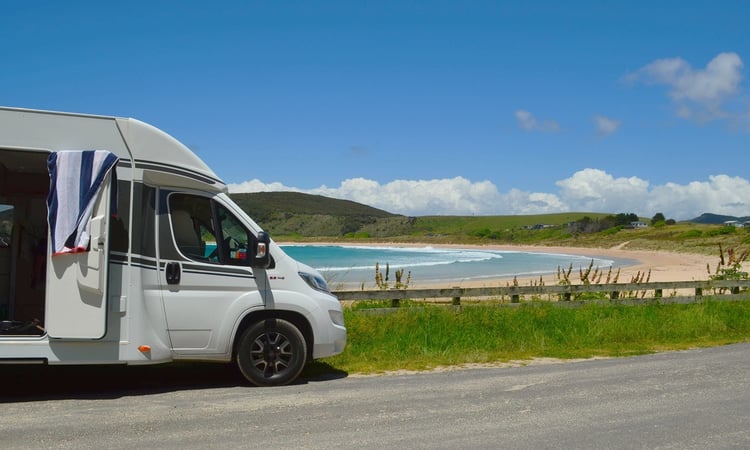
Northland is where New Zealand begins. It is where the first Māori settlers arrived, where the Treaty of Waitangi was signed, where the last great kauri forests still stand, and where the spirits of the dead are said to depart from the cliffs at Cape Reinga. It is also where some of the country's best road trips are.
This 13-day loop leaves Auckland heading north up the east coast, past Shakespear Regional Park, Goat Island Marine Reserve, the Tutukaka Coast, and the Poor Knights Islands. You’ll then head to the Bay of Islands, continue north through Mangonui to Cape Reinga, and return south down the wild west coast through Ahipara, Waipoua Forest, and Kai Iwi Lakes.
Designed around slow travel, it builds in breathing room at the best stops rather than rushing through them. Most driving days are under two hours, so there is always time to linger, relax, and get to know a place properly.
Itinerary highlights
-
Shakespear Regional Park – A mainland island sanctuary at the tip of the Whangaparaoa Peninsula – native bush, glow-worms, and little spotted kiwi after dark.
-
Goat Island Marine Reserve – New Zealand's oldest marine reserve. Snorkel straight off the beach with enormous, fearless snapper and crayfish.
-
Poor Knights Islands – Rated by Jacques Cousteau as one of the world's top ten dive sites.
-
Bay of Islands – a paradise of 144 islands, dolphins, and two of New Zealand's most significant historical sites.
-
Cape Reinga – The top of New Zealand and one of its most sacred sites. Watch the Tasman and Pacific collide from the lighthouse headland.
-
Ninety Mile Beach & Ahipara – A vast west coast strand surrounded by giant dunes, with world-class surf and the best sunsets in the north.
-
Waipoua Forest & Tāne Mahuta – New Zealand's largest living kauri tree – up to 2,500 years old, 51 metres tall.
-
Kai Iwi Lakes – Three crystal-clear freshwater dune lakes, ringed with white sand. Impossibly blue in sunlight.
-
Matakohe Kauri Museum – Arguably the finest small museum in New Zealand, displaying the full story of the kauri logging era that transformed Northland's forests.
Day 1: Auckland to Shakespear Regional Park
Out of the city and onto the peninsula
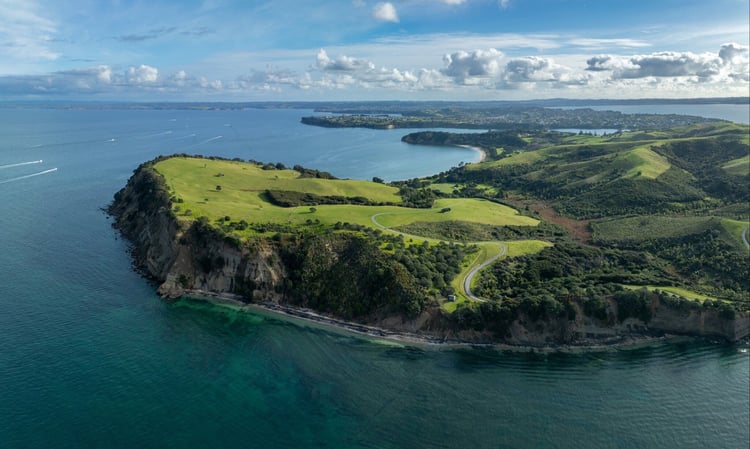
Leave the bright lights of Auckland behind and head north on SH1, turning right at Silverdale onto the Whangaparaoa Peninsula.
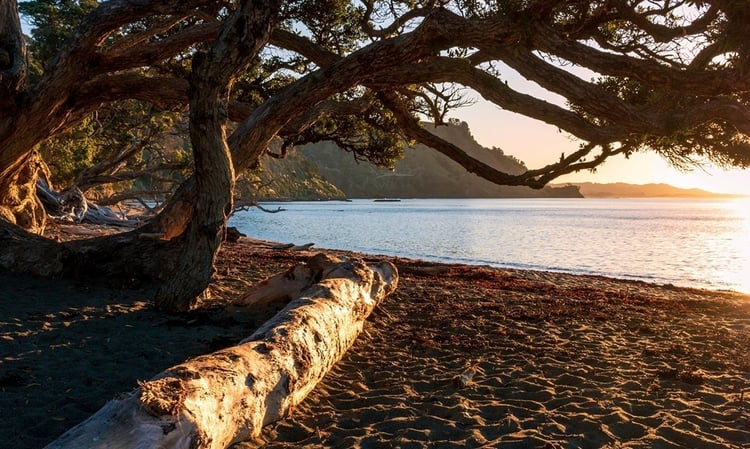
Shakespear Regional Park sits at the peninsula's tip – a beautiful expanse of farmland, native bush, and sweeping coastal views. With pohutukawa-lined beaches, walking tracks through regenerating forest, and abundant birdlife, this is the perfect place to ease into your trip.
Spend the afternoon exploring the various walking tracks and watching the sun set over the Hauraki Gulf.
|
Travel tip Auckland is New Zealand’s biggest city – so as you can probably imagine, the traffic gets bad! To avoid the worst of it, we suggest heading out before 7 am, or else timing your departure between 10 am – 1 pm. It starts piling up quickly during the peak morning and afternoon rush hours, and you can be stuck at a crawl for some time. |
Things to do in Shakespear Regional Park
-
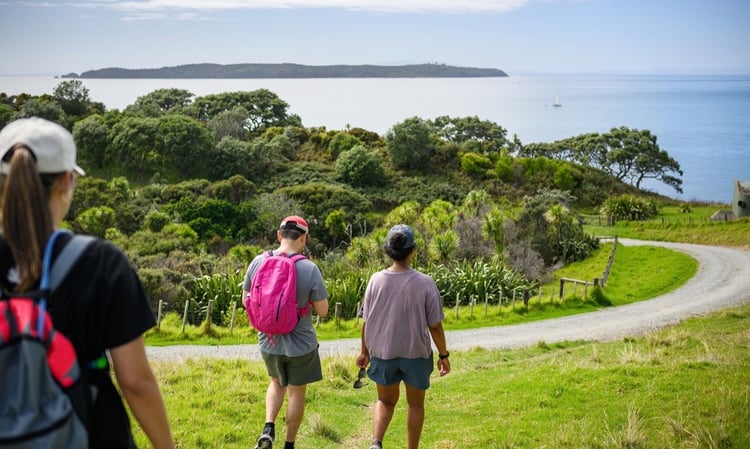
Walk the Lookout Track for 360-degree views – Auckland's skyline one way, the Hauraki Gulf islands the other.
-
Follow the Heritage Trail through rolling farmlands, and say hello to the free-roaming sheep. You’ll pass by huge Puriri trees, as well as the scenic Waterfall Gully.
-
Listen for the soft calls of the little spotted kiwi near Waterfall Gully after dark. Around 20 birds live in the sanctuary; head out in the evening and stay still and quiet if you hear some rustling. If carrying a torch, make sure to use a red light.
-
If the weather is good, grab some snacks and have a picnic. Shakespear has some bookable picnic sites with terrific views.
|
I camped at Shakespear Park with my family when my kids were little, and it's still one of our favourites. Te Haruhi Bay is U-shaped and naturally sheltered, making it wonderfully child-friendly - the water stays calm, and the beach is relatively flat, so toddlers can splash around without being knocked over by waves. We also felt that the water was relatively warm. The campsite was well-serviced, and when we hit a couple of rainy days in a row, we took the kids to Silverdale Adventure Park for a fun day of rides. Renata Jantos — Wilderness Marketing Team Leader |
|
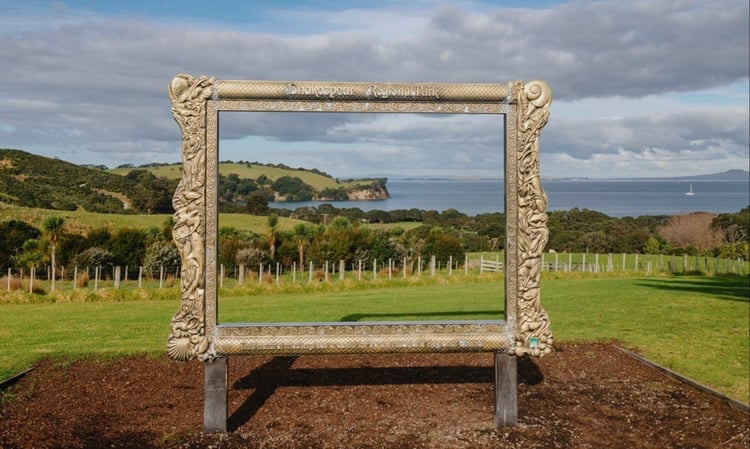
The great wall of Whangaparoa As you enter Shakespear Regional Park, you'll pass through a vehicle gate in the tall predator-proof fence. Drive up slowly, and it will open automatically. Why is this fence here? To protect New Zealand's native birds, which evolved with no mammal predators. Possums, rats and stoats – all introduced by humans – have wiped out native species across the country. Protecting what's left means creating pest-free sites where natives can breed safely. Shakespear does this by fencing off the narrow neck where the peninsula joins the mainland, rather than a full loop – the sea forms the rest of the boundary, so it's a cheap way to seal off a large area. Once the fence went up, all pests inside it were removed, and species like the little spotted kiwi were brought back in. The peninsula has now become a sanctuary for our most fragile species. That's also why the rules matter: dogs aren’t allowed anywhere in the park, and all visitors must disinfect their boots before heading on a hike. This prevents the spread of a fungus which causes kauri dieback disease – both threats are invisible to us, but serious for what's being protected here. |
Distance: 73 km
Time: 1 hr 45 mins
Route: Auckland to Shakespear Regional Park
Stay: Te Haruhi Bay Campground
Resources: Auckland Council – Shakespear Regional Park
Day 2: Shakespear Regional Park to Leigh
The charm of old-world villages
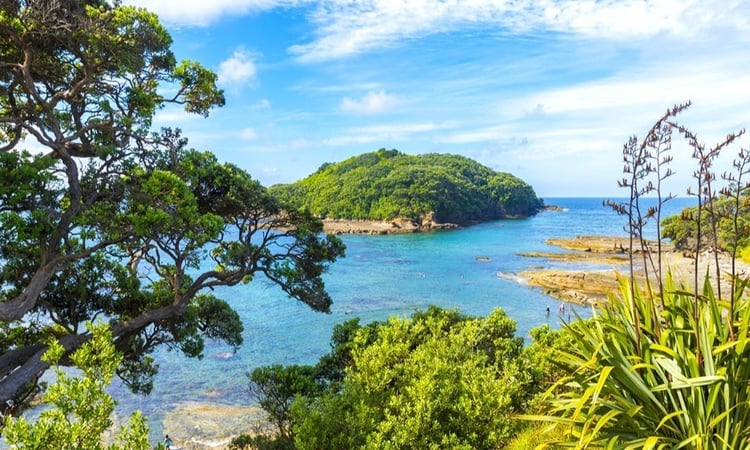
Take a slow morning at the park before rejoining SH1 north. You’ll pass the small coastal town of Orewa before the road climbs and tunnels through to Pūhoi – one of New Zealand's oldest Bohemian settlements, founded by Czech immigrants in 1863. Take a break here to wander the historic church, grab a coffee at the village pub, and take in the old-world atmosphere of one of the country's most distinctive villages.
Continue north to Warkworth, a charming town on the Mahurangi River, before turning east towards the coast and down to Leigh – a small fishing village that's home to New Zealand's very first marine reserve.
Stay the night in Leigh, and explore the star attraction – Goat Island Marine Reserve – a hotspot for divers and snorkellers.
|
Travel tip If you’re heading to Goat Island, check the conditions before diving into the water. Southerly or westerly winds keep the water calm and clear; northerlies or easterlies create large swells, and can make snorkelling unsafe and murky. If in doubt, ask one of the pop-up snorkel stands or the dive & snorkel centre – they’ll know best! The car park also fills up fast on warm days, so arriving early will mean less stress trying to find a parking spot. |
Things to do in Leigh
-
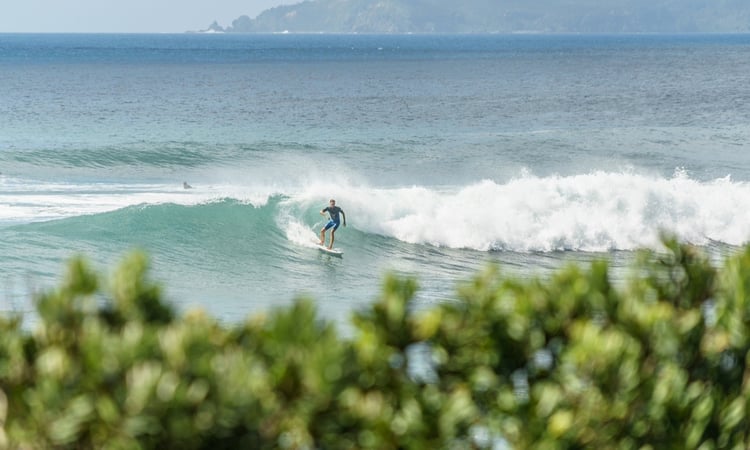
Head to Goat Island Marine Reserve – you have endless options here. You can rent your own snorkelling gear and head out into the water, book a glass-bottom boat tour, or try a scuba dive. Bear in mind that operators generally shut down for the winter season (June – August).
-
Head over to the pristine Pakiri Beach – just a 20-minute drive from Leigh – and take a stroll along the white sand.
-
Head down one of the walking tracks – the Leigh Coastal Walkway is a beautiful 2-hour return walk along the coastline, and the Matheson Bay Bush Walk is a 40-minute stroll along the stream with plenty of waterfalls along the way.
-
Check out upcoming gigs at the Leigh Sawmill Cafe. There are regular lineups of live music in this beautiful, historic venue.
|
How many snapper did you see today? The fish at Goat Island have not been fished since 1975. Fifty years of protection means the snapper here are some of the largest you'll find anywhere on the New Zealand coast, and completely fearless. They’re known for swimming right up to snorkellers and following them. Over 100 marine species have been recorded in the reserve. Alongside the snapper, you'll find schools of bright blue maomao, parore, red moki and wrasse, crayfish tucked into rocky overhangs, and in summer, kingfish and kahawai in the shallows. New Zealand fur seals relax on the outer rocks in winter. The reserve is also a conservation success story. When it was established, the reefs had been grazed almost bare by sea urchins – the result of decades of overfishing their predators. As snapper and crayfish recovered, they ate the urchins back, and the kelp forests returned. What you're swimming through now is a beautifully restored and protected coastline. |
|
I visited Goat Island Marine Reserve recently with my nine-year-old daughter and her friend and it was a brilliant day out. One of the best things about it is how close to shore the sea life is. We didn't have to swim out far at all before the fish appeared. I brought life vests for the kids so they could just float on the surface and look down, completely absorbed in what was beneath them. It took the pressure off swimming and let them fully enjoy the experience. Highly recommend it for families with children. Afterwards, we had a real fruit ice cream sold at the carpark - the perfect summer treat.
Renata Jantos — Wilderness Marketing Team Leader |
Distance: 69 km
Time: 1 hr 10 mins
Route: Shakespear Regional Park to Leigh
Stay: Leigh Central
Resources: Leigh by the Sea
Day 3: Leigh to Whangarei
Exploring Northland’s only city
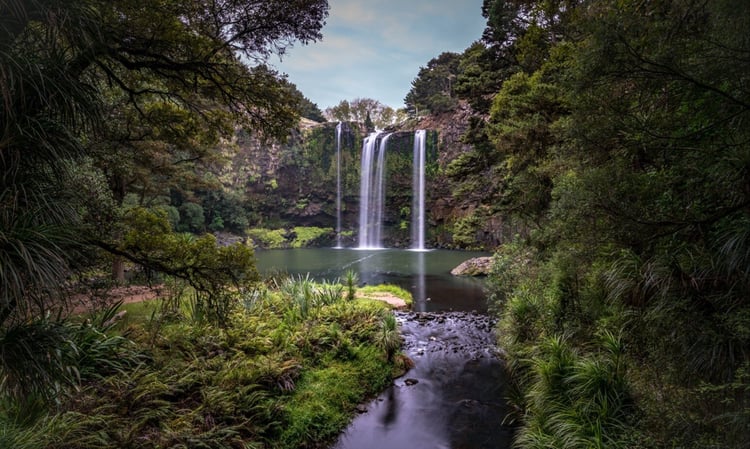
Head back to SH1 and continue north through Wellsford and over the Brynderwyn Hills. The drive is straightforward – mostly open highway with rolling farmland – and Whangarei is about two hours from Leigh. It's worth stopping at Waipu on the way, a small town with a strong Scottish heritage settled by Highlanders who arrived via Nova Scotia in the 1850s. The Waipu Scottish Migration Museum tells the story well if you have time.
|
The last time I stayed in Waipu, we visited the Waipu Glow Worm Caves. There are plenty of glow worms inside and they look absolutely magical. It's a bit of an adventure to get there: you'll need to clamber down some rocks and wade through a small stream inside the cave, so I'd recommend wearing jandals or sandals that you don’t mind getting wet. Wading in barefoot is a bit hard on your feet. A great little nature experience that doesn't cost a thing. Renata Jantos - Wilderness Marketing Team Leader |

Whangarei is Northland's only city, and it’s compact and easy to navigate. It has a beautiful waterfront precinct with good cafés, plus a rich arts scene. Spend the afternoon at the Town Basin, check out the unique Hundertwasser Art Centre, or watch some glass blowing at the Burning Issues Gallery.
|
Travel tip
Large motorhomes can find parking in central Whangarei tricky. The Town Basin car park off Dent Street has free parking but is limited to three hours and is tight for bigger vehicles. The Bascule carpark near the Te Matau a Pohe bridge is the closest freedom camping option for self-contained vehicles, with toilets on site, but it fills up fast in summer. Your best bet is to base yourself at one of the holiday parks a short drive from the centre – Whangarei Top 10 is about 2 km from the Town Basin – and drive or walk in from there. |
|
Josi Krebs — Wilderness Digital Content Creator |
Things to do in Whangarei
-
Walk the Hatea Loop from the Town Basin along the river. This beautiful path passes public sculptures, heritage panels and the iconic Te Matau a Pohe bascule bridge – Whangarei's opening drawbridge. Allow about an hour for the walk.
-
Visit the Hundertwasser Art Centre, featuring 80+ original works by the eccentric Austrian-born artist and architect, Friedensreich Hundertwasser. You can also explore the Wairau Māori Art Gallery on the ground floor, which is dedicated to contemporary Māori fine art.
-
Browse Clapham's National Clock Museum at the Town Basin – a collection of 1,600 clocks and timepieces housed in a sundial-shaped building.
-
Treat yourself to one of New Zealand’s best restaurants – The Quay. The diverse menu features seafood, burgers, pizza, steak, and Pasifika-inspired dishes, with a strong emphasis on local sourcing.
-
Watch glassblowing at the Burning Issues Gallery in the Town Basin, where working glass artists produce and sell their work on site.
-
Visit the Kiwi House at Kiwi North — Northland's only nocturnal house, where the lighting turns day into night so the kiwi are active during visiting hours. Watch them foraging and interacting in their enclosure as they would in the wild. The same site also houses native geckos (well camouflaged and worth finding) and invertebrates, including wētā and stick insects.
|
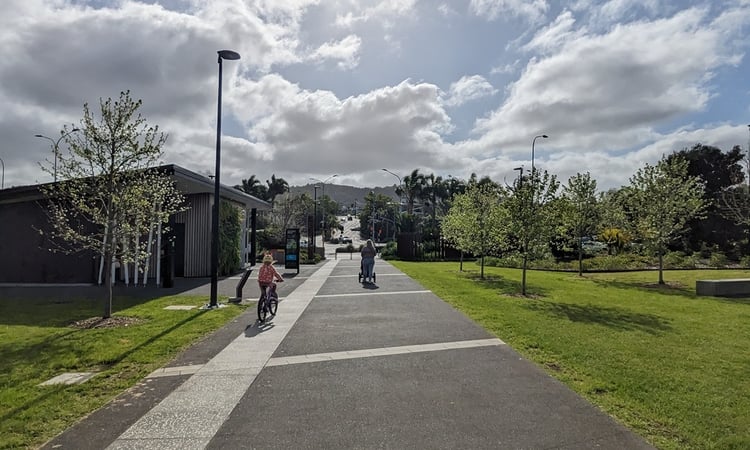
There's a fantastic playground, and if you bring wheels — bikes, scooters, or skateboards — the cycleway runs all the way through town and beyond, with smooth, good-quality pavement.
In summer, the water fountains are a hit with kids needing to cool down.
And don't miss the fascinating mechanical clock that uses rolling balls to display the time. That's all on top of the glassblowing and the Hundertwasser Art Centre, making Whangarei well worth a stop. Renata — Wilderness Marketing Team Leader |
|
A crusade against straight lines Friedensreich Hundertwasser was an Austrian artist and architect who became one of the most distinctive creative figures of the 20th century. He famously hated straight lines, which he called "the devil's tools," and designed buildings that look like they grew organically from the ground. His buildings in Vienna are major tourist attractions. What most people don't know is that he spent the last 30 years of his life in the Bay of Islands, becoming a New Zealand citizen and planting over 100,000 native trees on his property near Kawakawa. In 1993, he sketched plans to transform a building on Whangarei's waterfront in his signature style. He died in 2000 before it happened, and for years the project stalled and was nearly shelved for good. In 2015, the community voted on three options: build it, build a maritime museum, or demolish the building. Just over half voted to build it. The result opened in 2022 – undulating floors, colourful ceramic columns, irregular windows, and a golden cupola – and this is the last Hundertwasser building ever to be constructed to his original designs. It houses the largest collection of his works outside Vienna alongside the Wairau Māori Art Gallery. |
Distance: 120 km
Time: 1 hr 45 mins
Route: Leigh to Whangarei
Stay: Whangarei Top 10 Holiday Park
Resources: Whangarei NZ
Day 4: Whangarei Day – Tutukaka & Poor Knights Islands
A whole new world underwater
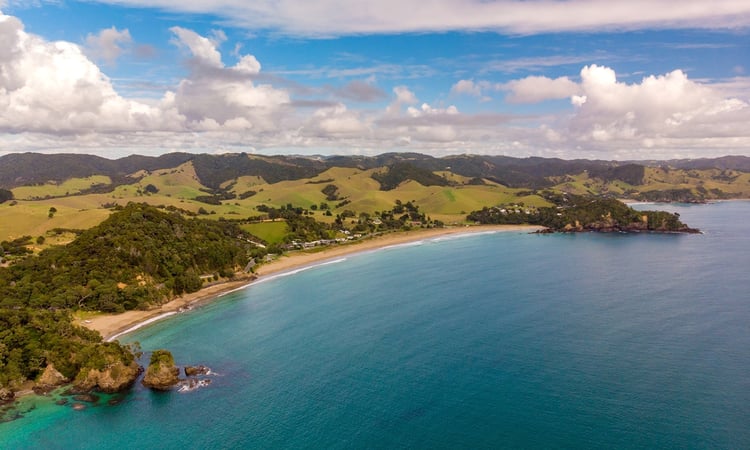
Today you're staying put in the Whangarei region, and the reward for that is one of the great diving and snorkelling experiences in the world.
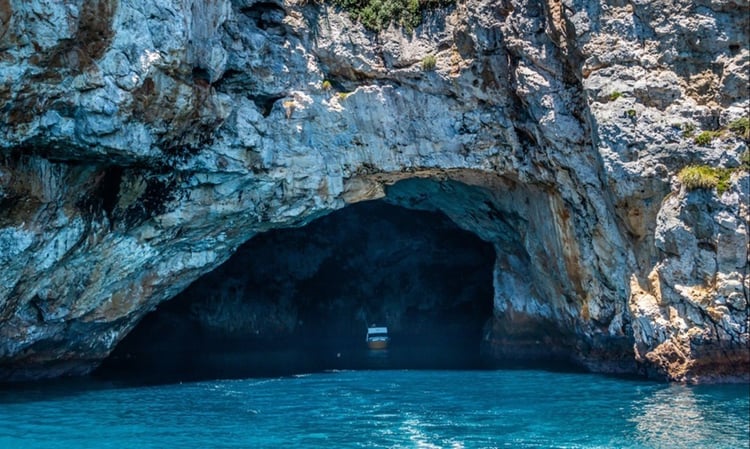
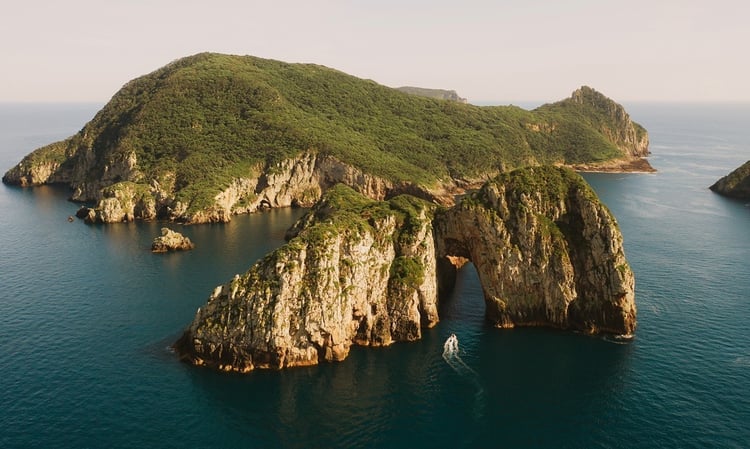
Drive east on SH14 to Tutukaka Marina, about 30 minutes away from town, and board a boat out to the Poor Knights Islands. The islands are the eroded remains of ancient volcanoes, and what that geology has created underwater is extraordinary: vast sea caves, tunnels, arches and walls dropping from a few metres down to 90 m, all fed by warm currents sweeping south from the Coral Sea.
Jacques Cousteau rated the Poor Knights among the top ten dive sites in the world in 1979. Over 120 species of fish have been recorded here, many of them subtropical species found nowhere else in New Zealand.
You don't need to be a scuba diver. Dive! Tutukaka's "Perfect Day" cruise caters for everyone – snorkellers, kayakers and paddleboarders included!
|
Travel tip
Book your cruise well in advance, particularly in summer. Dive! Tutukaka is the main operator, and trips fill up fast. Check the website for availability before you commit to dates for this leg of the trip. Trips can be cancelled in rough weather, so a two-night stay in Whangarei gives you a fallback day if conditions aren't right. |
Things to do at Tutukaka & Poor Knights Islands
-
Head out snorkelling the Poor Knights with Dive! Tutukaka – it runs snorkel, kayak and paddleboarding trips suited to all experience levels, including first-timers.
-
If you’re a certified scuba diver, head out on Dive! Tutukaka’s scuba tour to experience some of the best subtropical diving in the world.
-
Look for the Blue Maomao Arch – a low archway where shafts of sunlight filter through rock and thousands of fish cover the walls.
-
Watch for dolphins on the crossing – common and bottlenose dolphins are regularly spotted, and orca, minke and pilot whales are occasionally seen.
-
Spend the evening in Tutukaka, a small, pretty coastal village with good food and one of the best views on the Northland coast. Dine at Schnappa Rock – its menu is built around what's growing in its own spray-free garden and what's been caught or sourced locally that day.
|
An isolated bird sanctuary The Poor Knights are entirely off-limits to people on land – no one is permitted to set foot on the islands. After a Māori settlement was massacred in 1823, the islands were declared tapu (sacred and restricted), and they've been largely undisturbed ever since. That isolation has made them one of New Zealand's most significant seabird sanctuaries, home to more than a million birds, including the endangered Buller's shearwater – the only place on earth where it breeds. The surrounding waters are the only area where people are allowed to explore. |
Distance: 60 km (return)
Time: 1 hr (return)
Route: Whangarei to Tutukaka
Stay: Whangarei Top 10 Holiday Park
Resources: Explore Tutukaka
Day 5: Whangarei – Matapouri & Whananaki
The winding road north
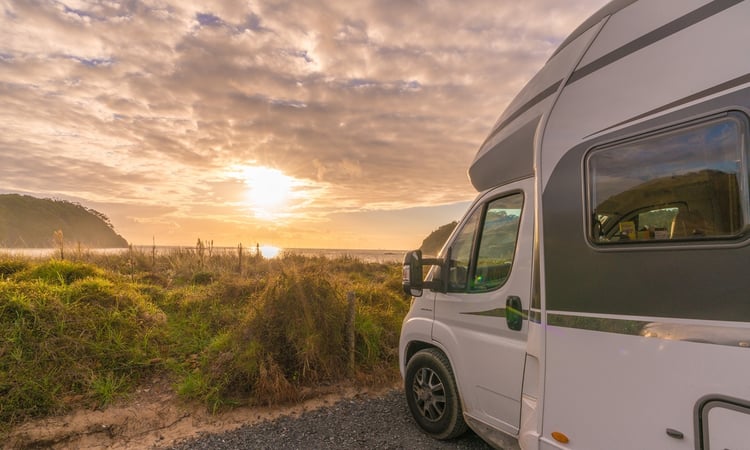
Leave Whangarei and head north on the Tutukaka Coast road rather than SH1 – it's longer but considerably more rewarding, winding through pohutukawa-lined bays and small coastal communities with the sea visible at every turn.
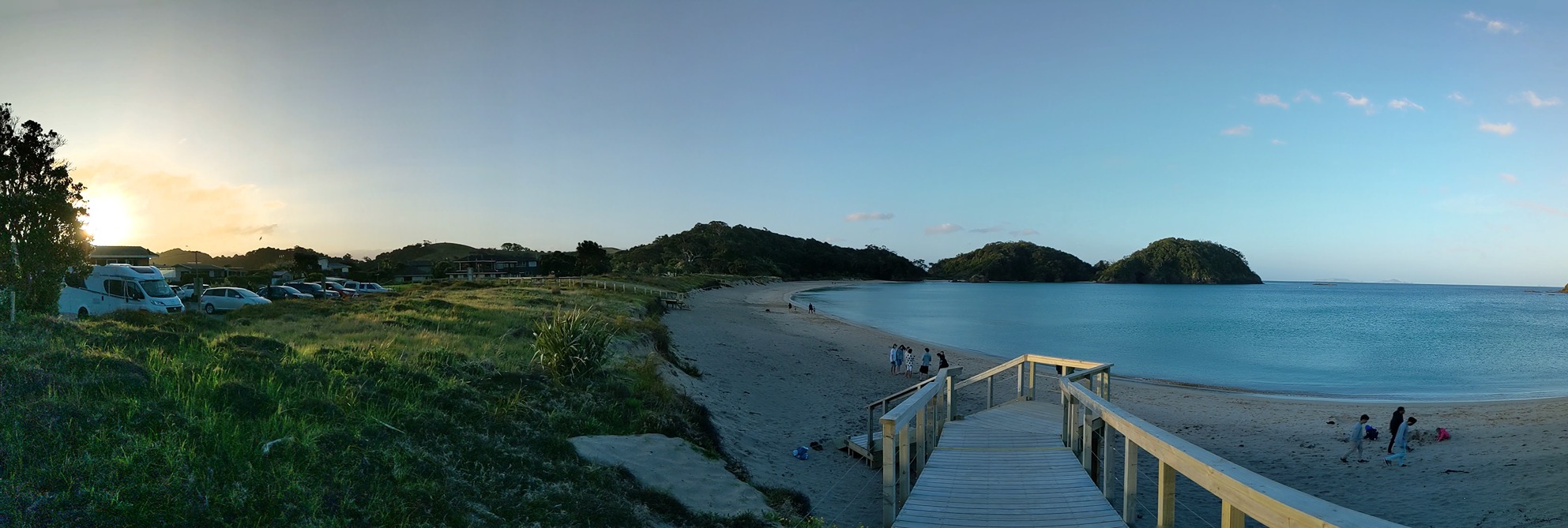
The first stop is Matapouri Bay, a near-perfect horseshoe of white sand with shallow, turquoise water sheltered by low headlands on both sides. Take the short coastal walk to Whale Bay, a secluded beach only accessible on foot, for a quieter spot away from the main beach.
|
What I loved about Matapouri was the freedom camping spot right by the beach. We spent our evening watching the full moon rise over the water — one of those simple moments that stays with you.
Renata — Marketing Team Leader |
Continue north to Whananaki, a small coastal community split across an estuary. It’s connected by the longest footbridge in the Southern Hemisphere – 395 metres of weathered timber built in 1947, so children from Whananaki South could get to school on the north side.
|
Travel tip The Mermaid Pools at Matapouri, natural rock pools over the headland, are world-renowned for their crystal clear water. However, they have also suffered from heavy visitor numbers and are currently under a rāhui – a cultural closure placed by the local Māori hapū (tribe) to allow the ecosystem to recover from the impact. Please respect the closure and don't attempt to access them. The beach itself and the walk to Whale Bay are both well worth your time. |
Things to do in Matapouri & Whananaki
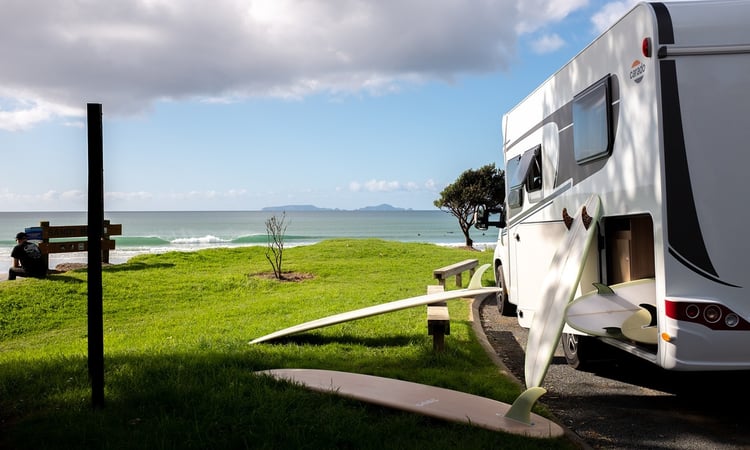
-
Swim at Matapouri Bay. It's sheltered, shallow and calm on most days, and there’s good snorkelling around the rocky reef edges at either end of the bay.
-
Walk to Whale Bay (about 20 minutes each way from the northern end of Matapouri Beach). Because it's only reachable on foot or by water, it stays quiet even in summer – a longer arc of sand with no facilities and usually very few people.
-
Cross the Whananaki Footbridge – 395 metres of weathered timber planking, three planks wide.
-
Follow the Whananaki Coastal Walkway from the north end of the bridge for views back over the estuary and out to the open coast. It’s a great leg-stretch after the drive. The full walk takes around six hours, so turn around whenever you’d like!
-
Fish from the rocks at either end of Matapouri Bay or off the Whananaki estuary bank at dusk, when the light drops and the place goes very quiet.
|
In my day, we crossed a three-plank bridge to get to school Whananaki is a small coastal community split in two by an estuary. For years, getting from one side to the other meant a long detour by road. This was a particular problem for the children of South Whananaki, who had to make that journey every day to reach the school on the north side. In 1947, the community built a footbridge straight across the water. It's 395 metres long, three planks wide, made from local timber, and it is still the longest footbridge in the Southern Hemisphere. Walk it yourself, and you can look down through the gaps in the planks at the water below – on a calm day, you'll often see stingrays passing underneath. |
Distance: 72 km
Time: 1 hr 30 mins
Route: Whangarei to Matapouri & Whananaki
Stay: Whananaki Holiday Park
Resources: Whananaki NZ
Day 6: Whananaki – Paihia & the Bay of Islands
A coast rich with history
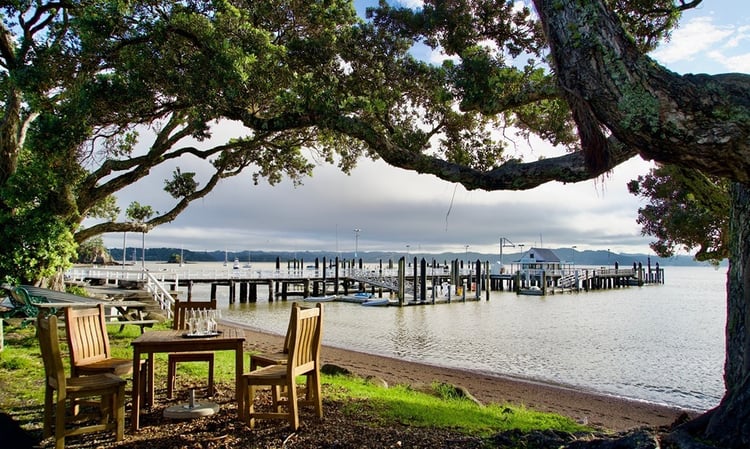
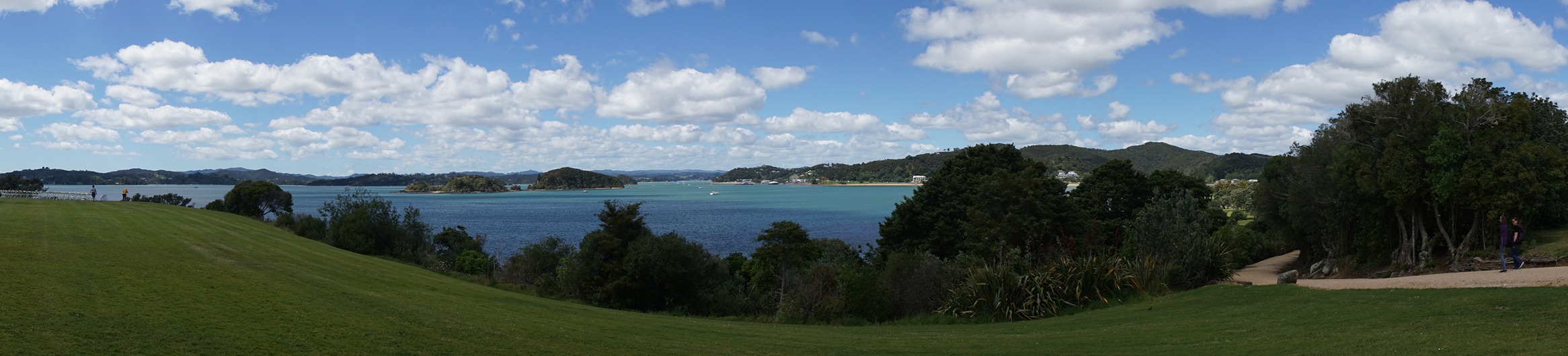
Head north on SH1 through rolling Northland farmland. The coast will appear in glimpses as you near the Bay of Islands, and the time you descend into Paihia, you’ll see the bay spread out below you – 144 islands scattered across sheltered blue water.
This is one of the most historically significant stretches of New Zealand coastline. Start the afternoon with the ferry across to Russell, just 15 minutes from Paihia Wharf. Russell today is a quiet, pretty waterfront village, which makes it hard to believe it was once called the "hell hole of the Pacific”!
New Zealand's oldest church, Christ Church (built 1835), sits peacefully in the middle of it all and still bears the musket and cannonball holes from the 1845 Battle of Kororāreka, when chief Hōne Heke and his allies attacked and burned the town in protest against British colonial authority.
Back in Paihia, the Waitangi Treaty Grounds are a five-minute drive north and deserve a full two to three hours. This is where the Treaty of Waitangi was signed in 1840 – the founding document of New Zealand as a nation.
|
Travel tip
|
Things to do in Paihia
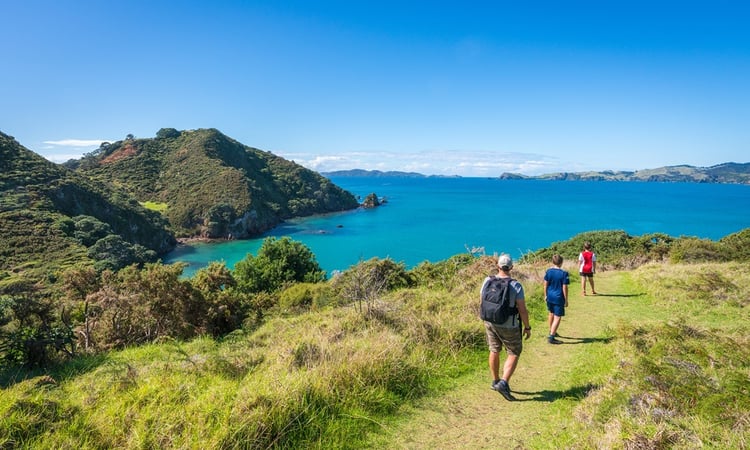
-
Take the passenger ferry from Paihia Wharf to Russell and walk the waterfront to Christ Church, New Zealand's oldest surviving church, built in 1835.
-
Walk up Flagstaff Hill (Te Maiki) in Russell – a steep 15-minute climb from the waterfront – to the site where Hōne Heke famously cut down the British flagpole four times, and panoramic views across the bay.
-
Visit the Waitangi Treaty Grounds. Allow 2–3 hours for the guided tour, cultural performance in the carved meeting house, and the museum.
-
Walk the Paihia to Opua Coastal Walkway (about 1.5 hours one way) for views across the bay through native bush. The trail is flat and easy, and you can take a water taxi back if needed.
-
Walk to Haruru Falls, a wide horseshoe waterfall, a short drive or 6 km river trail from Paihia along the Waitangi River.
-
Grab your morning pick-me-up at Third Wheel Coffee Co, and sample their great range of vegan and gluten-free cabinet food.
|
New Zealand’s founding document
|
Distance: 69 km
Time: 1 hr 10 mins
Route: Whananaki to Paihia
Stay: Paihia Top 10 Holiday Park
Resources: Paihia NZ
Day 7: Paihia Day – Bay of Islands
Out among the islands
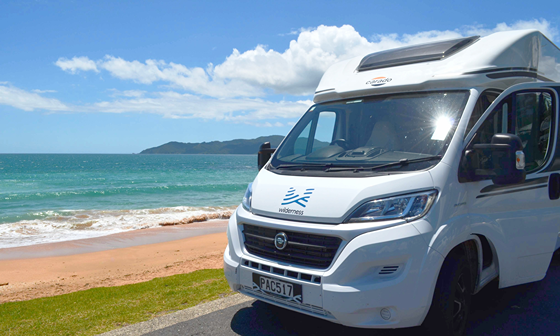
Today, the motorhome stays put. The Bay of Islands has 144 islands, sheltered water in every direction, and more ways to spend a day on it than you'll have time for. Pick one or two things and do them properly.
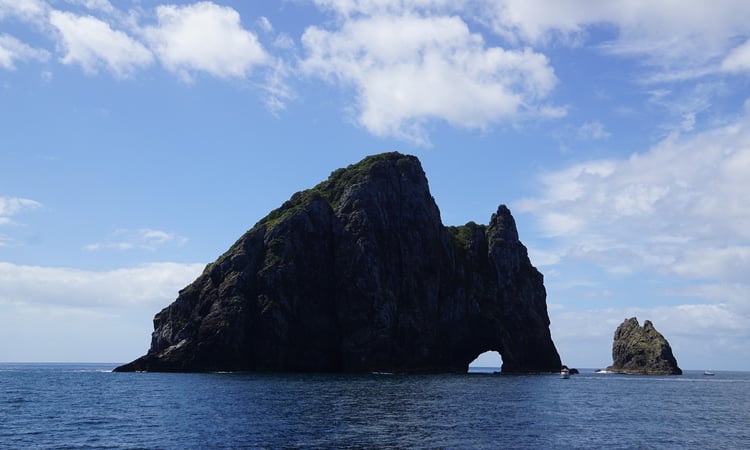
The signature experience is the Hole in the Rock cruise – a full or half-day boat trip out to Motukokako Island at Cape Brett, where the boat passes through a natural archway in the rock face at the right tide and sea conditions. The journey out takes you through the islands, and dolphins are a regular sighting along the way.
If you'd rather something quieter, hire a kayak from Paihia and paddle to one of the closer islands at your own pace – the bay is sheltered enough for confident beginners.
Things to do in the Bay of Islands
-
Join a Hole in the Rock cruise from Paihia Wharf. Full-day and half-day options available, most including island stopovers and swim opportunities along the way.
-
Book a dolphin watching tour. Common and bottlenose dolphins are resident in the bay year-round, with orca occasionally spotted in winter.
-
Hire a kayak or paddleboard from Bay Beach Hire and explore the bay independently. Guided half-day kayak tours are also available for those who want local knowledge.
-
Charter a fishing boat for a morning's deep-sea fishing in the bay – snapper, kingfish and marlin depending on the season.
-
Head to The Blue Door for some fresh fish and chips, a cocktail, and some great beach views.
|
Can you spot some rare visitors? The Bay of Islands has two very different dolphin stories happening at once. Common dolphins visit in large pods – sometimes hundreds at a time – and are a frequent sighting on any cruise. The bottlenose dolphins are another matter entirely. The local bottlenose population has declined to the point where DOC now classifies it as critically endangered within the bay, with only around 26 individuals recorded visiting the area. The Bay of Islands is a designated Marine Mammal Sanctuary, partly in response to this, with strict rules around how close boats can approach and how long they can stay near a pod. If you see bottlenose dolphins on your cruise, you're looking at a small and carefully monitored community. |
Stay: Paihia Top 10 Holiday Park
Resources: Best Bay of Islands Attractions
Day 8: Paihia – Mangōnui via Matauri Bay
The far north’s most famous lunch
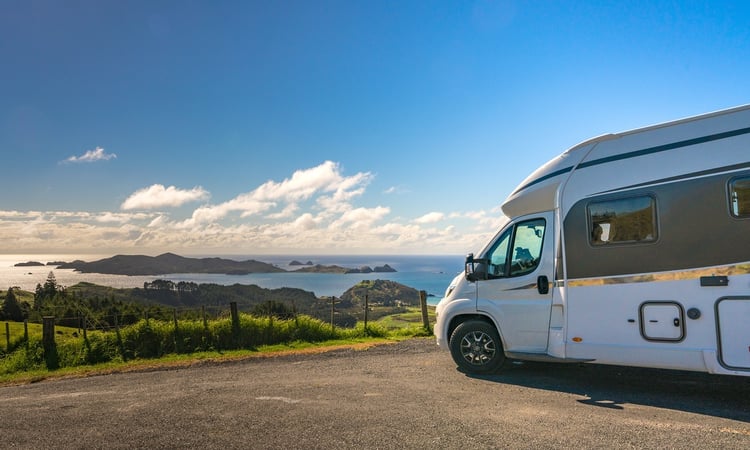
Head north out of Paihia on SH10, winding through farmland with occasional glimpses of the Karikari Peninsula.
The first stop is Matauri Bay, about an hour north of Paihia. Pull into the holiday park at the northern end of the bay and walk the short track up to the memorial for the Rainbow Warrior – the Greenpeace vessel sunk by French agents in Auckland Harbour in 1985. The ship now rests on the seabed near the Cavallis as an artificial reef and dive site.
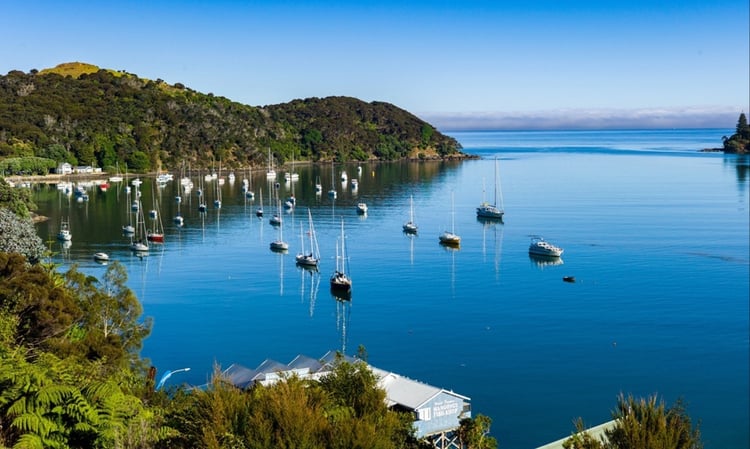
From Matauri Bay, continue north on SH10 to Mangōnui – one of the oldest ports in New Zealand and one of the most intact. The waterfront is lined with 150-year-old buildings housing cafés, galleries and craft shops, and the whole place moves at a pace that suits it. Lunch at the Mangōnui Fish Shop is a Northland rite of passage. It serves fish landed at the wharf next door, and can be eaten on the deck over the water.
|
Travel tip The Mangonui Fish Shop is well known and busy in summer – arrive early for lunch or expect a queue. The fish is landed at the wharf directly next door, so what's on offer depends on what came in that morning. |
Things to do in Mangōnui
-
Lunch at the Mangonui Fish Shop on the waterfront. Eat on the deck over the water with fishing boats moored alongside.
-
Walk the Mangonui Heritage Trail (3 km, about 1.5 hours on foot) through the village, taking in 18 heritage buildings, including the 1892 courthouse, now an art gallery.
-
Climb to Rangikapiti Pā Historic Reserve above the village for panoramic views over Doubtless Bay. It’s a short but steep walk with a significant Māori fortification site at the top.
-
Swim at Coopers Beach, a pohutukawa-lined stretch of golden sand a short drive west of Mangonui, popular with locals and calmer than the open coast.
-
Check out Jesse’s on the Waterfront for the best pizza in town.
|
What happened to the Rainbow Warrior
|
Distance: 103 km
Time: 1 hr 30 mins
Route: Paihia to Mangōnui via Matauri Bay
Stay: Hihi Beach Top 10 Holiday Park
Resources: Mangōnui NZ
Day 9: Mangōnui – Cape Reinga
The end of a journey – or the start of one
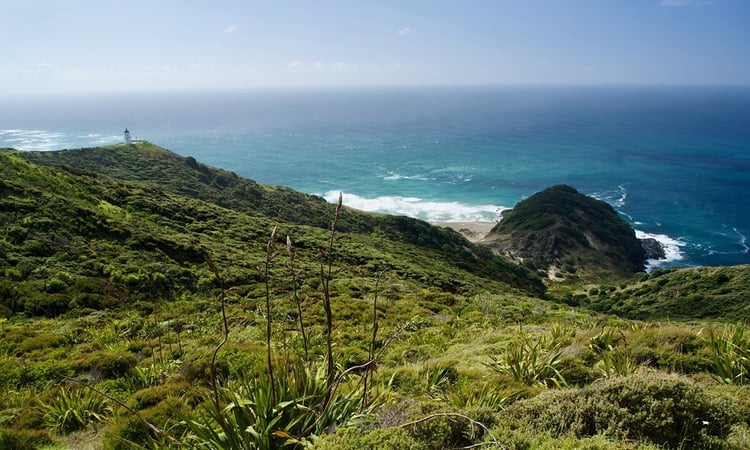
Today, you reach the northernmost point of New Zealand – a place that has marked the start and end of journeys for centuries.
Head north through Kaitaia and follow SH1 as it runs parallel to Ninety Mile Beach. The beach itself stretches away to the west: a vast, unbroken sweep of hard sand backed by dunes, with the Tasman Sea hammering in from the left.
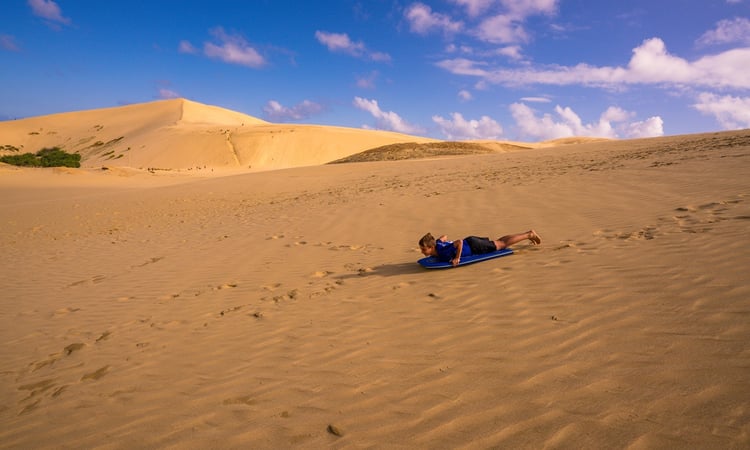
Stop at Te Paki Stream for tobogganing down the giant sand dunes. The stream cuts through to the beach, and the dunes rise steeply on either side. There are pop-up stands where you can rent a board to surf the sand.
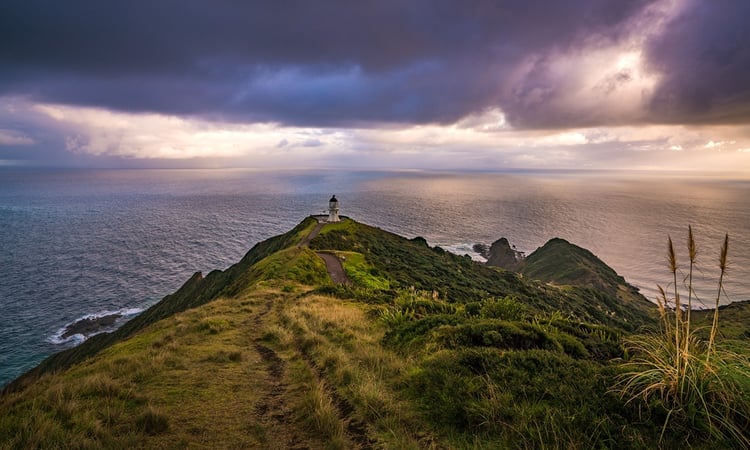
From here it's a short drive to the car park at Cape Reinga. Walk the path down to the lighthouse and take in the stunning views. The Tasman Sea and the Pacific Ocean meet just offshore in a visible churning rip – two bodies of water, two different colours, colliding in open water. On a windy day, which is most days, the headland feels elemental.
|
Travel tip There is no food or fuel available at Cape Reinga – fill up and stock up in Kaitaia before heading north. The road is now fully sealed all the way to the cape, but it's narrow and winding in places. Allow more time than the distance suggests. |
Things to do in Cape Reinga
-
Stop at Te Paki Stream (well signposted off SH1) and toboggan down the giant sand dunes. You can hire a boogie board from the operators at the stream crossing. The dunes drop steeply to the beach below, and the stream provides a flat walk back.
-
Walk from the cape car park down to the lighthouse – about 800 metres each way on a sealed path with views across both oceans.
-
Stand at the lighthouse and watch the tidal rip where the Tasman and Pacific meet. The line where the two seas collide is often clearly visible as a change in colour and texture in the water.
-
Read the informative signs along the walkway, which explain the spiritual significance of the site and the journey of the spirits in detail.
-
Walk a little of the Te Araroa Trail – a 3,000 km walk across the full length of New Zealand, starting or ending at Cape Reinga. If you arrive early in the morning in the spring or summer seasons, you’ll often see hikers with big backpacks setting off on their long journey.
-
Visit Tapotupotu Bay, 5 km before the cape – a sheltered tidal estuary with a small DOC campsite and swimming, a quieter spot for lunch before or after the cape. You can also choose to stay here overnight.
|
If you want to get a couple of hours of walking in, I’d definitely suggest following the Te Paki Track all the way down to the beach. It’s a great taste of what the start of the Te Araroa Trail feels like, and it’s quite an experience to imagine walking on this stretch of coastline for days on end! The Tasman Sea on one side and the rugged sand dunes on the other make for some truly spectacular scenery. Ksenia Stepanova — Lead Content Writer at Wilderness |
|
The end of a journey For Māori, Cape Reinga is the most spiritually significant place in New Zealand. After death, the spirits of the dead travel north along Te Ara Wairua – the Spirits' Pathway – to this headland. Here, a solitary 800-year-old pōhutukawa tree clings to the cliff face. The spirits descend its roots into the sea, travel underwater to the Three Kings Islands, rise to the surface for one last look back at the land, and then continue to Hawaiki, the ancestral homeland. The tree is said never to flower. The name Cape Reinga comes from the Māori word for underworld. The full name, Te Rerenga Wairua, means the leaping-off place of spirits. Every Māori who has ever died is believed to have passed through here. It’s hard not to feel the spiritual significance of this place, so savour your time here. |
Distance: 138 km
Time: 1 hr 55 mins
Route: Mangōnui to Cape Reinga
Stay: Kapowairua (Spirits Bay) Campsite or Tapotupotu Bay Camping Area
Resources: Cape Reinga NZ
Day 10: Cape Reinga – Ahipara
The last stop on the longest beach
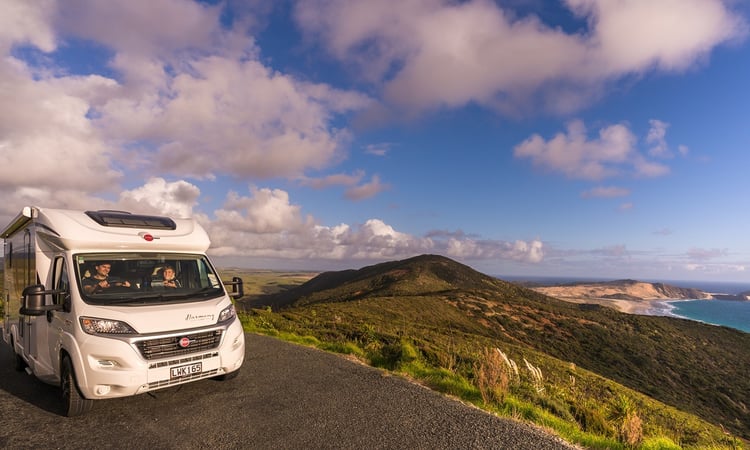
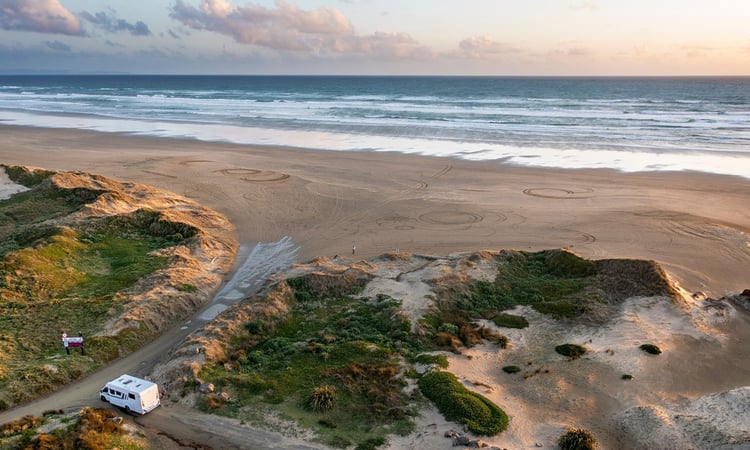
Leave the cape and head back down the spectacular winding road that you drove in on. The drive down SH1 runs roughly parallel to Ninety Mile Beach, the Tasman side of the peninsula, and you'll catch glimpses of it through the dunes. Pull over at one of the beach access points to walk down and see it – a vast, hard-packed strip of sand stretching south as far as the eye can reach, with nothing but surf and sky beyond it.
You’ll see four-wheel drive vehicles driving up and down the beach, but don’t be tempted to take your motorhome onto the sand. It’s a much heavier vehicle without any off-road capability, so it will get stuck!
Ahipara sits at the southern end of Ninety Mile Beach, where the sand runs out at Reef Point. It's a small, relaxed surf community – a few streets, a beach, and a slow pace of life. The sunsets here, with the Tasman open to the west, are exceptional.
|
Travel tip Ahipara is an off-season gem. In summer, it fills up with locals from Kaitaia and further south, and the beach buzzes with quad bikes and families. But if you're travelling in shoulder seasons, you may have whole stretches of the beach largely to yourself. Either way, book your stay in advance as campsite options are limited. |
Things to do in Ahipara
-
Walk or drive to Shipwreck Bay (end of Wreck Bay Road) to watch the surf at the point break.
-
Sandboard the Ahipara sand dunes. Walk along the beach south from the end of Foreshore Road (about 45 minutes, timed around the tide) to the dunes behind Reef Point. You can hire boards locally.
-
Hire a blokart – a small wind-powered land cart – from Ahipara Adventures and take it onto the hard sand flats at low tide. Lessons are offered for complete beginners.
-
Horse trek on the beach with Ahipara Horse Treks. They offer two-hour rides along Ninety Mile Beach and the gentle headland country behind the town, suitable for beginners.
-
Learn the tuatua twist – a local method of catching clams at low tide. Stand in the shallows and twist your feet in the wet sand until you feel the hard edges of tuatua shellfish below the surface, then reach out and grab them. Steam them that evening.
|
The wave that made it into the movies Ahipara's name means 'sacred fire' in te reo Māori, a reference to a fire kept constantly burning by the local Te Rarawa people. The town has another claim to fame among surfers: Shipwreck Bay, just to the south of the township, is considered one of the best left-hand point breaks in Australasia, and was first brought to international attention in the 1966 surf film Endless Summer. At low tide, the wrecks the bay is named for are still partially visible on the reef. |
Distance: 124 km
Time: 1 hr 50 mins
Stay: Ahipara Top 10 Holiday Park
Resources: Ahipara NZ
Day 11: Ahipara – Kai Iwi Lakes via Waipoua Forest
An ancient canopy of trees
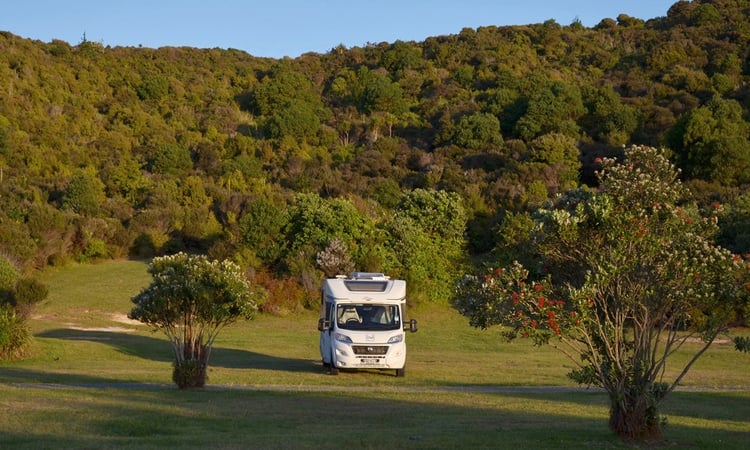
Head south from Ahipara on SH12 through Broadwood to Kohukohu. You have two options today – you can take the ferry across the Hokianga Harbour to Rawene, which is a 15-minute crossing with good views of the harbour and the golden dunes on the northern headland. From Rawene, SH12 continues south through Waipoua Forest and on to Kai Iwi Lakes. If you'd prefer to stay on the main road, you can take SH1 south via Kaitaia and Kaikohe. It is the slightly faster option, though it bypasses Waipoua Forest.
As you drive into Waipoua Forest, the road will narrow, and the canopy will start closing in overhead. Pull over at the Tāne Mahuta car park and walk the short track in. A huge tree appears around a bend – 51 metres tall, nearly 14 metres in girth, somewhere between 1,250 and 2,500 years old. No photograph prepares you for the scale of it.
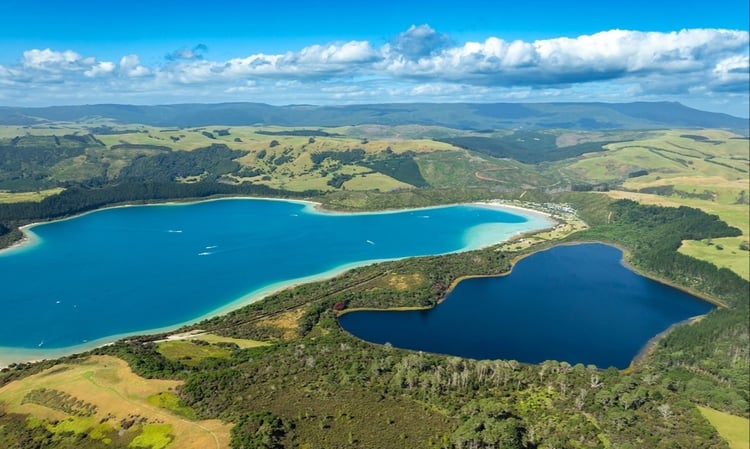
Continue south to Kai Iwi Lakes – three freshwater dune lakes ringed with white sand. The water is so clear that you can see the bottom dropping away steeply at the edge of the shallow beach. Arrive in the afternoon and take a swim before setting up camp.
|
Travel tip The Hokianga ferry runs between Kohukohu and Rawene roughly every hour during the day, but times vary by season, and it doesn't run late in the evening. Check the timetable before leaving Ahipara so you're not sitting on the wrong side of the harbour waiting for a crossing that's already done for the day. |
|
If you make it out to Kai Iwi Lakes, you absolutely have to explore the coast properly. Walking through the ancient Waipoua Kauri Forest is incredible, and the Omapere Signal Station walk gives you some of the best coastal views in the region.
Josi Krebs — Digital Content Creator at Wilderness |
Things to do in Kai Iwi Lakes
-
Walk the Tāne Mahuta track (10 minutes return, fully accessible) from the SH12 car park.
-
Book a twilight tour of the forest with Footprints Waipoua – a guided night walk with local guides from Te Roroa, the iwi of Waipoua, focused on the forest's ecology, history and significance.
-
Swim at Pine Beach on Lake Taharoa – the main swimming area, with a shallow sandy entry that drops away quickly into very deep, very clear water.
-
Kayak or paddleboard on Lake Taharoa. You’ll have calm, still water in good weather, especially early morning, before any wind arrives.
-
Walk the Kai Iwi Lakes Coastal Track, which takes you all the way out to Kai Iwi Beach.
|
A fish found nowhere else on earth The Kai Iwi Lakes are home to the dune lake galaxias – a small native fish that exists nowhere else in the world. Cut off from the sea by the sand dunes that formed the lakes, it evolved in complete isolation over thousands of years. It's now at risk and found only in two of the three lakes, largely because of introduced rainbow trout, which were stocked for recreational fishing and prey directly on the galaxias. Since 2018, releasing trout into these lakes has been banned as part of a conservation plan to protect the native fish. |
Distance: 161 km (via ferry), 208 km (via SH1)
Time: 3 hrs 15 mins
Route: Ahipara to Kai Iwi Lakes
Stay: Pine Beach Campground
Resources: Kai Iwi Lakes NZ
Day 12: Kai Iwi Lakes to Matakohe
The remains of the kauri giants
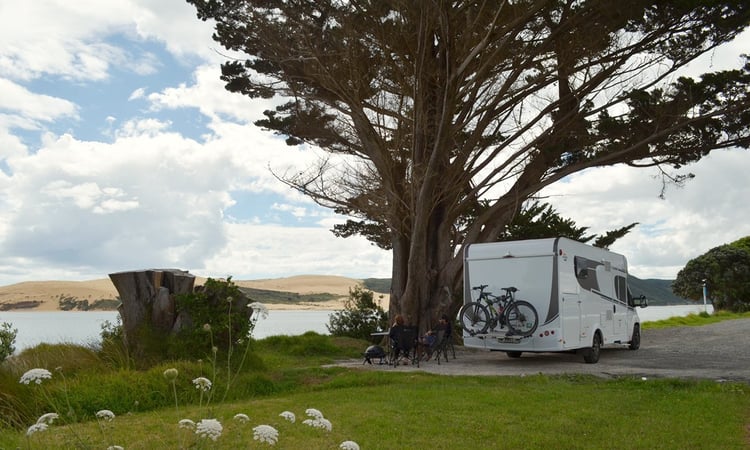
Head south on SH12 through the Kaipara, allowing a stop in Dargaville if you need supplies before arriving in Matakohe.
The Kauri Museum is the reason to be here. Over 4,500 square metres of exhibits tell the full story of the kauri timber industry – the felling, milling, transporting and selling of a forest that once covered most of Northland. There's a working reproduction of a steam sawmill, the world's largest collection of kauri gum, and a full-size recreated boarding house from the 1880s. The walls show the circumference outlines of felled trees, one of which measures 8.5 metres – wider even than Tāne Mahuta.
Allow at least two hours to experience the museum properly. The Gumdiggers Café across the road is a good spot for lunch.
|
Travel tip If you're visiting with kids, the museum runs Object Treasure Hunts throughout the exhibits in easy, medium and hard versions, which give children a great way to engage with the displays rather than trail behind the adults. They're worth picking up at the entrance. |
Things to do in Matakohe
-
Spend the morning at the Kauri Museum. The sawmill, the gum collection, the recreated boarding house, and the kauri furniture collection are all worth time.
-
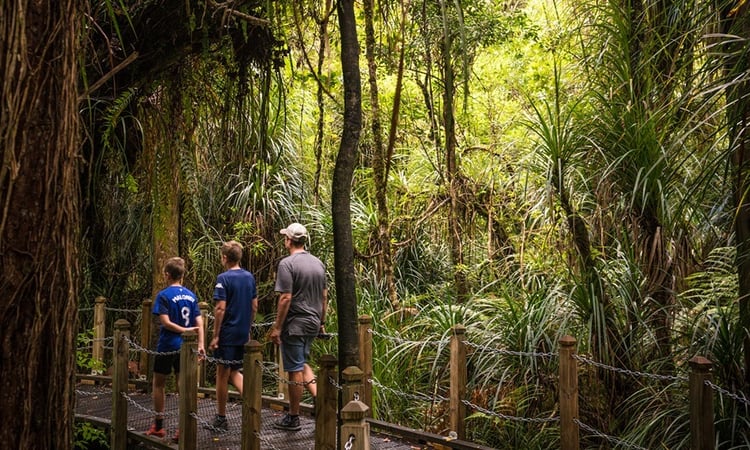
Walk the Kauri Bushman’s Walk – a short boardwalk loop (15 minutes) through a small kauri grove 3.6 km from the museum on Sterling Road.
-
Head to the Gumdiggers Café for lunch opposite the museum.
-
Visit Totara House, the historic villa adjacent to the museum grounds.
|
The trees that built a country Kauri tree timber was among the most valuable in the world. It is straight-grained, strong, and able to produce ships' masts longer than any European tree could. When European settlers arrived in Northland in the mid-1800s, the logging industry was already underway. Within decades, most of the ancient kauri forest had been cleared. After the trees were gone, people dug up the gum – a hardened resin that had built up in the soil over thousands of years – and exported it for use in varnishes and paints. Many of those workers were Dalmatian immigrants, digging by hand in swamps. What remains in Waipoua today is a small fraction of what once covered the land. |
Distance: 81 km
Time: 1 hr 10 mins
Route: Kai Iwi Lakes to Matakohe
Stay: Matakohe Holiday Park
Resources: Explore Matakohe
Day 13: Matakohe to Auckland via Matakana
The road back south
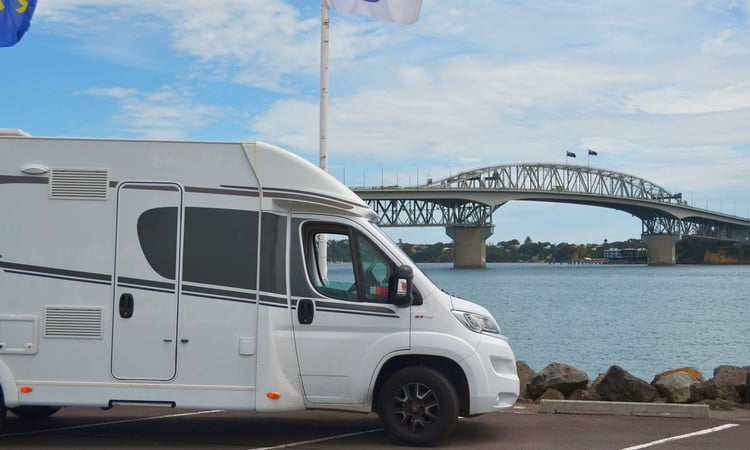
Head south on SH12 to Brynderwyn, then rejoin SH1 towards Auckland. The drive is straightforward and the landscape familiar – rolling Northland farmland giving way to the Dome Valley and the suburban sprawl of Auckland's northern edge.
If you’d like a small detour, take the turn-off east to Matakana just past Warkworth.
Matakana is a small village that has grown into one of the better food and wine stops north of Auckland, with boutique shops, good cafés and a compact wine region on its doorstep. If you're arriving on a Saturday, the Matakana Village Farmers' Market runs from 8 am to 1 pm. You’ll find local producers, fresh food, coffee and live music on the riverside. Any other day, the village is still worth an hour for lunch and a wander before the final push into the city.
From Matakana, head back to SH1 and continue south into Auckland.
|
Travel tip Freedom camping within Auckland's boundaries is tightly regulated – you can only stay in designated council-approved sites, and enforcement is active. Use apps like CamperMate to find campsites and check live availability. |
Things to do in Matakana and Auckland
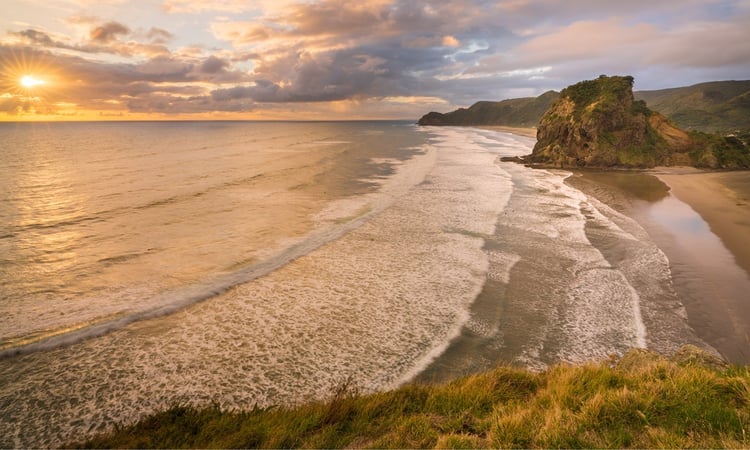
-
Browse the Matakana Village Farmers' Market on Saturday mornings (8 am – 1 pm) for local produce, artisan food and coffee on the riverside.
-
Visit Matakana Country Market on a Sunday morning for more local food and produce
-
Visit Sculptureum, a short drive from Matakana village. This art gallery features three sculpture gardens and six galleries on a working vineyard. Allow at least two hours.
-
Walk or drive to the summit of Mount Eden (Maungawhau) in Auckland – the highest of the city's volcanic cones, with 360-degree views across both harbours and out to the islands of the Hauraki Gulf.
-
Visit the Auckland War Memorial Museum in the Domain. You’ll find extensive collections on Māori and Pacific culture, New Zealand's natural history and the two World Wars.
For more things to do in Auckland, check out our Auckland city guide.
|
A city built on volcanoes Auckland is built on an active volcanic field – 53 separate volcanoes spread across 360 square kilometres, each one the result of a different eruption from the same pool of magma that still sits beneath the city today. The hills you see as you drive in – Mount Eden, One Tree Hill, North Head, Rangitoto Island out in the harbour – are all volcanic cones. The most recent eruption formed Rangitoto around 600 years ago. Because each eruption tends to break through at a new location rather than the same one, geologists consider any part of the city a potential site for the next event – not next week, but not never either. |
For more travel inspiration, check out Dane & Stacey's guest story, who also extensively explored Northland.
Distance: 154 km
Time: 2 hrs 5 mins
Route: Matakohe to Auckland via Matakana
Stay: Ambury Park Campground
Resources: Discover Auckland
-
About this itinerary
Northland is where New Zealand begins. It is where the first Māori settlers arrived, where the Treaty of Waitangi was signed, where the last great kauri forests still stand, and where the spirits of the dead are said to depart from the cliffs at Cape Reinga. It is also where some of the country's best road trips are.
This 13-day loop leaves Auckland heading north up the east coast, past Shakespear Regional Park, Goat Island Marine Reserve, the Tutukaka Coast, and the Poor Knights Islands. You’ll then head to the Bay of Islands, continue north through Mangonui to Cape Reinga, and return south down the wild west coast through Ahipara, Waipoua Forest, and Kai Iwi Lakes.
Designed around slow travel, it builds in breathing room at the best stops rather than rushing through them. Most driving days are under two hours, so there is always time to linger, relax, and get to know a place properly.
Itinerary highlights
-
Shakespear Regional Park – A mainland island sanctuary at the tip of the Whangaparaoa Peninsula – native bush, glow-worms, and little spotted kiwi after dark.
-
Goat Island Marine Reserve – New Zealand's oldest marine reserve. Snorkel straight off the beach with enormous, fearless snapper and crayfish.
-
Poor Knights Islands – Rated by Jacques Cousteau as one of the world's top ten dive sites.
-
Bay of Islands – a paradise of 144 islands, dolphins, and two of New Zealand's most significant historical sites.
-
Cape Reinga – The top of New Zealand and one of its most sacred sites. Watch the Tasman and Pacific collide from the lighthouse headland.
-
Ninety Mile Beach & Ahipara – A vast west coast strand surrounded by giant dunes, with world-class surf and the best sunsets in the north.
-
Waipoua Forest & Tāne Mahuta – New Zealand's largest living kauri tree – up to 2,500 years old, 51 metres tall.
-
Kai Iwi Lakes – Three crystal-clear freshwater dune lakes, ringed with white sand. Impossibly blue in sunlight.
-
Matakohe Kauri Museum – Arguably the finest small museum in New Zealand, displaying the full story of the kauri logging era that transformed Northland's forests.
-
-
Day 1: Auckland to Shakespear Regional Park
Out of the city and onto the peninsula
Leave the bright lights of Auckland behind and head north on SH1, turning right at Silverdale onto the Whangaparaoa Peninsula.
Shakespear Regional Park sits at the peninsula's tip – a beautiful expanse of farmland, native bush, and sweeping coastal views. With pohutukawa-lined beaches, walking tracks through regenerating forest, and abundant birdlife, this is the perfect place to ease into your trip.
Spend the afternoon exploring the various walking tracks and watching the sun set over the Hauraki Gulf.
Travel tip
Auckland is New Zealand’s biggest city – so as you can probably imagine, the traffic gets bad! To avoid the worst of it, we suggest heading out before 7 am, or else timing your departure between 10 am – 1 pm. It starts piling up quickly during the peak morning and afternoon rush hours, and you can be stuck at a crawl for some time.
Things to do in Shakespear Regional Park
-
Walk the Lookout Track for 360-degree views – Auckland's skyline one way, the Hauraki Gulf islands the other.
-
Follow the Heritage Trail through rolling farmlands, and say hello to the free-roaming sheep. You’ll pass by huge Puriri trees, as well as the scenic Waterfall Gully.
-
Listen for the soft calls of the little spotted kiwi near Waterfall Gully after dark. Around 20 birds live in the sanctuary; head out in the evening and stay still and quiet if you hear some rustling. If carrying a torch, make sure to use a red light.
-
If the weather is good, grab some snacks and have a picnic. Shakespear has some bookable picnic sites with terrific views.

I camped at Shakespear Park with my family when my kids were little, and it's still one of our favourites. Te Haruhi Bay is U-shaped and naturally sheltered, making it wonderfully child-friendly - the water stays calm, and the beach is relatively flat, so toddlers can splash around without being knocked over by waves. We also felt that the water was relatively warm. The campsite was well-serviced, and when we hit a couple of rainy days in a row, we took the kids to Silverdale Adventure Park for a fun day of rides.
Renata Jantos — Wilderness Marketing Team Leader
The great wall of Whangaparoa
As you enter Shakespear Regional Park, you'll pass through a vehicle gate in the tall predator-proof fence. Drive up slowly, and it will open automatically.
Why is this fence here? To protect New Zealand's native birds, which evolved with no mammal predators. Possums, rats and stoats – all introduced by humans – have wiped out native species across the country. Protecting what's left means creating pest-free sites where natives can breed safely.
Shakespear does this by fencing off the narrow neck where the peninsula joins the mainland, rather than a full loop – the sea forms the rest of the boundary, so it's a cheap way to seal off a large area. Once the fence went up, all pests inside it were removed, and species like the little spotted kiwi were brought back in. The peninsula has now become a sanctuary for our most fragile species.
That's also why the rules matter: dogs aren’t allowed anywhere in the park, and all visitors must disinfect their boots before heading on a hike. This prevents the spread of a fungus which causes kauri dieback disease – both threats are invisible to us, but serious for what's being protected here.
Distance: 73 km
Time: 1 hr 45 mins
Route: Auckland to Shakespear Regional Park
Stay: Te Haruhi Bay Campground
Resources: Auckland Council – Shakespear Regional Park
-
-
Day 2: Shakespear Regional Park to Leigh
The charm of old-world villages
Take a slow morning at the park before rejoining SH1 north. You’ll pass the small coastal town of Orewa before the road climbs and tunnels through to Pūhoi – one of New Zealand's oldest Bohemian settlements, founded by Czech immigrants in 1863. Take a break here to wander the historic church, grab a coffee at the village pub, and take in the old-world atmosphere of one of the country's most distinctive villages.
Continue north to Warkworth, a charming town on the Mahurangi River, before turning east towards the coast and down to Leigh – a small fishing village that's home to New Zealand's very first marine reserve.
Stay the night in Leigh, and explore the star attraction – Goat Island Marine Reserve – a hotspot for divers and snorkellers.
Travel tip
If you’re heading to Goat Island, check the conditions before diving into the water. Southerly or westerly winds keep the water calm and clear; northerlies or easterlies create large swells, and can make snorkelling unsafe and murky. If in doubt, ask one of the pop-up snorkel stands or the dive & snorkel centre – they’ll know best!
The car park also fills up fast on warm days, so arriving early will mean less stress trying to find a parking spot.
Things to do in Leigh
-
Head to Goat Island Marine Reserve – you have endless options here. You can rent your own snorkelling gear and head out into the water, book a glass-bottom boat tour, or try a scuba dive. Bear in mind that operators generally shut down for the winter season (June – August).
-
Head over to the pristine Pakiri Beach – just a 20-minute drive from Leigh – and take a stroll along the white sand.
-
Head down one of the walking tracks – the Leigh Coastal Walkway is a beautiful 2-hour return walk along the coastline, and the Matheson Bay Bush Walk is a 40-minute stroll along the stream with plenty of waterfalls along the way.
-
Check out upcoming gigs at the Leigh Sawmill Cafe. There are regular lineups of live music in this beautiful, historic venue.
How many snapper did you see today?
The fish at Goat Island have not been fished since 1975. Fifty years of protection means the snapper here are some of the largest you'll find anywhere on the New Zealand coast, and completely fearless. They’re known for swimming right up to snorkellers and following them.
Over 100 marine species have been recorded in the reserve. Alongside the snapper, you'll find schools of bright blue maomao, parore, red moki and wrasse, crayfish tucked into rocky overhangs, and in summer, kingfish and kahawai in the shallows. New Zealand fur seals relax on the outer rocks in winter.
The reserve is also a conservation success story. When it was established, the reefs had been grazed almost bare by sea urchins – the result of decades of overfishing their predators. As snapper and crayfish recovered, they ate the urchins back, and the kelp forests returned. What you're swimming through now is a beautifully restored and protected coastline.
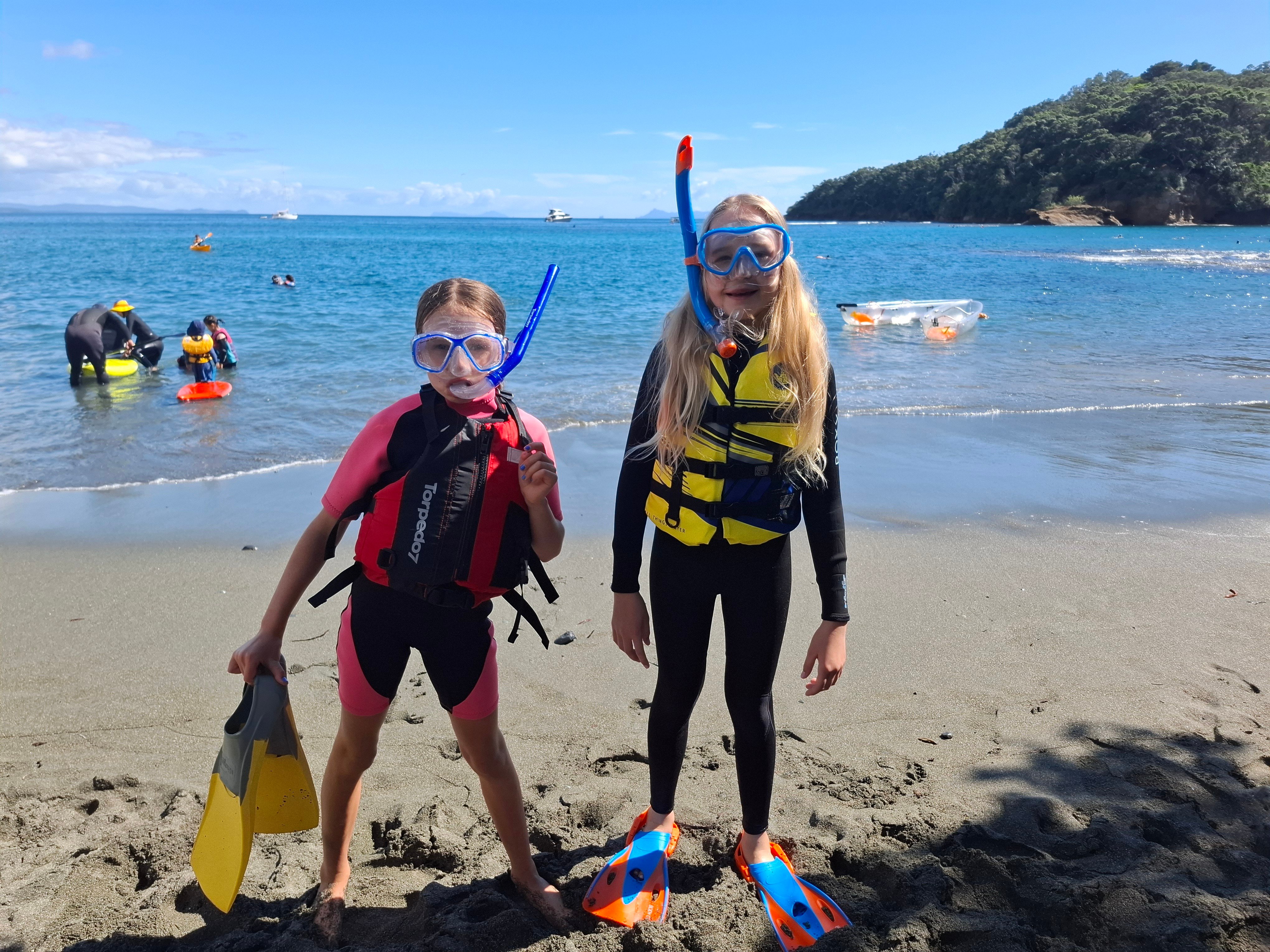
I visited Goat Island Marine Reserve recently with my nine-year-old daughter and her friend and it was a brilliant day out. One of the best things about it is how close to shore the sea life is. We didn't have to swim out far at all before the fish appeared. I brought life vests for the kids so they could just float on the surface and look down, completely absorbed in what was beneath them. It took the pressure off swimming and let them fully enjoy the experience. Highly recommend it for families with children. Afterwards, we had a real fruit ice cream sold at the carpark - the perfect summer treat.
 On the way to Warkworth, I always make a point of stopping at the Honye Centre. They stock an impressive range of honeys from across the region, including varieties made from native New Zealand plants - kānuka, mānuka, and more. Plus you get to try them before you buy. There's also an educational section, which makes it a great little pit stop for curious kids.
Renata Jantos — Wilderness Marketing Team Leader
Distance: 69 km
Time: 1 hr 10 mins
Route: Shakespear Regional Park to Leigh
Stay: Leigh Central
Resources: Leigh by the Sea
-
-
Day 3: Leigh to Whangarei
Exploring Northland’s only city
Head back to SH1 and continue north through Wellsford and over the Brynderwyn Hills. The drive is straightforward – mostly open highway with rolling farmland – and Whangarei is about two hours from Leigh. It's worth stopping at Waipu on the way, a small town with a strong Scottish heritage settled by Highlanders who arrived via Nova Scotia in the 1850s. The Waipu Scottish Migration Museum tells the story well if you have time.
The last time I stayed in Waipu, we visited the Waipu Glow Worm Caves. There are plenty of glow worms inside and they look absolutely magical. It's a bit of an adventure to get there: you'll need to clamber down some rocks and wade through a small stream inside the cave, so I'd recommend wearing jandals or sandals that you don’t mind getting wet. Wading in barefoot is a bit hard on your feet. A great little nature experience that doesn't cost a thing.
Renata Jantos - Wilderness Marketing Team Leader
Whangarei is Northland's only city, and it’s compact and easy to navigate. It has a beautiful waterfront precinct with good cafés, plus a rich arts scene. Spend the afternoon at the Town Basin, check out the unique Hundertwasser Art Centre, or watch some glass blowing at the Burning Issues Gallery.
Travel tip
Large motorhomes can find parking in central Whangarei tricky. The Town Basin car park off Dent Street has free parking but is limited to three hours and is tight for bigger vehicles. The Bascule carpark near the Te Matau a Pohe bridge is the closest freedom camping option for self-contained vehicles, with toilets on site, but it fills up fast in summer. Your best bet is to base yourself at one of the holiday parks a short drive from the centre – Whangarei Top 10 is about 2 km from the Town Basin – and drive or walk in from there.
Whangarei was such a highlight. We stayed right by the surf at the Ocean Beach freedom campsite, which was amazing, and later we found this awesome little hidden gem called the Piggery Secondhand Book Shop. If you're up for some walking, the views from Busby Head and the Bream Head Scenic Lookout are absolutely stunning. If you go to the Paranui Falls Lookout, definitely keep walking past the falls - it turns into this incredibly beautiful forest loop track.Josi Krebs — Wilderness Digital Content Creator
Things to do in Whangarei
-
Walk the Hatea Loop from the Town Basin along the river. This beautiful path passes public sculptures, heritage panels and the iconic Te Matau a Pohe bascule bridge – Whangarei's opening drawbridge. Allow about an hour for the walk.
-
Visit the Hundertwasser Art Centre, featuring 80+ original works by the eccentric Austrian-born artist and architect, Friedensreich Hundertwasser. You can also explore the Wairau Māori Art Gallery on the ground floor, which is dedicated to contemporary Māori fine art.
-
Browse Clapham's National Clock Museum at the Town Basin – a collection of 1,600 clocks and timepieces housed in a sundial-shaped building.
-
Treat yourself to one of New Zealand’s best restaurants – The Quay. The diverse menu features seafood, burgers, pizza, steak, and Pasifika-inspired dishes, with a strong emphasis on local sourcing.
-
Watch glassblowing at the Burning Issues Gallery in the Town Basin, where working glass artists produce and sell their work on site.
-
Visit the Kiwi House at Kiwi North — Northland's only nocturnal house, where the lighting turns day into night so the kiwi are active during visiting hours. Watch them foraging and interacting in their enclosure as they would in the wild. The same site also houses native geckos (well camouflaged and worth finding) and invertebrates, including wētā and stick insects.
When we visited Whangarei, the town centre turned out to be a great spot for families.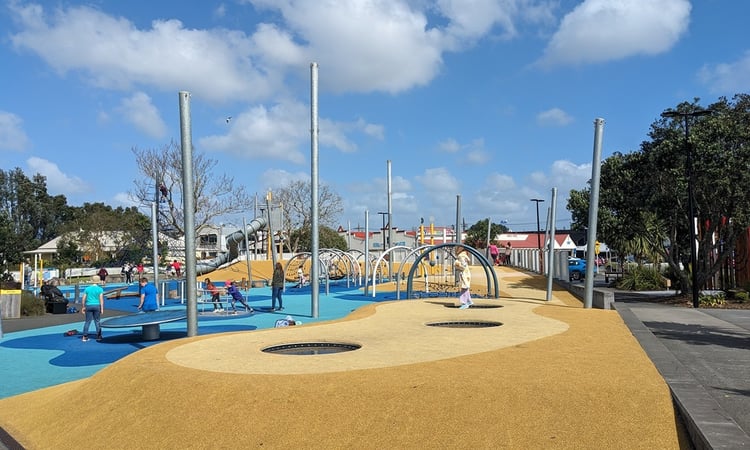
There's a fantastic playground, and if you bring wheels — bikes, scooters, or skateboards — the cycleway runs all the way through town and beyond, with smooth, good-quality pavement.
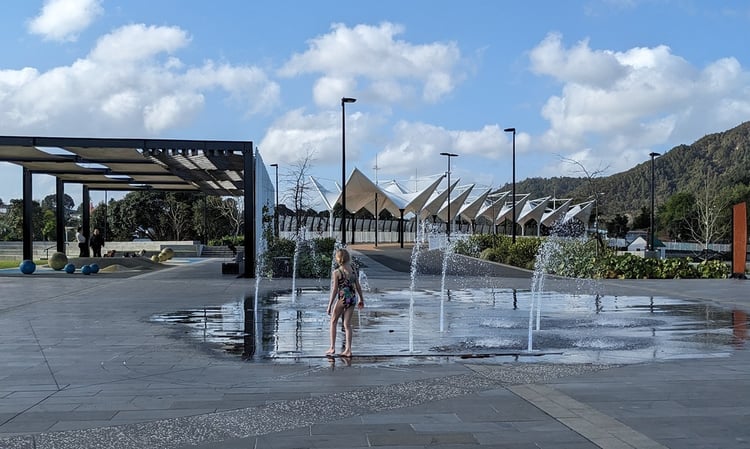
In summer, the water fountains are a hit with kids needing to cool down.
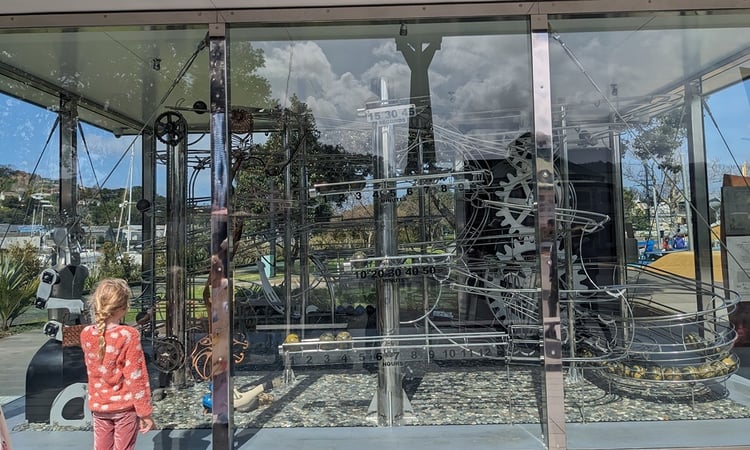
And don't miss the fascinating mechanical clock that uses rolling balls to display the time. That's all on top of the glassblowing and the Hundertwasser Art Centre, making Whangarei well worth a stop.
Renata — Wilderness Marketing Team Leader
A crusade against straight lines
Friedensreich Hundertwasser was an Austrian artist and architect who became one of the most distinctive creative figures of the 20th century. He famously hated straight lines, which he called "the devil's tools," and designed buildings that look like they grew organically from the ground. His buildings in Vienna are major tourist attractions.
What most people don't know is that he spent the last 30 years of his life in the Bay of Islands, becoming a New Zealand citizen and planting over 100,000 native trees on his property near Kawakawa.
In 1993, he sketched plans to transform a building on Whangarei's waterfront in his signature style. He died in 2000 before it happened, and for years the project stalled and was nearly shelved for good. In 2015, the community voted on three options: build it, build a maritime museum, or demolish the building. Just over half voted to build it. The result opened in 2022 – undulating floors, colourful ceramic columns, irregular windows, and a golden cupola – and this is the last Hundertwasser building ever to be constructed to his original designs. It houses the largest collection of his works outside Vienna alongside the Wairau Māori Art Gallery.
Distance: 120 km
Time: 1 hr 45 mins
Route: Leigh to Whangarei
Stay: Whangarei Top 10 Holiday Park
Resources: Whangarei NZ
-
-
Day 4: Whangarei Day – Tutukaka & Poor Knights Islands
A whole new world underwater
Today you're staying put in the Whangarei region, and the reward for that is one of the great diving and snorkelling experiences in the world.
Drive east on SH14 to Tutukaka Marina, about 30 minutes away from town, and board a boat out to the Poor Knights Islands. The islands are the eroded remains of ancient volcanoes, and what that geology has created underwater is extraordinary: vast sea caves, tunnels, arches and walls dropping from a few metres down to 90 m, all fed by warm currents sweeping south from the Coral Sea.
Jacques Cousteau rated the Poor Knights among the top ten dive sites in the world in 1979. Over 120 species of fish have been recorded here, many of them subtropical species found nowhere else in New Zealand.
You don't need to be a scuba diver. Dive! Tutukaka's "Perfect Day" cruise caters for everyone – snorkellers, kayakers and paddleboarders included!
Travel tip
Book your cruise well in advance, particularly in summer. Dive! Tutukaka is the main operator, and trips fill up fast. Check the website for availability before you commit to dates for this leg of the trip. Trips can be cancelled in rough weather, so a two-night stay in Whangarei gives you a fallback day if conditions aren't right.
Things to do at Tutukaka & Poor Knights Islands
-
Head out snorkelling the Poor Knights with Dive! Tutukaka – it runs snorkel, kayak and paddleboarding trips suited to all experience levels, including first-timers.
-
If you’re a certified scuba diver, head out on Dive! Tutukaka’s scuba tour to experience some of the best subtropical diving in the world.
-
Look for the Blue Maomao Arch – a low archway where shafts of sunlight filter through rock and thousands of fish cover the walls.
-
Watch for dolphins on the crossing – common and bottlenose dolphins are regularly spotted, and orca, minke and pilot whales are occasionally seen.
-
Spend the evening in Tutukaka, a small, pretty coastal village with good food and one of the best views on the Northland coast. Dine at Schnappa Rock – its menu is built around what's growing in its own spray-free garden and what's been caught or sourced locally that day.
An isolated bird sanctuary
The Poor Knights are entirely off-limits to people on land – no one is permitted to set foot on the islands. After a Māori settlement was massacred in 1823, the islands were declared tapu (sacred and restricted), and they've been largely undisturbed ever since. That isolation has made them one of New Zealand's most significant seabird sanctuaries, home to more than a million birds, including the endangered Buller's shearwater – the only place on earth where it breeds. The surrounding waters are the only area where people are allowed to explore.
Distance: 60 km (return)
Time: 1 hr (return)
Route: Whangarei to Tutukaka
Stay: Whangarei Top 10 Holiday Park
Resources: Explore Tutukaka
-
-
Day 5: Whangarei – Matapouri & Whananaki
The winding road north
Leave Whangarei and head north on the Tutukaka Coast road rather than SH1 – it's longer but considerably more rewarding, winding through pohutukawa-lined bays and small coastal communities with the sea visible at every turn.
The first stop is Matapouri Bay, a near-perfect horseshoe of white sand with shallow, turquoise water sheltered by low headlands on both sides. Take the short coastal walk to Whale Bay, a secluded beach only accessible on foot, for a quieter spot away from the main beach.
What I loved about Matapouri was the freedom camping spot right by the beach. We spent our evening watching the full moon rise over the water — one of those simple moments that stays with you.
Renata — Marketing Team Leader
Continue north to Whananaki, a small coastal community split across an estuary. It’s connected by the longest footbridge in the Southern Hemisphere – 395 metres of weathered timber built in 1947, so children from Whananaki South could get to school on the north side.
Travel tip
The Mermaid Pools at Matapouri, natural rock pools over the headland, are world-renowned for their crystal clear water. However, they have also suffered from heavy visitor numbers and are currently under a rāhui – a cultural closure placed by the local Māori hapū (tribe) to allow the ecosystem to recover from the impact. Please respect the closure and don't attempt to access them. The beach itself and the walk to Whale Bay are both well worth your time.
Things to do in Matapouri & Whananaki
-
Swim at Matapouri Bay. It's sheltered, shallow and calm on most days, and there’s good snorkelling around the rocky reef edges at either end of the bay.
-
Walk to Whale Bay (about 20 minutes each way from the northern end of Matapouri Beach). Because it's only reachable on foot or by water, it stays quiet even in summer – a longer arc of sand with no facilities and usually very few people.
-
Cross the Whananaki Footbridge – 395 metres of weathered timber planking, three planks wide.
-
Follow the Whananaki Coastal Walkway from the north end of the bridge for views back over the estuary and out to the open coast. It’s a great leg-stretch after the drive. The full walk takes around six hours, so turn around whenever you’d like!
-
Fish from the rocks at either end of Matapouri Bay or off the Whananaki estuary bank at dusk, when the light drops and the place goes very quiet.
In my day, we crossed a three-plank bridge to get to school
Whananaki is a small coastal community split in two by an estuary. For years, getting from one side to the other meant a long detour by road. This was a particular problem for the children of South Whananaki, who had to make that journey every day to reach the school on the north side.
In 1947, the community built a footbridge straight across the water. It's 395 metres long, three planks wide, made from local timber, and it is still the longest footbridge in the Southern Hemisphere. Walk it yourself, and you can look down through the gaps in the planks at the water below – on a calm day, you'll often see stingrays passing underneath.
Distance: 72 km
Time: 1 hr 30 mins
Route: Whangarei to Matapouri & Whananaki
Stay: Whananaki Holiday Park
Resources: Whananaki NZ
-
-
Day 6: Whananaki – Paihia & the Bay of Islands
A coast rich with history
Head north on SH1 through rolling Northland farmland. The coast will appear in glimpses as you near the Bay of Islands, and the time you descend into Paihia, you’ll see the bay spread out below you – 144 islands scattered across sheltered blue water.
This is one of the most historically significant stretches of New Zealand coastline. Start the afternoon with the ferry across to Russell, just 15 minutes from Paihia Wharf. Russell today is a quiet, pretty waterfront village, which makes it hard to believe it was once called the "hell hole of the Pacific”!
New Zealand's oldest church, Christ Church (built 1835), sits peacefully in the middle of it all and still bears the musket and cannonball holes from the 1845 Battle of Kororāreka, when chief Hōne Heke and his allies attacked and burned the town in protest against British colonial authority.
Back in Paihia, the Waitangi Treaty Grounds are a five-minute drive north and deserve a full two to three hours. This is where the Treaty of Waitangi was signed in 1840 – the founding document of New Zealand as a nation.
Travel tip
The Waitangi Treaty Grounds ticket is valid for two consecutive days, so if you arrive late in the afternoon, you can go back the following morning and pick up anything you missed. This includes the guided tour and cultural performance, which are included in the entry fee and run several times a day.Things to do in Paihia
-
Take the passenger ferry from Paihia Wharf to Russell and walk the waterfront to Christ Church, New Zealand's oldest surviving church, built in 1835.
-
Walk up Flagstaff Hill (Te Maiki) in Russell – a steep 15-minute climb from the waterfront – to the site where Hōne Heke famously cut down the British flagpole four times, and panoramic views across the bay.
-
Visit the Waitangi Treaty Grounds. Allow 2–3 hours for the guided tour, cultural performance in the carved meeting house, and the museum.
-
Walk the Paihia to Opua Coastal Walkway (about 1.5 hours one way) for views across the bay through native bush. The trail is flat and easy, and you can take a water taxi back if needed.
-
Walk to Haruru Falls, a wide horseshoe waterfall, a short drive or 6 km river trail from Paihia along the Waitangi River.
-
Grab your morning pick-me-up at Third Wheel Coffee Co, and sample their great range of vegan and gluten-free cabinet food.
New Zealand’s founding document
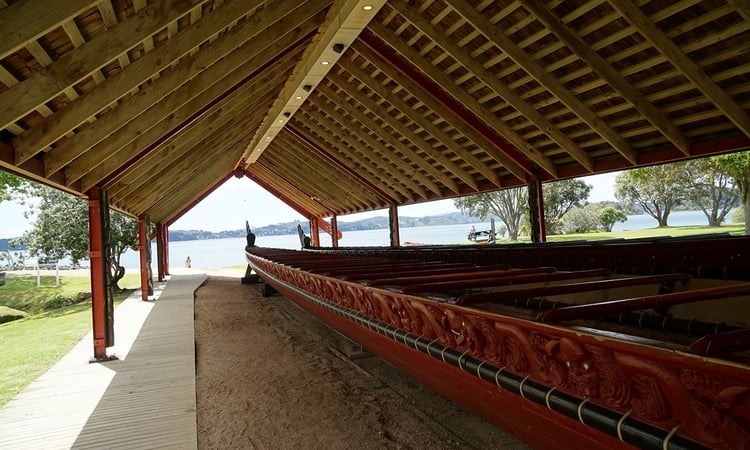
The Treaty of Waitangi was signed on 6 February 1840 between the British Crown and over 500 Māori chiefs, making it arguably the most consequential document in New Zealand history. The grounds include the original Treaty House (the Georgian home of British Resident James Busby, where the treaty was negotiated), a magnificently carved meeting house, and the Ngatokimatawhaorua – a 37-metre ceremonial waka carved from three giant kauri trees, one of the largest ever built. Every year on Waitangi Day (6 February), the waka is carried to the water and paddled by 80 paddlers. It weighs six tonnes when dry.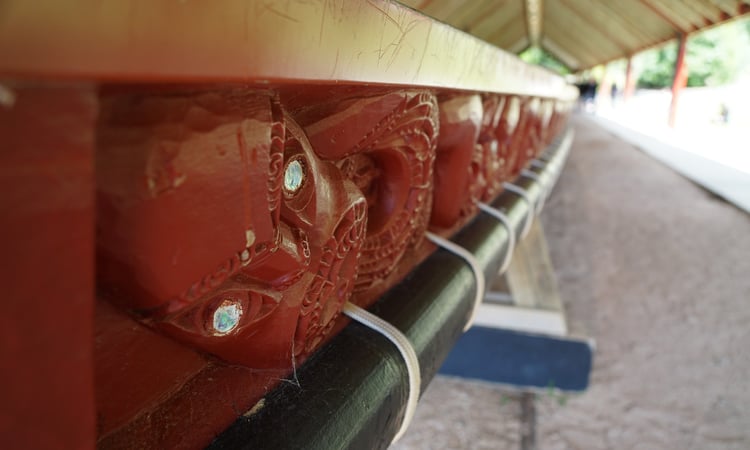
Distance: 69 km
Time: 1 hr 10 mins
Route: Whananaki to Paihia
Stay: Paihia Top 10 Holiday Park
Resources: Paihia NZ
-
-
Day 7: Paihia Day – Bay of Islands
Out among the islands
Today, the motorhome stays put. The Bay of Islands has 144 islands, sheltered water in every direction, and more ways to spend a day on it than you'll have time for. Pick one or two things and do them properly.
The signature experience is the Hole in the Rock cruise – a full or half-day boat trip out to Motukokako Island at Cape Brett, where the boat passes through a natural archway in the rock face at the right tide and sea conditions. The journey out takes you through the islands, and dolphins are a regular sighting along the way.
If you'd rather something quieter, hire a kayak from Paihia and paddle to one of the closer islands at your own pace – the bay is sheltered enough for confident beginners.
Things to do in the Bay of Islands
-
Join a Hole in the Rock cruise from Paihia Wharf. Full-day and half-day options available, most including island stopovers and swim opportunities along the way.
-
Book a dolphin watching tour. Common and bottlenose dolphins are resident in the bay year-round, with orca occasionally spotted in winter.
-
Hire a kayak or paddleboard from Bay Beach Hire and explore the bay independently. Guided half-day kayak tours are also available for those who want local knowledge.
-
Charter a fishing boat for a morning's deep-sea fishing in the bay – snapper, kingfish and marlin depending on the season.
-
Head to The Blue Door for some fresh fish and chips, a cocktail, and some great beach views.
Can you spot some rare visitors?
The Bay of Islands has two very different dolphin stories happening at once. Common dolphins visit in large pods – sometimes hundreds at a time – and are a frequent sighting on any cruise. The bottlenose dolphins are another matter entirely. The local bottlenose population has declined to the point where DOC now classifies it as critically endangered within the bay, with only around 26 individuals recorded visiting the area.
The Bay of Islands is a designated Marine Mammal Sanctuary, partly in response to this, with strict rules around how close boats can approach and how long they can stay near a pod. If you see bottlenose dolphins on your cruise, you're looking at a small and carefully monitored community.
Stay: Paihia Top 10 Holiday Park
Resources: Best Bay of Islands Attractions
-
-
Day 8: Paihia – Mangōnui via Matauri Bay
The far north’s most famous lunch
Head north out of Paihia on SH10, winding through farmland with occasional glimpses of the Karikari Peninsula.
The first stop is Matauri Bay, about an hour north of Paihia. Pull into the holiday park at the northern end of the bay and walk the short track up to the memorial for the Rainbow Warrior – the Greenpeace vessel sunk by French agents in Auckland Harbour in 1985. The ship now rests on the seabed near the Cavallis as an artificial reef and dive site.
From Matauri Bay, continue north on SH10 to Mangōnui – one of the oldest ports in New Zealand and one of the most intact. The waterfront is lined with 150-year-old buildings housing cafés, galleries and craft shops, and the whole place moves at a pace that suits it. Lunch at the Mangōnui Fish Shop is a Northland rite of passage. It serves fish landed at the wharf next door, and can be eaten on the deck over the water.
Travel tip
The Mangonui Fish Shop is well known and busy in summer – arrive early for lunch or expect a queue. The fish is landed at the wharf directly next door, so what's on offer depends on what came in that morning.
Things to do in Mangōnui
-
Lunch at the Mangonui Fish Shop on the waterfront. Eat on the deck over the water with fishing boats moored alongside.
-
Walk the Mangonui Heritage Trail (3 km, about 1.5 hours on foot) through the village, taking in 18 heritage buildings, including the 1892 courthouse, now an art gallery.
-
Climb to Rangikapiti Pā Historic Reserve above the village for panoramic views over Doubtless Bay. It’s a short but steep walk with a significant Māori fortification site at the top.
-
Swim at Coopers Beach, a pohutukawa-lined stretch of golden sand a short drive west of Mangonui, popular with locals and calmer than the open coast.
-
Check out Jesse’s on the Waterfront for the best pizza in town.
What happened to the Rainbow Warrior
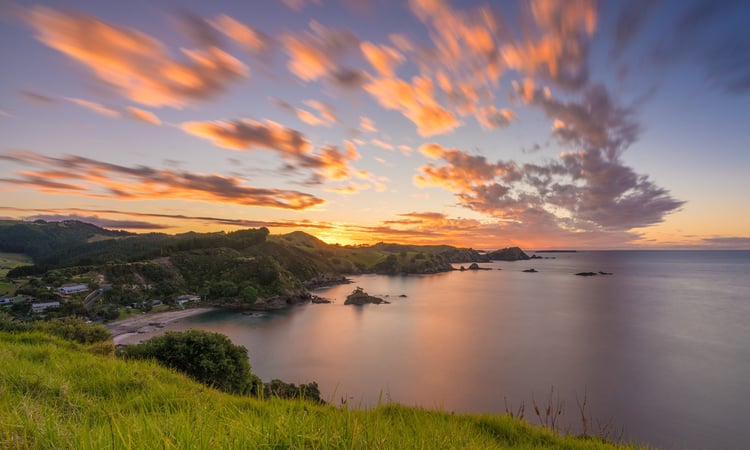
The Rainbow Warrior was a Greenpeace ship moored in Auckland Harbour in July 1985, preparing to protest French nuclear testing in the Pacific. On the evening of 10 July, two French secret service agents dived beneath the hull and attached explosive devices. The first bomb went off just before midnight. Greenpeace photographer Fernando Pereira, who had gone below to retrieve his camera, drowned in the flooding.
The bombing caused an international scandal, and France was ordered to pay $13 million in compensation. The wreck was later towed north and scuttled off Matauri Bay in December 1987 at the invitation of the local hapū, Ngāti Kura, who offered it a resting place. The memorial above the bay – built from local stone with the ship's propeller at its centre – was funded in part by the reparation money France was ordered to pay.Distance: 103 km
Time: 1 hr 30 mins
Route: Paihia to Mangōnui via Matauri Bay
Stay: Hihi Beach Top 10 Holiday Park
Resources: Mangōnui NZ
-
-
Day 9: Mangōnui – Cape Reinga
The end of a journey – or the start of one
Today, you reach the northernmost point of New Zealand – a place that has marked the start and end of journeys for centuries.
Head north through Kaitaia and follow SH1 as it runs parallel to Ninety Mile Beach. The beach itself stretches away to the west: a vast, unbroken sweep of hard sand backed by dunes, with the Tasman Sea hammering in from the left.
Stop at Te Paki Stream for tobogganing down the giant sand dunes. The stream cuts through to the beach, and the dunes rise steeply on either side. There are pop-up stands where you can rent a board to surf the sand.
From here it's a short drive to the car park at Cape Reinga. Walk the path down to the lighthouse and take in the stunning views. The Tasman Sea and the Pacific Ocean meet just offshore in a visible churning rip – two bodies of water, two different colours, colliding in open water. On a windy day, which is most days, the headland feels elemental.
Travel tip
There is no food or fuel available at Cape Reinga – fill up and stock up in Kaitaia before heading north. The road is now fully sealed all the way to the cape, but it's narrow and winding in places. Allow more time than the distance suggests.
Things to do in Cape Reinga
-
Stop at Te Paki Stream (well signposted off SH1) and toboggan down the giant sand dunes. You can hire a boogie board from the operators at the stream crossing. The dunes drop steeply to the beach below, and the stream provides a flat walk back.
-
Walk from the cape car park down to the lighthouse – about 800 metres each way on a sealed path with views across both oceans.
-
Stand at the lighthouse and watch the tidal rip where the Tasman and Pacific meet. The line where the two seas collide is often clearly visible as a change in colour and texture in the water.
-
Read the informative signs along the walkway, which explain the spiritual significance of the site and the journey of the spirits in detail.
-
Walk a little of the Te Araroa Trail – a 3,000 km walk across the full length of New Zealand, starting or ending at Cape Reinga. If you arrive early in the morning in the spring or summer seasons, you’ll often see hikers with big backpacks setting off on their long journey.
-
Visit Tapotupotu Bay, 5 km before the cape – a sheltered tidal estuary with a small DOC campsite and swimming, a quieter spot for lunch before or after the cape. You can also choose to stay here overnight.
If you want to get a couple of hours of walking in, I’d definitely suggest following the Te Paki Track all the way down to the beach. It’s a great taste of what the start of the Te Araroa Trail feels like, and it’s quite an experience to imagine walking on this stretch of coastline for days on end! The Tasman Sea on one side and the rugged sand dunes on the other make for some truly spectacular scenery.
Ksenia Stepanova — Lead Content Writer at Wilderness
The end of a journey
For Māori, Cape Reinga is the most spiritually significant place in New Zealand. After death, the spirits of the dead travel north along Te Ara Wairua – the Spirits' Pathway – to this headland. Here, a solitary 800-year-old pōhutukawa tree clings to the cliff face. The spirits descend its roots into the sea, travel underwater to the Three Kings Islands, rise to the surface for one last look back at the land, and then continue to Hawaiki, the ancestral homeland. The tree is said never to flower.
The name Cape Reinga comes from the Māori word for underworld. The full name, Te Rerenga Wairua, means the leaping-off place of spirits. Every Māori who has ever died is believed to have passed through here. It’s hard not to feel the spiritual significance of this place, so savour your time here.
Distance: 138 km
Time: 1 hr 55 mins
Route: Mangōnui to Cape Reinga
Stay: Kapowairua (Spirits Bay) Campsite or Tapotupotu Bay Camping Area
Resources: Cape Reinga NZ
-
-
Day 10: Cape Reinga – Ahipara
The last stop on the longest beach
Leave the cape and head back down the spectacular winding road that you drove in on. The drive down SH1 runs roughly parallel to Ninety Mile Beach, the Tasman side of the peninsula, and you'll catch glimpses of it through the dunes. Pull over at one of the beach access points to walk down and see it – a vast, hard-packed strip of sand stretching south as far as the eye can reach, with nothing but surf and sky beyond it.
You’ll see four-wheel drive vehicles driving up and down the beach, but don’t be tempted to take your motorhome onto the sand. It’s a much heavier vehicle without any off-road capability, so it will get stuck!
Ahipara sits at the southern end of Ninety Mile Beach, where the sand runs out at Reef Point. It's a small, relaxed surf community – a few streets, a beach, and a slow pace of life. The sunsets here, with the Tasman open to the west, are exceptional.
Travel tip
Ahipara is an off-season gem. In summer, it fills up with locals from Kaitaia and further south, and the beach buzzes with quad bikes and families. But if you're travelling in shoulder seasons, you may have whole stretches of the beach largely to yourself. Either way, book your stay in advance as campsite options are limited.
Things to do in Ahipara
-
Walk or drive to Shipwreck Bay (end of Wreck Bay Road) to watch the surf at the point break.
-
Sandboard the Ahipara sand dunes. Walk along the beach south from the end of Foreshore Road (about 45 minutes, timed around the tide) to the dunes behind Reef Point. You can hire boards locally.
-
Hire a blokart – a small wind-powered land cart – from Ahipara Adventures and take it onto the hard sand flats at low tide. Lessons are offered for complete beginners.
-
Horse trek on the beach with Ahipara Horse Treks. They offer two-hour rides along Ninety Mile Beach and the gentle headland country behind the town, suitable for beginners.
-
Learn the tuatua twist – a local method of catching clams at low tide. Stand in the shallows and twist your feet in the wet sand until you feel the hard edges of tuatua shellfish below the surface, then reach out and grab them. Steam them that evening.
The wave that made it into the movies
Ahipara's name means 'sacred fire' in te reo Māori, a reference to a fire kept constantly burning by the local Te Rarawa people. The town has another claim to fame among surfers: Shipwreck Bay, just to the south of the township, is considered one of the best left-hand point breaks in Australasia, and was first brought to international attention in the 1966 surf film Endless Summer. At low tide, the wrecks the bay is named for are still partially visible on the reef.
Distance: 124 km
Time: 1 hr 50 mins
Stay: Ahipara Top 10 Holiday Park
Resources: Ahipara NZ
-
-
Day 11: Ahipara – Kai Iwi Lakes via Waipoua Forest
An ancient canopy of trees
Head south from Ahipara on SH12 through Broadwood to Kohukohu. You have two options today – you can take the ferry across the Hokianga Harbour to Rawene, which is a 15-minute crossing with good views of the harbour and the golden dunes on the northern headland. From Rawene, SH12 continues south through Waipoua Forest and on to Kai Iwi Lakes. If you'd prefer to stay on the main road, you can take SH1 south via Kaitaia and Kaikohe. It is the slightly faster option, though it bypasses Waipoua Forest.
As you drive into Waipoua Forest, the road will narrow, and the canopy will start closing in overhead. Pull over at the Tāne Mahuta car park and walk the short track in. A huge tree appears around a bend – 51 metres tall, nearly 14 metres in girth, somewhere between 1,250 and 2,500 years old. No photograph prepares you for the scale of it.
Continue south to Kai Iwi Lakes – three freshwater dune lakes ringed with white sand. The water is so clear that you can see the bottom dropping away steeply at the edge of the shallow beach. Arrive in the afternoon and take a swim before setting up camp.
Travel tip
The Hokianga ferry runs between Kohukohu and Rawene roughly every hour during the day, but times vary by season, and it doesn't run late in the evening. Check the timetable before leaving Ahipara so you're not sitting on the wrong side of the harbour waiting for a crossing that's already done for the day.
If you make it out to Kai Iwi Lakes, you absolutely have to explore the coast properly. Walking through the ancient Waipoua Kauri Forest is incredible, and the Omapere Signal Station walk gives you some of the best coastal views in the region.
%20%20Nov%202025.jpg?width=750&height=450&name=Waipoua%20Kauri%20Forest%20(1)%20%20Nov%202025.jpg)
Josi Krebs — Digital Content Creator at Wilderness
Things to do in Kai Iwi Lakes
-
Walk the Tāne Mahuta track (10 minutes return, fully accessible) from the SH12 car park.
-
Book a twilight tour of the forest with Footprints Waipoua – a guided night walk with local guides from Te Roroa, the iwi of Waipoua, focused on the forest's ecology, history and significance.
-
Swim at Pine Beach on Lake Taharoa – the main swimming area, with a shallow sandy entry that drops away quickly into very deep, very clear water.
-
Kayak or paddleboard on Lake Taharoa. You’ll have calm, still water in good weather, especially early morning, before any wind arrives.
-
Walk the Kai Iwi Lakes Coastal Track, which takes you all the way out to Kai Iwi Beach.
A fish found nowhere else on earth
The Kai Iwi Lakes are home to the dune lake galaxias – a small native fish that exists nowhere else in the world. Cut off from the sea by the sand dunes that formed the lakes, it evolved in complete isolation over thousands of years. It's now at risk and found only in two of the three lakes, largely because of introduced rainbow trout, which were stocked for recreational fishing and prey directly on the galaxias.
Since 2018, releasing trout into these lakes has been banned as part of a conservation plan to protect the native fish.
Distance: 161 km (via ferry), 208 km (via SH1)
Time: 3 hrs 15 mins
Route: Ahipara to Kai Iwi Lakes
Stay: Pine Beach Campground
Resources: Kai Iwi Lakes NZ
-
-
Day 12: Kai Iwi Lakes to Matakohe
The remains of the kauri giants
Head south on SH12 through the Kaipara, allowing a stop in Dargaville if you need supplies before arriving in Matakohe.
The Kauri Museum is the reason to be here. Over 4,500 square metres of exhibits tell the full story of the kauri timber industry – the felling, milling, transporting and selling of a forest that once covered most of Northland. There's a working reproduction of a steam sawmill, the world's largest collection of kauri gum, and a full-size recreated boarding house from the 1880s. The walls show the circumference outlines of felled trees, one of which measures 8.5 metres – wider even than Tāne Mahuta.
Allow at least two hours to experience the museum properly. The Gumdiggers Café across the road is a good spot for lunch.
Travel tip
If you're visiting with kids, the museum runs Object Treasure Hunts throughout the exhibits in easy, medium and hard versions, which give children a great way to engage with the displays rather than trail behind the adults. They're worth picking up at the entrance.
Things to do in Matakohe
-
Spend the morning at the Kauri Museum. The sawmill, the gum collection, the recreated boarding house, and the kauri furniture collection are all worth time.
-
Walk the Kauri Bushman’s Walk – a short boardwalk loop (15 minutes) through a small kauri grove 3.6 km from the museum on Sterling Road.
-
Head to the Gumdiggers Café for lunch opposite the museum.
-
Visit Totara House, the historic villa adjacent to the museum grounds.
The trees that built a country
Kauri tree timber was among the most valuable in the world. It is straight-grained, strong, and able to produce ships' masts longer than any European tree could. When European settlers arrived in Northland in the mid-1800s, the logging industry was already underway. Within decades, most of the ancient kauri forest had been cleared.
After the trees were gone, people dug up the gum – a hardened resin that had built up in the soil over thousands of years – and exported it for use in varnishes and paints. Many of those workers were Dalmatian immigrants, digging by hand in swamps. What remains in Waipoua today is a small fraction of what once covered the land.
Distance: 81 km
Time: 1 hr 10 mins
Route: Kai Iwi Lakes to Matakohe
Stay: Matakohe Holiday Park
Resources: Explore Matakohe
-
-
Day 13: Matakohe to Auckland via Matakana
The road back south
Head south on SH12 to Brynderwyn, then rejoin SH1 towards Auckland. The drive is straightforward and the landscape familiar – rolling Northland farmland giving way to the Dome Valley and the suburban sprawl of Auckland's northern edge.
If you’d like a small detour, take the turn-off east to Matakana just past Warkworth.
Matakana is a small village that has grown into one of the better food and wine stops north of Auckland, with boutique shops, good cafés and a compact wine region on its doorstep. If you're arriving on a Saturday, the Matakana Village Farmers' Market runs from 8 am to 1 pm. You’ll find local producers, fresh food, coffee and live music on the riverside. Any other day, the village is still worth an hour for lunch and a wander before the final push into the city.
From Matakana, head back to SH1 and continue south into Auckland.
Travel tip
Freedom camping within Auckland's boundaries is tightly regulated – you can only stay in designated council-approved sites, and enforcement is active. Use apps like CamperMate to find campsites and check live availability.
Things to do in Matakana and Auckland
-
Browse the Matakana Village Farmers' Market on Saturday mornings (8 am – 1 pm) for local produce, artisan food and coffee on the riverside.
-
Visit Matakana Country Market on a Sunday morning for more local food and produce
-
Visit Sculptureum, a short drive from Matakana village. This art gallery features three sculpture gardens and six galleries on a working vineyard. Allow at least two hours.
-
Walk or drive to the summit of Mount Eden (Maungawhau) in Auckland – the highest of the city's volcanic cones, with 360-degree views across both harbours and out to the islands of the Hauraki Gulf.
-
Visit the Auckland War Memorial Museum in the Domain. You’ll find extensive collections on Māori and Pacific culture, New Zealand's natural history and the two World Wars.
For more things to do in Auckland, check out our Auckland city guide.
A city built on volcanoes
Auckland is built on an active volcanic field – 53 separate volcanoes spread across 360 square kilometres, each one the result of a different eruption from the same pool of magma that still sits beneath the city today. The hills you see as you drive in – Mount Eden, One Tree Hill, North Head, Rangitoto Island out in the harbour – are all volcanic cones. The most recent eruption formed Rangitoto around 600 years ago. Because each eruption tends to break through at a new location rather than the same one, geologists consider any part of the city a potential site for the next event – not next week, but not never either.
For more travel inspiration, check out Dane & Stacey's guest story, who also extensively explored Northland.
Distance: 154 km
Time: 2 hrs 5 mins
Route: Matakohe to Auckland via Matakana
Stay: Ambury Park Campground
Resources: Discover Auckland
-