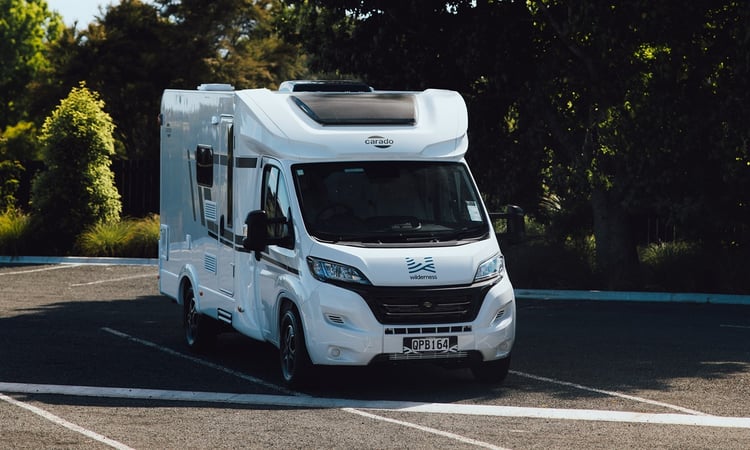
There are few things worse than waking up to a beautiful view, only to find a parking ticket tucked under your windscreen wiper – or arriving home from your trip to discover a speeding infringement waiting in your inbox.
New Zealand is one of the best countries in the world to explore by motorhome, but like anywhere, there are rules. Automated cameras, ticketless car parks and speed enforcement cameras are dotted all over the country, ready to catch anyone not paying attention.
That said, avoiding tickets is easy! It really boils down to two things: don't speed, and pay for your parking. But to make sure you're fully prepared, this guide walks through practical steps to avoid parking fines and speeding tickets, including how to spot the enforcement systems (licence plate recognition cameras, average speed cameras, CCTV-monitored zones) that sometimes catch holidaymakers off guard.
How do you avoid speeding fines during your motorhome holiday?
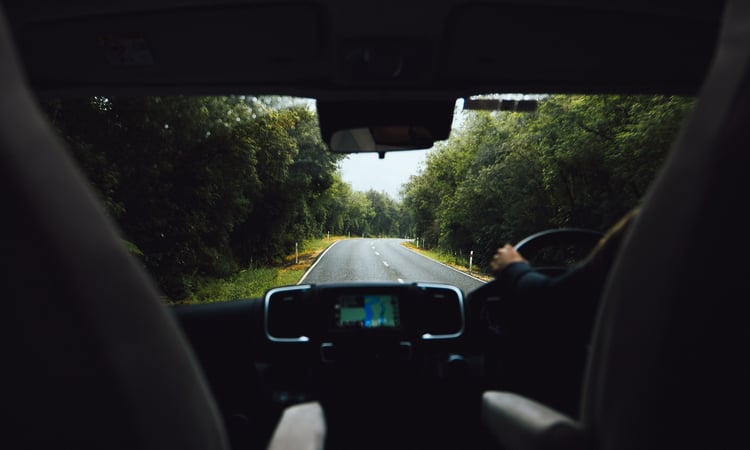
Speeding fines are the most common infringement our guests pick up, and they're the easiest to avoid. The best habit is to treat posted speed limits as a firm ceiling, not a target, and ease off the accelerator when approaching towns where the speed limit drops quickly.
Speed limits for heavy vehicles are also different – all Wilderness motorhomes have a speed limit of 90 km/h. When you see a speed limit of 100 km/h, it can be easy to treat that as the ceiling. The reality is that if you’re caught exceeding 90 km/h in a heavy motorhome, you’ll get a ticket.
It also helps to understand the three types of speed enforcement you'll encounter, because each one works differently.
Fixed speed cameras
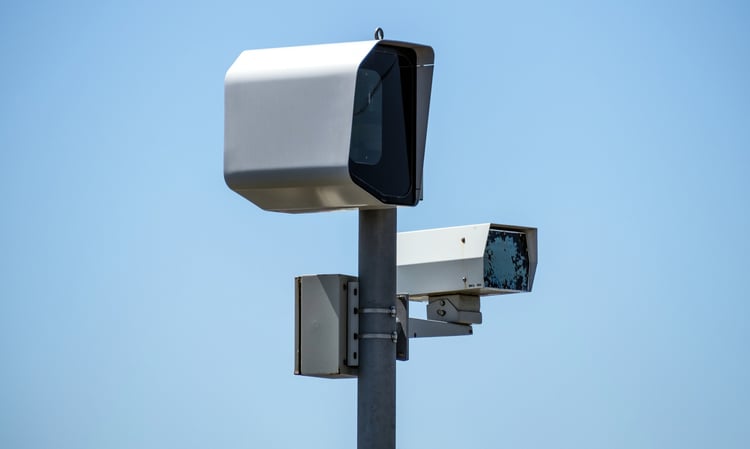
These are the "spot speed" cameras most travellers picture – permanently mounted, and measuring your speed at a single point using radar as you pass. They can identify the lane you're in, the type of vehicle, and the speed limit that applies to that vehicle type. In New Zealand, every fixed camera has a warning sign ahead of it, so if you're keeping to the limit you've got nothing to worry about.
The catch is that they only measure that one spot – which is exactly why the next type exists.
Average speed (point-to-point) cameras
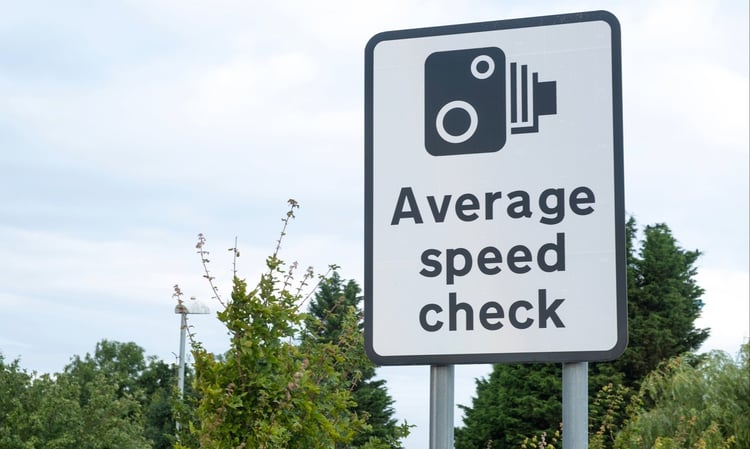
New Zealand has rapidly expanded its network of average speed cameras (also called point-to-point cameras), and they work differently from fixed cameras. Rather than catching you at a single instant, they measure your average speed over a whole stretch of road.
-
They time your entry and exit between two camera points and divide the distance by the time. If your average over that stretch exceeds the limit, you get a ticket, so there's no benefit to braking hard just for the camera and speeding up again.
-
They catch vehicles travelling in either direction, on both sides of the road. There's no "safe" lane, and both front and rear plates can be captured.
-
Heavy vehicles are held to a lower limit. On 100km/h and 110km/h roads, trucks and larger motorhomes are measured against a 90km/h limit, not the posted limit, which catches bigger vehicles off guard.
-
The signage is there, but it's easy to miss on a holiday-mode drive. When NZTA switched on its first average speed cameras at Matakana Road near Warkworth, compliance jumped dramatically once drivers noticed them – evidence that most tickets come from simply not paying attention, not from deliberate speeding.
The takeaway: on a marked average speed stretch, set your cruising speed to the limit and hold it. You can't outsmart the average.
Mobile speed cameras
The newest addition to the network is the hardest to spot. Mobile cameras work on the same radar principle as fixed ones, but they're installed in vehicles and trailers that move around, so there's no permanent sign warning you they're there. NZTA's mobile fleet includes unmarked SUVs (in a range of colours and models, with no branding) and small roadside trailers, deployed around the country. That nondescript SUV parked on the verge may well be measuring your speed in both directions. Because you can't rely on spotting them, the only reliable defence is to keep to the limit everywhere, all the time.
Why do tourists frequently get speeding tickets when approaching small New Zealand towns?
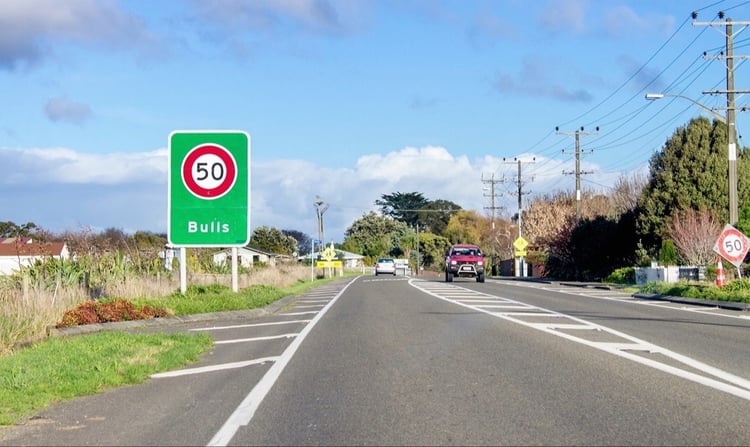
Speed limits in New Zealand change abruptly, and the transitions catch out international and domestic drivers alike.
Here’s why:
-
Open-road limits drop sharply at town boundaries. A 100km/h stretch can become 80km/h or 50km/h with minimal lead-in signage, right as you're entering a settlement.
-
Enforcement isn't just fixed cameras. Approaching a town is exactly where a mobile SUV or trailer tends to be positioned – see above – so the fact that you can't spot one is precisely the risk at these transitions.
-
Scenery and GPS are distracting. Tourists focused on the view or their navigation naturally pay less attention to speed-limit signs at transitions, which is exactly where the limit changes.
-
Large motorhomes take longer to slow down. Drivers unfamiliar with New Zealand's mix of open-road and settlement limits often misjudge braking distance in a big, heavy vehicle, and are still doing 90 as the 50 sign flashes past.
The habit that saves you: ease off the accelerator whenever you see houses, a river bridge or a "welcome to" sign coming up. Settlements almost always mean a lower limit, whether or not you've spotted the sign yet.
How do you avoid parking fines in a New Zealand motorhome rental?
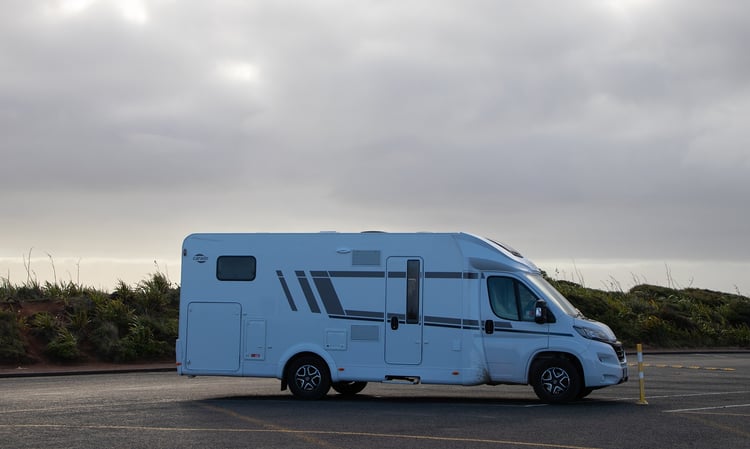
Most parking fines come down to a handful of avoidable mistakes – not reading local signs, not researching the rules online, and lingering in a parking space for too long.
Keep these habits, and you'll dodge the vast majority of them:
-
Read the localised signage carefully, every time. Rules vary significantly from car park to car park and town to town. The sign in front of you always overrides any general assumption.
-
Check campsite and car park rules online before you arrive. Apps like CamperMate, the DOC website and local council pages will tell you time limits, costs and how to pay.
-
Assume any paid car park without a gate or ticket machine is ticketless and still requires payment. Look for signage, an honesty box or an app before you walk away. "No barrier" does not mean "free."
-
Move the vehicle the moment your errand is done. Overstaying in supermarkets and other time-limited car parks can result in an infringement. If you’ve just done your shopping, a supermarket car park isn’t the place to start cooking.
-
Use council parking apps where available (for example PayMyPark or AT Park) rather than guessing at time limits.
What are Licence Plate Recognition (LPR) parking cameras, and how do they track motorhomes?
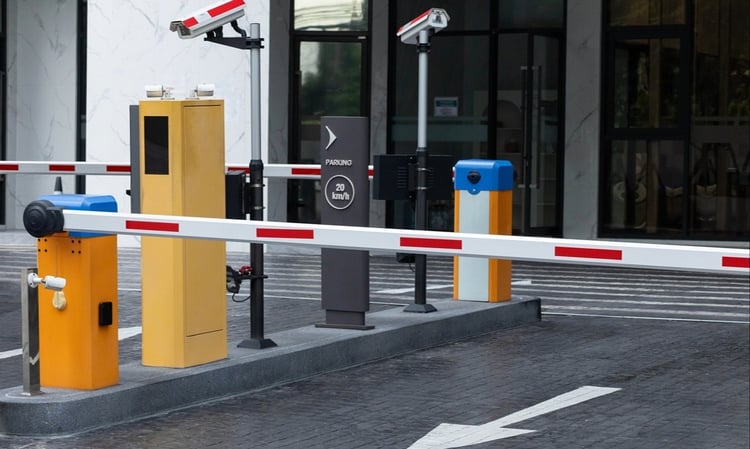
Licence Plate Recognition (LPR) – also called ANPR, for Automatic Number Plate Recognition – is the technology that’s replacing the old paper-ticket system across New Zealand. Instead of taking a ticket on the way in, a camera simply photographs your plate as you enter and again as you exit, and the system calculates how long you stayed.
Because no physical ticket is issued, there's nothing to collect or display on your dashboard – which is exactly why travellers get caught. It's easy to park, wander off, and never realise payment was required at all.
Here's what to know:
-
Payment is usually pay-by-plate, not ticket-based. You'll typically enter your licence plate number at a machine or in an app, rather than feeding coins for a printed ticket.
-
Private operators run many of these car parks. Companies such as Stellar Parking operate LPR systems across private, council and Department of Conservation car parks, using enforcement tools including ANPR cameras and a mobile compliance app. When a vehicle overstays or doesn't pay, the operator obtains the registered owner's details from NZTA and issues a breach notice by mail – which, for a rental, means it comes to us first and is then passed on to you.
-
The clock starts when you park, not when you decide to pay. There's no grace for "I only just got back to the machine."
Where are the most common spots motorhomes get parking tickets in the South Island?
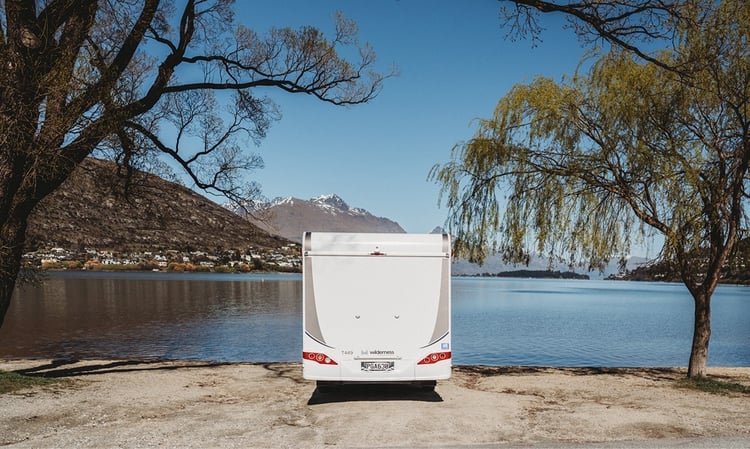
According to our internal records, a handful of high-demand tourist hotspots account for a disproportionate share of motorhome fines. If your route includes these, slow down and read every sign:
-
Queenstown. Large campervans and motorhomes aren't permitted to park in the town centre at all, and incorrect parking can draw an infringement (roughly $40–$100 depending on the breach). Use the 33 dedicated motorhome bays at the Boundary Street Car Park instead — it's an easy walk into town and far less stressful than trying to thread an oversized vehicle into a standard bay. Smaller van-based campers (Jucy, Wicked and similar) are treated like ordinary cars and can use standard spaces.

In Queenstown, they have CCTV cameras all over the town centre, and it’s all automated. So if a guest stops in a designated parking spot for taxis or a loading zone for trucks, etc., they instantly get fined - even if they just stopped for a few minutes and didn’t leave the vehicle.
-
Queenstown's district-wide CCTV. Queenstown Lakes District Council operates an extensive CCTV network covering loading zones, taxi stands and other restricted areas across the district, not just the town centre.
-
Milford Sound. The car parks here use automated, ticketless systems with strict time limits, driven by heavy tour-bus turnover. Don't assume you can leave the vehicle indefinitely while you're out on the water.
-
Aoraki/Mount Cook and Franz Josef. These are small, high-demand lots – for example, White Horse Hill Car Park at Mount Cook – where overstaying even briefly can draw a fine, simply because of visitor volume.
One big change to be aware of: DOC now charges for parking at Franz Josef, Aoraki/Mount Cook and Punakaiki.
After a seven-month pilot over the 2025–26 summer, DOC confirmed in July 2026 that the charges are here to stay. Rates are $5 per hour, with a daily cap of $20 at Franz Josef and Punakaiki and $25 at Aoraki/Mount Cook. The free drop-off window is short and getting shorter – 10 minutes at Punakaiki and Franz Josef (reduced from 20), and 20 minutes at Aoraki/Mount Cook. Payment machines and entry/exit cameras record your stay, and the parking provider issues breach notices for non-payment. Travellers who assume DOC car parks are always free are exactly the ones who get caught.
What are the rules for parking a motorhome at New Zealand supermarkets?
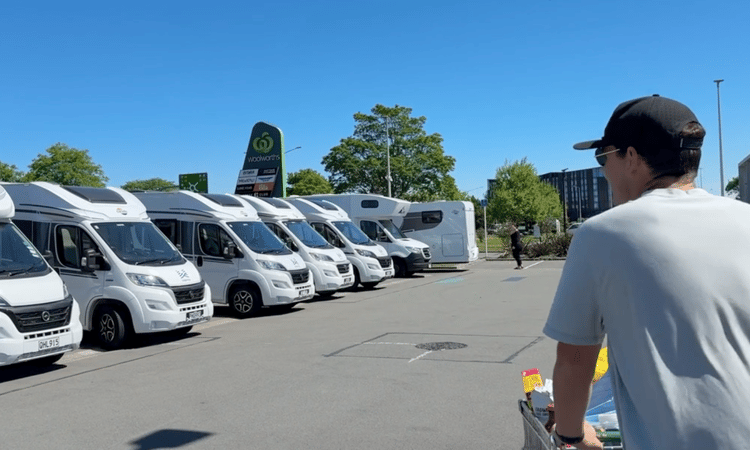
Supermarket car parks are one of the most common places motorhomes get fined, and one of the most avoidable. They're typically privately monitored (often by LPR) with short free periods before charges kick in.
-
Free periods are usually short – commonly 60 to 120 minutes – before a fine applies.
-
Time-stamping starts the moment you park, not when you walk through the store's doors.
-
Move the vehicle immediately after shopping. Don't linger in the car park for meal prep, a nap or a phone call. It's tempting in a self-contained motorhome, but supermarket lots are the wrong place for it.
-
Watch for oversized-vehicle bay restrictions. Some supermarkets have separate rules or dedicated bays for larger vehicles, distinct from standard car spaces.
How do you avoid freedom camping fines when arriving after dark?
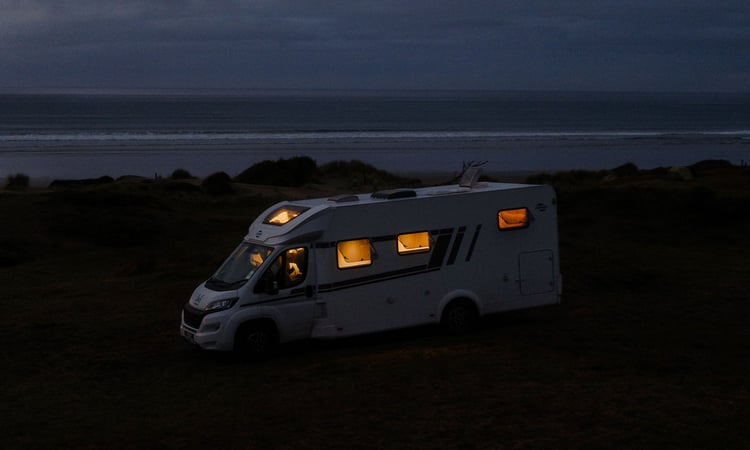
Arriving at a freedom camping site after dark is a classic way to end up with an expensive fine. Signage is hard to read, marked bays are hard to count, and the temptation to "just park here for the night" is strong. But enforcement officers do check overnight, and the penalties are steep: $400 infringements under the Freedom Camping Act and $800 under the Reserves Act are common in popular districts, with councils issuing thousands of them. In Queenstown alone, more than 1,600 fines were handed out in a single season.
To stay on the right side of the rules:
-
Scout and confirm your site – and your exact space number – before dusk. Sites often have a small, strict allocation (sometimes just three or nine marked bays). Parking in an unmarked overflow spot, or in space #4 when only three are allocated, counts as a breach even if you're inches away from a legal bay. One Queenstown camper was fined $400 for staying in a regular car park several metres from the designated spaces after arriving late at night.
-
Fines apply regardless of intent or weather. A council upheld a $400 fine even after a camper argued that 100km/h wind gusts made it unsafe to move on. "I didn't mean to" and "it wasn't safe to leave" won’t be accepted defences.
-
Make sure your self-containment is current. As of 7 June 2026, the old blue sticker is no longer valid — vehicles must display the new mandatory green self-containment warrant to freedom camp in areas that require it. (Your Wilderness Motorhome comes sorted, but it's worth understanding why it matters.)
-
Use official apps to confirm requirements before you arrive – Rankers, CamperMate and DOC's site lists will tell you whether a site needs self-containment and how many spaces it has.
On my first-ever night in a motorhome, I arrived at a beautiful freedom campsite on the Coromandel coast. The sign said “Freedom Camping” in large letters; I didn’t think to read past that, so I drove on in, parked myself on a scenic patch of grass and went to bed.
At 7 am, I woke up to an enforcement officer hammering on my door and handing me an infringement notice for $400. Shocked, still half-asleep and in my pyjamas, I finally went out to read the sign at the entrance properly. That’s when I realised that I’d completely missed the smaller print, and the “designated area” for self-contained vehicles wasn’t the campsite itself – it was one specific section of it. It wasn’t the section I’d parked in.
It was an expensive lesson! It’s not like this everywhere – some campsites do let you park anywhere, and they all have different rules. But never assume anything, and always read the entrance sign carefully!