Fuel prices are on the rise, and for travellers planning a New Zealand road trip, that's a real concern. The cost of filling up a motorhome can feel unpredictable, and when you're budgeting for a bucket-list holiday, uncertainty is the last thing you need.
This guide looks at whether a road trip still makes financial sense given current fuel costs. The good news is that yes, it does – but there are some nuances worth knowing. We'll cover how different vehicles compare on fuel economy, what the numbers actually look like on the road, and the strategies savvy travellers use to keep costs under control.
Are motorhomes fuel-efficient for a New Zealand road trip?
The answer is yes – but the cost picture is more complicated than it used to be, so it's worth understanding what's changed. Most motorhomes in New Zealand, including ours, run on diesel, so the diesel market is the one to look at for budgeting.
For decades, diesel vehicles enjoyed a comfortable price advantage in New Zealand. That changed in early 2026, when disruption to shipping through the Strait of Hormuz sent global fuel prices skyrocketing. Diesel was hit hardest, and for the first time in memory, it climbed above petrol at many New Zealand pumps.
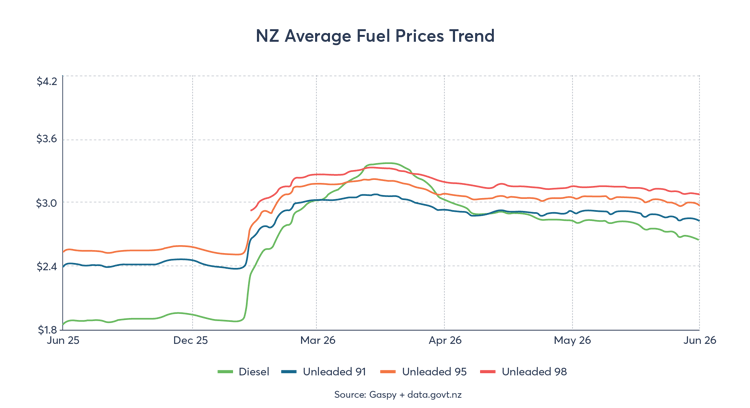
The situation is easing at the time of writing. Oil prices have fallen from their peak, and pump prices are gradually following, but the gap between diesel and petrol hasn't fully recovered yet.
There's one other cost to factor in: Road User Charges (RUCs). Diesel vehicles in New Zealand pay for road use by the kilometre rather than at the pump, and this adds $76–82 per 1,000km regardless of what fuel is doing on any given day. Add it all together, and total diesel running costs currently sit close to what you'd pay running a petrol vehicle.
So is a motorhome holiday still viable? Absolutely – but the travellers who get the most value out of one focus on three things:
-
Vehicle efficiency: Choosing a modern, aerodynamic motorhome rather than an older, thirstier model.
-
Slow and light travel: Driving fewer kilometres and carrying less weight.
-
Good driving habits: Steady speeds, no sharp braking or starting, and smart route planning.
How does Wilderness motorhome fuel economy compare to competitors?
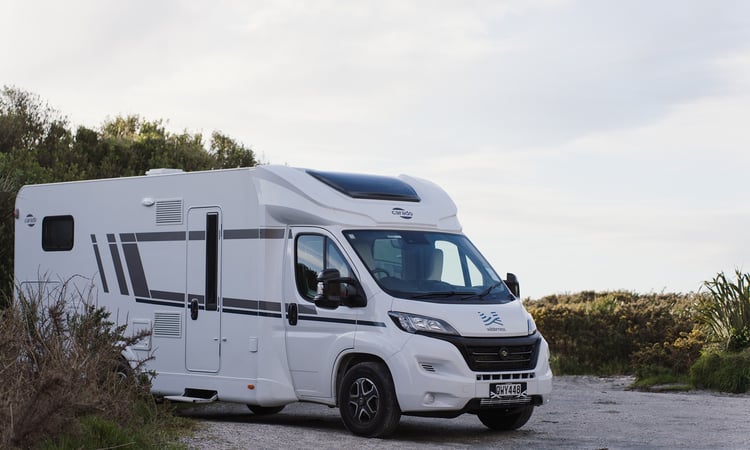
All Wilderness motorhomes meet Euro V or Euro VI emission standards – the highest in the automotive industry – and are built on fuel-efficient European vehicle bases. Across the fleet, fuel consumption averages around 11 litres per 100km.
To put that in context, the wider rental market spans roughly 11–15L per 100km. Older or lower-spec vehicles from budget operators can burn considerably more fuel than a modern European motorhome, and that difference compounds quickly over a multi-week trip.
A vehicle using 14L/100km instead of 11L/100km will burn an extra 90 litres of diesel over a three-week 3,000km holiday – roughly an extra $350, including RUCs. That’s not a small sum.
Why the difference? Two big reasons:
-
Modern engines: Euro V and VI engines are designed for cleaner combustion and better economy, while older fleet vehicles often run earlier-generation engines that simply use more fuel to do the same work.
-
Aerodynamics: Wilderness motorhomes are specifically chosen for their sleek, semi-integrated design, which slips through the air far more efficiently than the tall, boxy cabover silhouettes you'll see in many rental yards.
The headline rate of a budget rental can look tempting, but the fuel bill is part of the real price of your holiday, and an efficient vehicle quietly saves you money every single day you're on the road.
Here’s a comparison of fuel usage for popular campervans in New Zealand:
|
Provider |
Model Name |
Fuel Type |
Fuel Consumption (L/100km) |
Dimensions |
|
Wilderness Motorhomes |
All 2 and 4-Berth Models |
Diesel |
6–7.4m Length / 2–4 Berth |
|
|
Maui |
Cascade |
Diesel |
6.4m Length / 4 Berth |
|
|
Jucy |
Chaser/Condo |
Petrol |
4.7m Length / 3–4 Berth |
|
|
Britz |
Voyager |
Diesel |
5.94m Length / 4 Berth |
|
|
Britz |
Discovery |
Diesel |
6.7m Length / 4 Berth |
|
|
Apollo |
Endeavour |
Diesel |
5.94–6.74m Length / 4 Berth |
|
|
Maui |
Ultima / Plus |
Diesel |
7–7.2m Length / 2–3 Berth |
|
|
Britz |
Venturer |
Diesel |
7.05m Length / 2 Berth |
|
|
Britz |
Odyssey |
Diesel |
6.4–7.4m Length / 4 Berth |
|
|
Maui |
River |
Diesel |
7.5m Length / 6 Berth |
|
|
Apollo |
Euro Tourer |
Diesel |
7.05–7.2m Length / 2 Berth |
What are the top 6 practical driving tips to save fuel in a New Zealand motorhome?
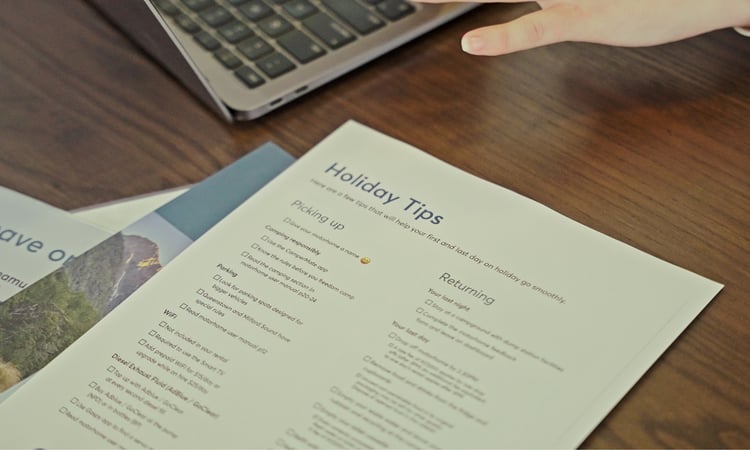
Smart driving habits like keeping a consistent speed, avoiding frequent stops and starts, and simply driving less can meaningfully cut your fuel bill – often by up to 10-15%, according to the Energy Efficiency & Conservation Authority (EECA).
Here's what works:
-
Maintain a steady speed. Cruise control at 80–90km/h is typically the sweet spot for a motorhome. Aerodynamic drag rises steeply with speed, so easing off the accelerator costs you very little time but saves a surprising amount of fuel.
-
Switch the engine off when stationary. If you're stopped for more than a few minutes – at a viewpoint, waiting for road works, taking photos – turn the key. Idling burns fuel for zero kilometres.
-
Avoid peak-hour city traffic. Stop-start driving is where fuel economy goes to die. Time your departures from Auckland, Wellington and Christchurch to dodge the morning and evening rush.
-
Use the Gaspy app. Gaspy tracks real-time fuel prices across New Zealand, crowd-sourced by drivers. Prices can vary by 20–30 cents per litre between stations just minutes apart, so a quick check before you fill up really pays off.
-
Pack light. Every extra kilogram makes your engine work harder, especially on hills. Be honest about what you'll actually use – a motorhome comes with a full kitchen and comfortable living space already, so you need far less than you think.
-
Drive less and see more. The simplest tip of all, and effective enough that it deserves its own section below.
How does the 'slow travel' philosophy reduce fuel costs on a Kiwi holiday?
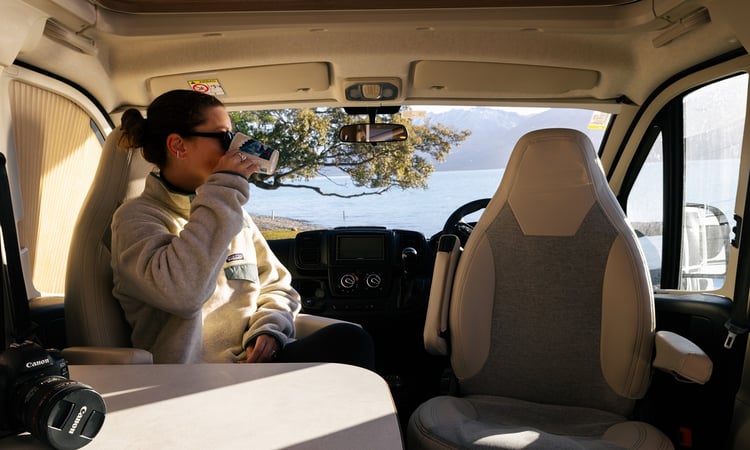
This is the single most powerful fuel-saving strategy on this list, and it costs nothing: drive fewer kilometres.
It sounds almost too obvious, but it goes against the instinct most first-time visitors have – to see everything. Both islands, all the highlights, ticked off in a fortnight. The result is long days behind the wheel, a big fuel bill, and a holiday that feels more like a logistics exercise than a break.
Slow travel flips that. Less mileage means less fuel, but it also means more time actually experiencing the places you came for – and more money spent in local communities rather than at service stations.
How to do it well:
-
Aim to drive no more than 150–200km per day, with plenty of non-driving days in between. New Zealand distances are deceptive – the roads are winding, and the scenery demands stops. Planning shorter distances makes for a more relaxed holiday.
-
Pick a region and give it time. Dedicate at least 7–9 days to a single region rather than racing between them.
-
Be realistic about both islands. If you want to do the North and South Islands properly, allow at least four weeks. If you only have two weeks, choose one island and savour it.
Don't just take our word for it. Wilderness guests like Adam Kubicek and Floor & Arjan deliberately slowed their itineraries down, and they found the unhurried pace was what made the trip. For Adam, the most meaningful moments were a quiet sunrise over the Tasman Sea, coffee on a rainy morning, and a hidden-gem café discovered with no schedule to keep.

One thing we became very aware of was how easy it is to spend entire days just driving. When we made a conscious effort to stop, go for short walks, and spend time outside, the whole trip felt more meaningful. Those moments in nature made us appreciate returning to our warm and comfortable motorhome, and the days felt like real experiences rather than just moving from one destination to another.
For Floor and Arjan, spending several months on the road gave them just the right amount of quality family time they were craving – and the slow pace made the whole trip much easier for their two young children.
Do you have must-do tips, hidden gems, or advice you’d give to yourself on day one of the trip?
No FOMO. It’s beautiful everywhere. Don’t try to cram everything into an overly tight schedule. This is a huge country; you will definitely miss things, and that’s perfectly fine. Letting go of that makes it possible to enjoy unexpected detours or linger longer in a place than originally planned.
Slow down. This gives you the chance to fully immerse yourself in a place. We usually stayed at a campsite for two to four days before moving on. I think that’s one of the reasons our boys did so well, and it allowed all of us to truly relax and enjoy the place to the fullest.
Is it cheaper to rent a fuel-efficient motorhome or a car and hotel setup in New Zealand?
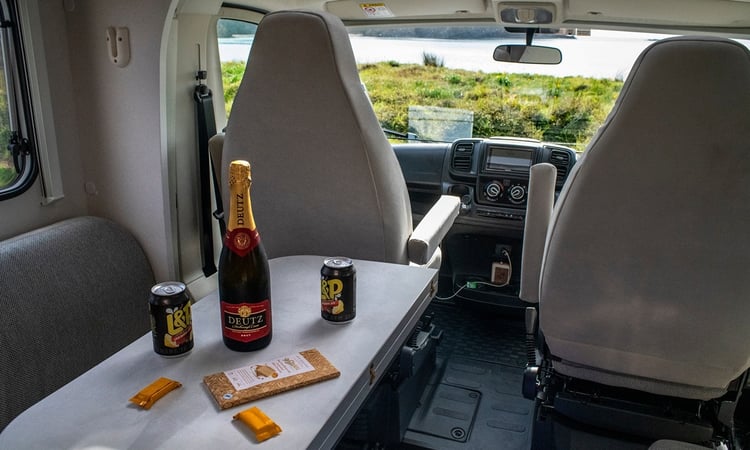
It's the question every budget-conscious traveller asks – and even with elevated fuel prices, the motorhome holds up remarkably well. Here's why.
A car-and-hotel holiday means stacking up several separate costs:
-
Car rental (plus insurance)
-
Fuel
-
Nightly hotel or motel costs – often $150–$300+ per room, per night
-
Eating out for most meals, since you have no kitchen
A motorhome consolidates accommodation, transport and kitchen into one daily rate. Yes, it uses more fuel per kilometre than a car – but fuel is only one line on the holiday budget, and it's usually one of the smaller ones. The savings show up everywhere else:
-
Accommodation: Holiday park sites cost a fraction of a hotel room, and Department of Conservation (DOC) sites are very cheap. Certified self-contained motorhomes can also freedom camp in many beautiful spots around New Zealand, bringing overnight costs to near zero.
-
Food: Cooking your own meals with local produce, rather than eating out three times a day, saves a typical couple a significant amount every single day.
-
Per-person economics: For families and groups, the maths gets even better. A motorhome's shared space means accommodation costs don't multiply with every extra traveller the way hotel rooms do.
The longer the trip, the more the motorhome pulls ahead – the daily savings on beds and meals compound, while the fuel difference stays modest, especially if you're travelling slowly.
Want to run the numbers for your own trip? Try our holiday budget calculator to see how the costs stack up for your dates, route and travel style.
Aerodynamics vs. Weight: What actually drives motorhome fuel efficiency in New Zealand?
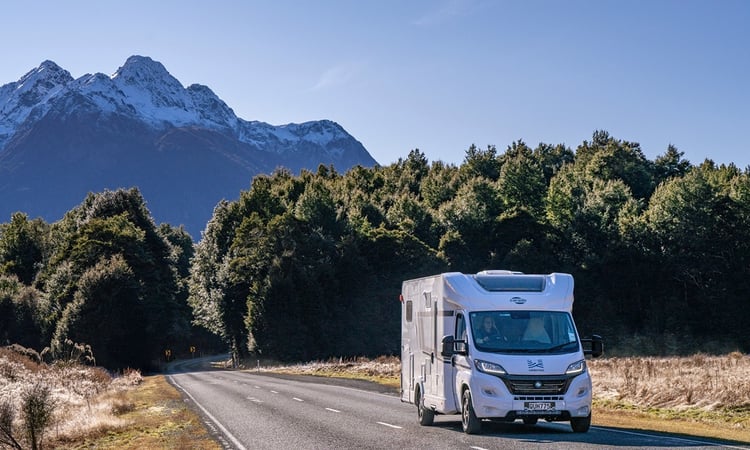
When people picture a fuel-hungry motorhome, they usually blame the engine. In reality, two physical forces do most of the damage: aerodynamic drag and weight. Understanding when each one matters helps explain why some motorhomes are so much cheaper to run – and how your own choices affect the bill.
Aerodynamics: the highway factor
A larger frontal area creates more drag, and drag increases exponentially with speed. Double your speed and the air resistance roughly quadruples. That means a boxy or tall profile (like a traditional cabover) costs you more and more the faster you go.
Where you'll feel it most:
-
Long open-highway stretches at 90–100km/h
-
Exposed alpine crossings like the Crown Range or Lewis Pass, where headwinds and crosswinds add to the resistance
Weight: the hill-climb factor
Weight matters most at lower speeds and on climbs, where every extra kilogram is something the engine has to physically push uphill. New Zealand has a lot of uphill, which is exactly why packing light is something to bear in mind.
The takeaway: you can't change the laws of physics, but you can choose a vehicle designed around them – sleek, low-profile, built on a light European base – and you can control what you load into it.
How do low-profile motorhome designs save you money?
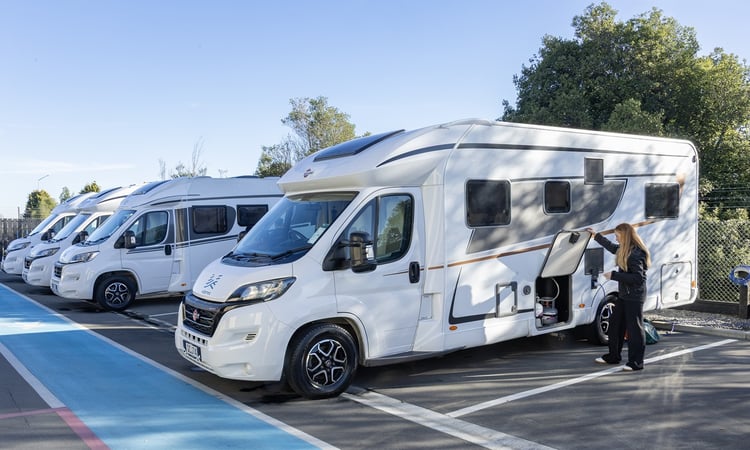
Walk around any New Zealand rental yard, and you'll see two basic shapes: tall cabover (overcab) motorhomes with a bulky sleeping pod above the driver's cab, and sleeker low-profile or semi-integrated designs that sit closer to the cab's natural roofline. Wilderness has deliberately chosen the latter, and all of our motorhomes fall into the low-profile/semi-integrated category.
This is what the difference means for fuel efficiency:
-
Less wind resistance. A low-profile body presents a smaller, smoother face to the air, which translates directly into lower fuel consumption – especially at highway speeds.
-
Better handling. Tall cabover designs catch more wind, producing more body roll and that unsettling, top-heavy feeling when cornering or meeting a gust on an exposed road. Low-profile motorhomes feel planted and far easier to drive – a real bonus if it's your first motorhome trip.
-
Real savings over a real trip. Over a 3,000km holiday (approximately a 20-day trip), even a 2L/100km efficiency difference saves around 60 litres of diesel – a meaningful sum at current prices, before you count the more relaxed driving experience.
This is one of the reasons our motorhomes average around 11L/100km, while taller, older designs can climb toward 16L/100km.
How do road conditions and topography impact a campervan's cost of operation?
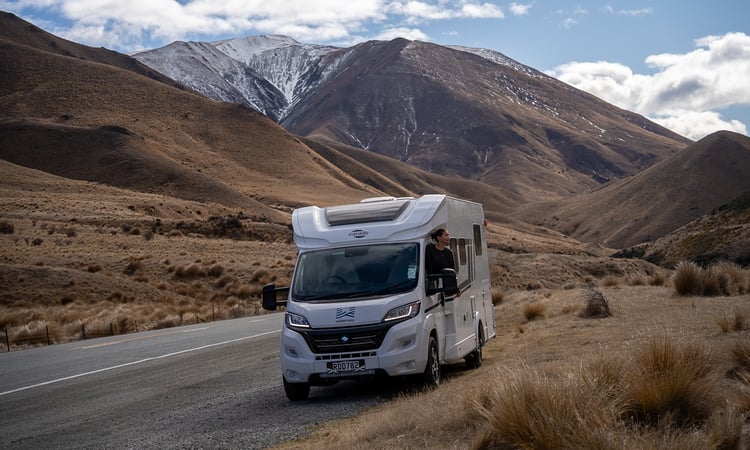
New Zealand's landscapes are the reason you're coming – and also the reason your fuel gauge moves faster here than on a European motorway. Mountainous terrain demands more engine power, and more power means more fuel.
A few realities of Kiwi roads worth planning around:
-
The South Island's alpine passes and winding coastal routes are especially demanding. Climbs like Arthur's Pass, the Crown Range and the road to Milford Sound are unforgettable – and thirsty. Budget a little extra fuel for these legs.
-
Winding roads punish aggressive driving. Harsh braking into corners and rapid acceleration out of them burns far more fuel than smooth, anticipatory driving. Read the road ahead, ease off early, and let the vehicle flow.
-
Backtracking is the silent budget-killer. Plan your route as a loop or a one-way journey (Wilderness offers both Auckland and Christchurch bases) rather than out-and-back legs that cover the same ground twice.
-
Anticipate traffic. Time your drives through cities and popular tourist corridors to avoid congestion, where stop-start driving sends consumption soaring.
None of this should put you off the spectacular routes – they're the heart of a New Zealand road trip. It just means the smart move is to plan deliberately, drive smoothly, and let the hills be part of the adventure rather than a surprise on the fuel bill.
Ready to start putting your road trip plan together? Check out our ultimate South Island itinerary!