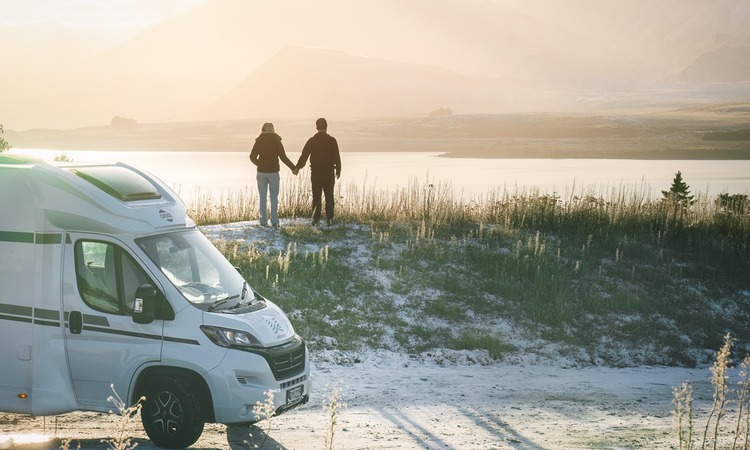
A decade changes many habits, but Rach Stewart’s relationship with sunrise isn't one of them. A professional photographer, she still sets her alarm for first light, still stays out until the last of it, and comes home with a memory card full of attempted shots.
“I am 10 years older since my last proper road trip with Wilderness, and (you’d think) wiser. But not a huge amount has changed in the way I travel, especially for photography,” Rach says.
“I still chase light and push hard for the good photos. But perhaps I’ve slowed down a little and am trying to make it more of a holiday these days.”
Her latest holiday needed a motorhome, and one name immediately came to mind. Ten years ago, Rach toured New Zealand in a Wilderness motorhome with her best friend. When planning her winter photo hunt, she knew she was ready to do it again – this time with her partner and fellow photographer, Clint.
The couple took us along on their journey and told us all about why a motorhome made the perfect base for a pair of landscape photographers.
Two photographers, two ways of seeing
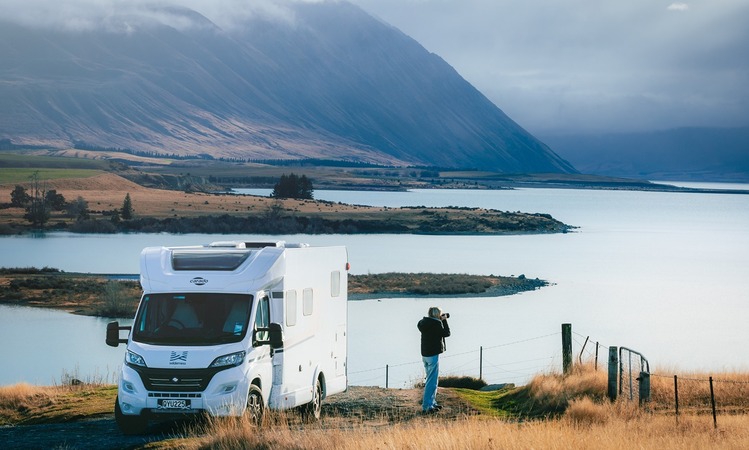
Stand Rach and Clint at the same lookout, and they'll come home with photos that barely look like the same place. Some of that is personal style, but most is down to the tools they choose.
“Rach loves her wide-angle, the 16-35, and long-exposure shots,” Clint says. “I’m a massive fan of the Canon RF 100-500mm zoom, which lets me shoot completely different scenes. Rach is looking at a much wider scene, whereas I’m looking for pockets in the distance that look good. It’s a great balance.”
Rach sees this as nothing but a bonus. Working the same spot from opposite ends of the focal range, neither of them has to worry about what the other one is pointing at.
“I love it,” she says. “Clint captures scenes that I would probably just miss, and vice versa, because we’re each seeing things in our own creative way.”
Often, they’ll arrive with a specific scene in mind, but reality ends up handing them something completely different. Rach is happy to let nature overrule her, and the frames she ends up loving are often the ones she didn’t plan.
Clint has also made his peace with it. If anything, he expects the gap between the idea and the result.
“I think that’s more often the case than getting what I envisioned – sometimes for the better, sometimes just different,” he says. “You go with the flow and handle what the nature gods give you.”
How do photographers decide on an itinerary?
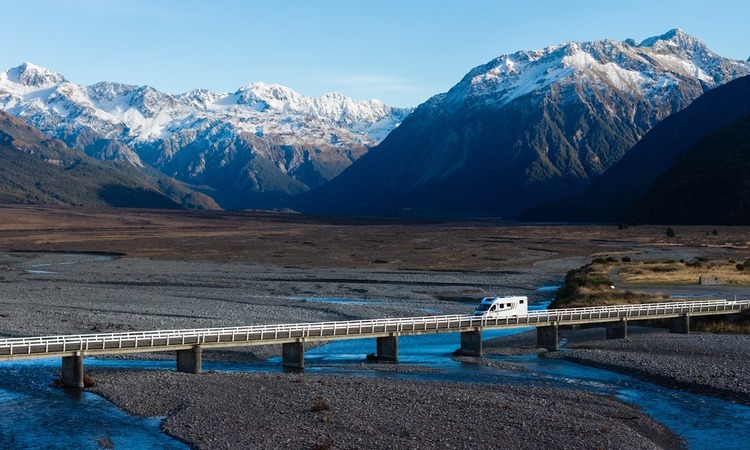
Clint has driven somewhere between 12 and 15 loops of the South Island, and he has stopped expecting any place to look the way it did last time. He’s also dropped any expectations of sticking to a schedule.
The West Coast has served up wind and rain more than a couple of times, which he counts as part of its appeal – but that also means the planning happens in layers. A route gets drawn a few weeks before they leave, redrawn about a week out, and often reworked again one to three days before they drive it.
“It is never the same twice,” he says. “The weather in New Zealand changes the mood of the landscapes constantly, and the light is always changing – day to day, season to season.”
“The key point is we don’t get locked into a plan just because it’s been built,” Clint says. “If the weather throws curveballs, like it did when Haast Pass closed this trip, you re-vector and adjust. Go with the flow!”
Rach also keeps a backup route up her sleeve for exactly those moments, along with a list of alternative locations. For photographers, this works just fine, as unplanned detours tend to be where the best material comes from.
“Our favourite moments are when Mother Nature throws us light we weren’t expecting, or we come across scenes or places we didn’t know about or research,” she says.
“Lake Mahinapua on the West Coast was a spontaneous stop for us to camp for the night as our plans changed due to some incoming weather. We woke up to a stunning scene across the lake towards the wetland and the mountain peaks,” Rach says. “I’d recommend anyone to camp here for the night. It’s close to Hokitika, but it still feels like you’re in the wilderness.”
Planning your own South Island loop? Browse our motorhome itineraries for routes you can bend around the forecast.
What does a typical day on the road look like?
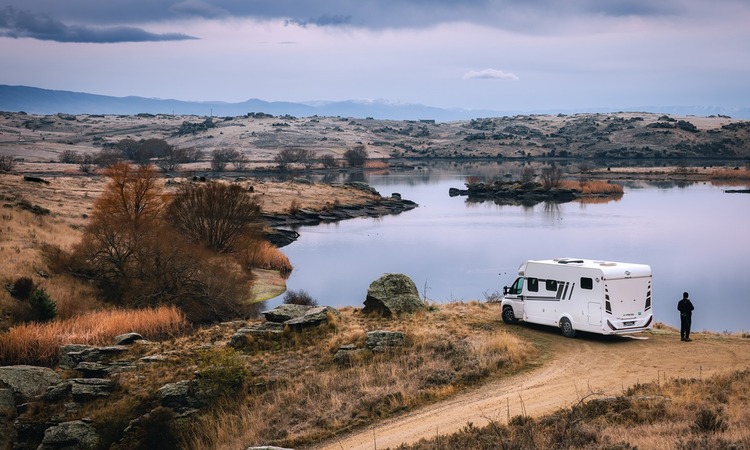
The day starts in the dark. The first coffee is made in the motorhome and carried out to wherever the sun is coming up, and the second comes from the nearest café once the good light has gone.
By mid-morning they're on the move. The drive usually ends somewhere with a walk, a daytime shot or a quiet spot to sit for a while and back up the morning's files, and then they're out again for sunset. It’s a rhythm that only works when you’re taking your accommodation with you wherever you go.
“Travelling and living on the road is a game changer for photography,” Rach says. “We can stay close to all the sunrise and sunset locations, and we don’t have to drive in the dark. We can change our plans easily if the weather is deteriorating, and stay longer at locations we love when conditions are good.”
For Clint, however good the hotel or Airbnb, it just can't compete on proximity to the places they want to shoot.
Once the sun is down, a few square metres become a kitchen, office and lounge. Dinner gets made, tomorrow's route gets checked against the forecast, and any changes to the plan get settled across the table.
“Warming up with a glass of wine after a cold day was our favourite thing,” Rach says. “That, and reviewing our photos together, and researching where to find the best pies. Mostly for Clint.”
Managing your gear in a motorhome

As you might imagine, professional photography comes with plenty of gear. Rach and Clint travelled with camera equipment, two laptops, portable hard drives and, because some habits don't take holidays, a computer mouse each.
“It was easier than one would think,” Clint says. “There’s plenty of space to store gear in the motorhome – the camera bags, tripods and so on.”
Rach and Clint quickly set up a system: anything they reached for daily, like battery chargers, spare batteries and ND filters, lived within easy reach of the door. The camera bags went under the bed when they weren't in use, which kept them out of sight whenever the motorhome was left unattended. During the day, the bed became a working table.
“We have a pretty run-and-gun approach,” Clint says. “The mattress and bedding keep the gear from rolling around, and it’s all instantly accessible if we see something to shoot. Super handy.”
At night, the inverter handled every camera battery that needed charging and kept both laptops running. The table had room for the pair of them to sit across from each other, download the day's content and prepare for the next one.
“Having front seats that swivel is game-changing,” Clint says. “The whole space felt like an office away from home when we needed it to.”
Curious how a motorhome’s power system works? Check out our full guide.
What were the highlights of the trip?
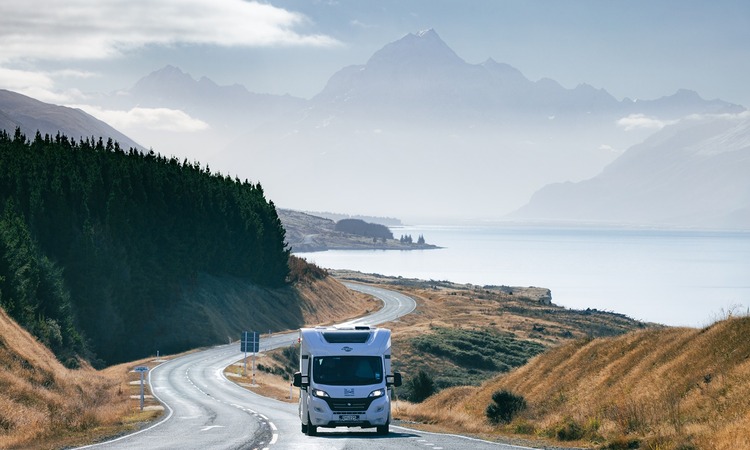
For a photographer, a campsite lives or dies on what's outside the window at first light. On that measure, Rach's pick of the trip was Lake Camp, a DOC-managed campground in the Hakatere Conservation Area, tucked into inland Canterbury.
The camp is just a 20-minute drive from Mount Sunday, best known for its role as Edoras in Lord of the Rings – a stunning walk with 360-degree views, which Rach describes as “more wild” compared to other popular locations.
“You can park close to the lake and wake up for sunrise with a view straight to the mountains,” she says. “When they’re reflecting in the lake, the view is insane. The Hakatere is a beautiful part of Canterbury, and the fact that you can camp there for next to nothing is such a bonus.”
The adventure capital of the world – Queenstown – was another highlight. The pair stayed at Driftaway, a holiday park in Frankton, where the higher nightly rate was very much worth it.
“They have amazing facilities,” Rach says. “The views from the kitchen make you feel like you’re in a restaurant, there are hot tubs for hire, and the location is stunning.”
Clint's vote goes to Lake Tekapo. He rates it among the most beautiful places in the country to wake up, and the lake gave him his favourite shot of the trip.
The perks of travelling during the winter
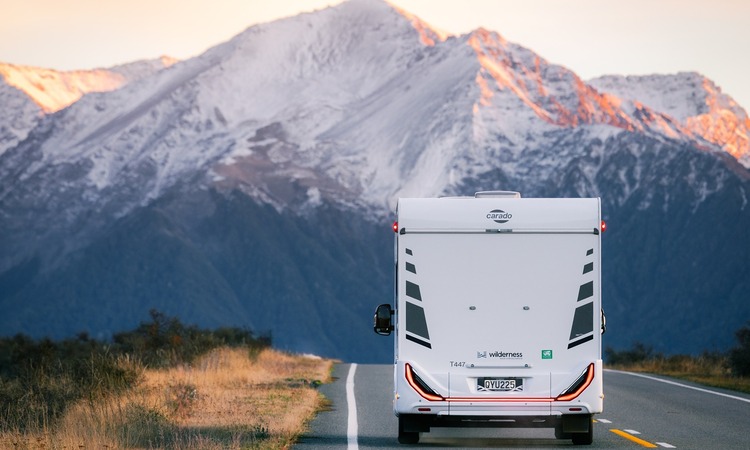
Initially, the “winter wonderland” Clint wanted for his photos didn’t quite pan out. After struggling to find snow, he got lucky at Tekapo and finally captured the “van in the snow” photo he’d been searching for.
For the couple, this winter scenery is a huge part of the appeal. Plenty of travellers write off the South Island between June and August, but Rach thinks they've crossed off the wrong season. The sun rises late and sets early, so you don’t need to wake up at a silly hour to capture a stunning sunrise. Then, there’s always a slope to hit.
“In my opinion, winter (especially in the South Island) is the prettiest time of the year for photography, and it is also incredible for all the snow sports,” she says. “It’s super fun to go skiing in between photo shoots.”
“It’s also the off season, so the roads and locations are far less busy, with fewer crowds at all the popular spots. That makes it a lot easier to compose for photography.”
Clint had been visiting New Zealand for more than ten years before this trip, but never in winter. Given how hard the snow was to find, he's only calling it winter for the sake of argument. That said, the season has still won him over.
“I need to do it again,” he says. “It is such a different experience to any other season.”
Thinking about a cold-season trip? Our guide to winter campervan trips in New Zealand explains what to expect.
If they were starting again
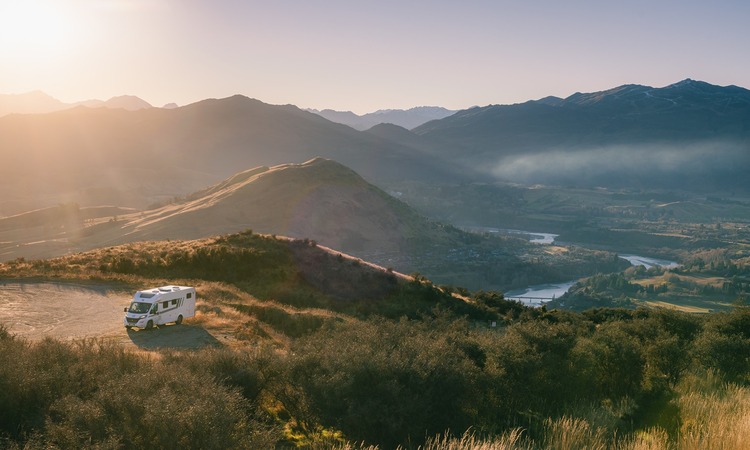
Hand Rach a camera tomorrow and ask her to photograph New Zealand for the first time, and she'd head for inland Canterbury – either the Hakatere Conservation Park or Aoraki Mount Cook National Park. Both are ringed by mountains, lakes and native wilderness, but Hakatere is the wilder and quieter of the two.
“The Hakatere is home to Edoras from Lord of the Rings, and the views over the Rangitata Valley and Mount Sunday are incredible,” she says. “Mount Cook is far more popular, but the scenery makes up for the crowds.”
Clint seconds the Hakatere. Then he would head northeast to Kaikoura.
“I love this spot. I don’t know another place on earth that gets as good sunrise and sunset light as Kaikoura does,” he says. “The wildlife is amazing. I was nearly knocked out of a kayak by a humpback whale a couple of years ago, and I have the video to prove it.”
For all the photographs they brought home (they’re truly stunning – take a look on Rach’s website), the experience is what stuck with them. Rach hopes the people who use her guides remember the sunrise over the mountains, the waterfall they stood beside, and warm evenings indoors.
“Every location in New Zealand leaves me in awe,” Rach says. “It reminds me how lucky we are to have this scenery right on our back doorstep. If people leave feeling more connected to the outdoors, inspired to protect these places, and already planning their next trip back, then I think that’s the best outcome.”
Ready to start planning your own winter getaway? Check out our complete guide to travelling New Zealand by motorhome in the winter.