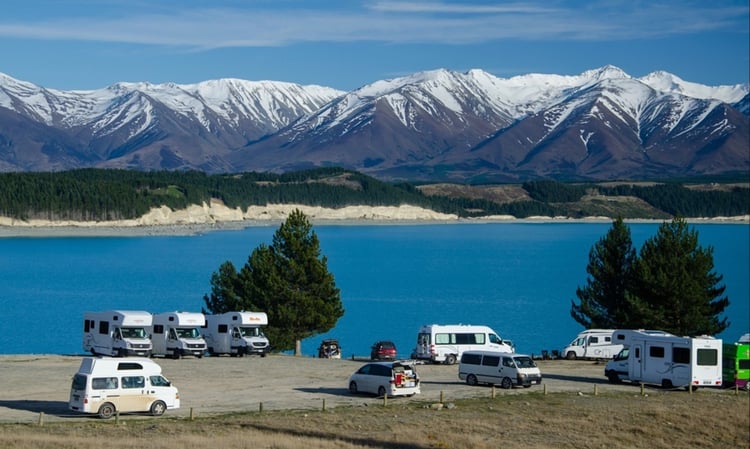
Walking through a New Zealand campsite can feel like visiting a showroom of RV choices, from tiny vans to bus-sized luxury rigs. Choosing the wrong one to rent doesn't just mean bad nights’ sleep awaits — it can also affect where you're legally allowed to stay and how much you enjoy the drive.
Whether you’re a first-timer or a seasoned motorhome traveller in NZ, knowing the difference between a luton and a low-profile recreational vehicle will help you book the right RV.
In this blog, we shed some light on the different kinds of rental motorhomes and campervans in New Zealand. We discuss the right number of berths for your group, the difference between premium and budget RVs, and the major trade-offs you’ll encounter.
What’s the difference between a campervan and a motorhome in New Zealand?
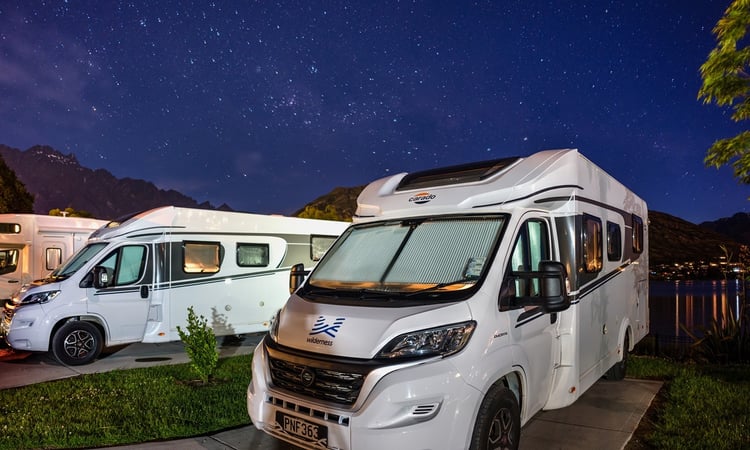
Motorhomes are purpose-built vehicles designed from the outset to be lived in, with interiors engineered for comfort and space. Campervans are standard vans that have been converted into living spaces.
In New Zealand, the terms motorhome and campervan are often used interchangeably, although there are distinct differences between them.
The truck chassis of a motorhome allows for spacious living areas, comfy beds with proper mattresses, and well-equipped kitchens. Motorhomes come in many layouts and sizes, and most are Certified Self-Contained (CSC), which means they're equipped with fixed toilets, holding tanks for fresh and grey water, and sealed rubbish storage. This certification allows you to freedom camp legally.
Campervans are everyday delivery-style vans converted for travel, and their interiors are outfitted with make-up beds and small kitchenettes. Although they’re relatively easy to park, the usable interior space can be significantly less than that of a motorhome.
What types of campervans can you rent in New Zealand?
You can choose from a basic sleepervan if you want something simple and cheaper, or a high-top campervan that offers more space to move and basic facilities.
It's worth knowing that most sleepervans and high-top campervans have had a previous life. Sleepervans are often former family cars, while high-tops typically started as delivery vans. That means an older vehicle with higher mileage — though this isn’t an issue for well-maintained, reliable models — and a relatively new camper conversion inside.
Sleepervans
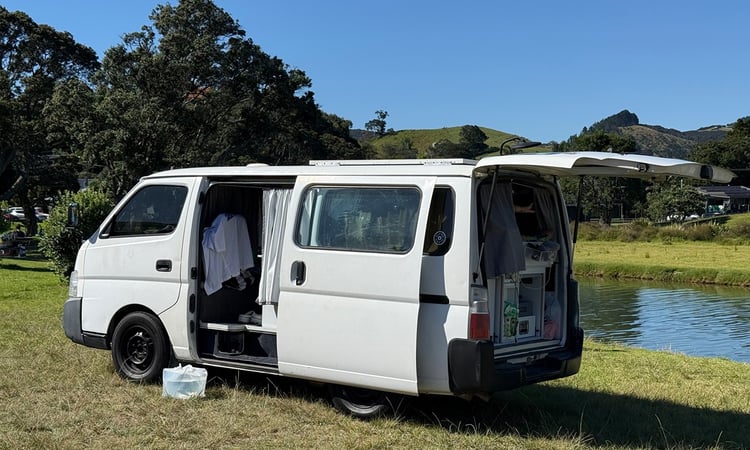
As the most basic recreational vehicle on the road, a sleepervan may be the right option if you’re a minimalist and tight on budget. Often based on small vans like the Toyota Previa, they’re simple, affordable and easy to drive and park — with a bed and basic gear.
Many sleepervans have kitchens that are accessible from the outside by opening the rear door or tailgate. Some have fixed toilets, which is one of the requirements for freedom camping certification in New Zealand. In a compact campervan, the toilet is often tucked into a tight space, so whether it works for you will depend on the vehicle layout and how comfortable you are with limited facilities.
Pros of renting a sleepervan:
-
Compact and easy to manoeuvre
-
Affordable
-
Suitable for minimalist solo travellers or couples
Cons of renting a sleepervan:
-
Limited living space – you can’t walk around inside, and many don’t have a toilet
-
Kitchen area exposed to the elements
-
Less suitable for winter due to limited insulation and heating options
-
Less likely to be certified self-contained for freedom camping
If you’re travelling solo or as a couple, and are conscious of your budget, plus you intend to spend most of your time outdoors while only using the RV for sleeping, consider a sleepervan.
One thing for taller travellers to consider is that sleepervans can be too short to sleep in comfortably. Some sleepervans will come with a tent extension, which allows for some more horizontal space. However, this also means that you can’t close all doors for the night and will be closer to the elements.
High-top campervans
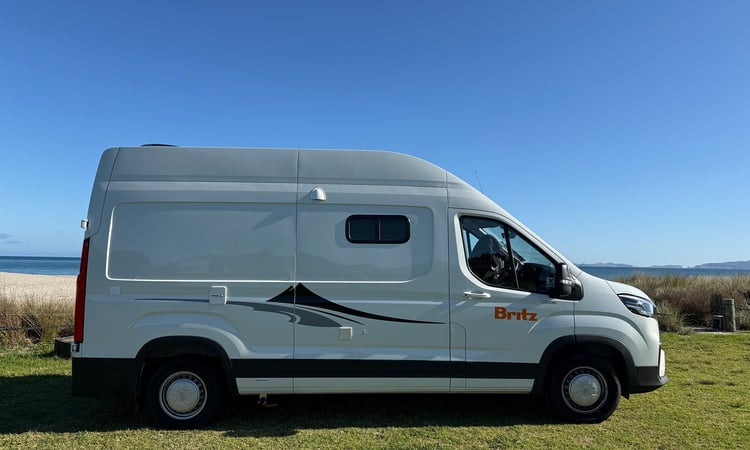
This kind of campervan comes with an extended roofline — offering a more spacious interior feel than low-roof models like sleepervans. Many high-top campers are based on vans like the Toyota Hiace or, more recently, LDV vans.
Compared to sleepervans, they feature more storage and living space and interior kitchens. This makes cooking easier and offers more overall comfort, especially in rainy weather. However, be sure to check the toilet type. As of June 2025, any rental campervan without a permanently fixed toilet does not come with self-containment certification — meaning you’ll no longer be able to use it to legally freedom camp.
Pros of renting a high-top campervan:
-
More roomy than a compact sleepervan - you can walk around in it
-
Easy to explore hard-to-reach places
-
Comfortable for two people, with some able to accommodate four
-
Small campervans are cheaper than a motorhome, though larger ones will approach motorhome prices
Cons of renting a high-top campervan:
-
More compact living space than a motorhome
-
Limited storage space
-
You’ll likely need to convert the living space into a bed each night
-
Not suitable for winter camping due to limited insulation and a lack of central heating
What kinds of motorhomes can you hire in NZ?
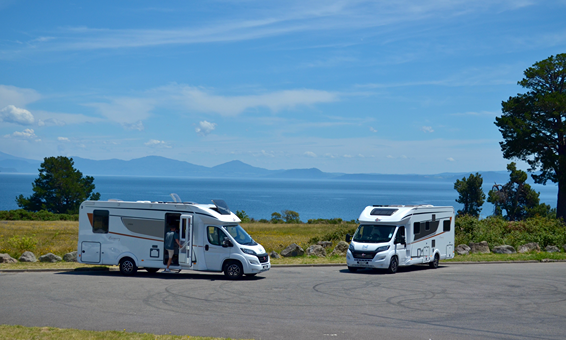
The most common motorhome types include family-friendly cabover designs and aerodynamic semi-integrated models. In a motorhome, the comfort comes primarily from the space — a proper lounge, a well-equipped kitchen, and a fixed shower and bathroom. Premium operators like Wilderness Motorhomes also include full insulation and heating as standard
When you step into the world of motorhomes, you’re looking at recreational vehicles designed for living, not just sleeping. Knowing more about these motorhome classes in NZ will help you understand why they’re more comfortable than campervans.
Cabover motorhomes
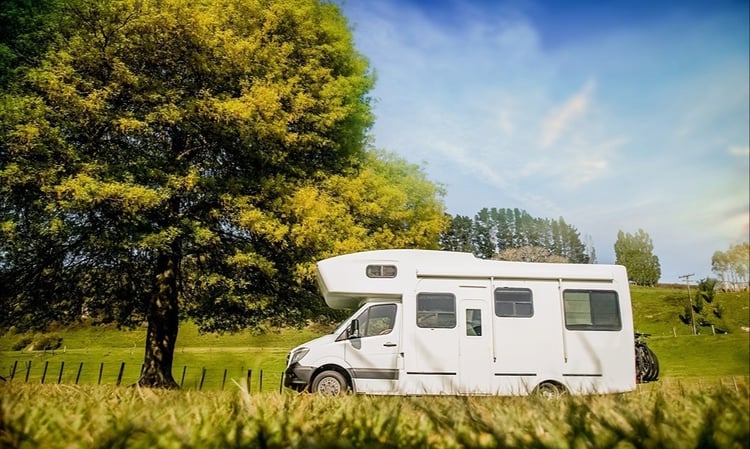
With its additional space above the cab, the cabover or luton motorhome is perfect if you’re a larger group needing a maximum number of sleeping spots.
This type is easily recognisable by its large bulge that extends over the cab. It’s a design which can offer up to six sleeping berths and sometimes free up floor space in the living and kitchen areas.
Pros of renting a cabover motorhome:
-
Extra berths for up to 6 passengers
-
The cabover bed is permanently made up
-
Storage – larger items can be put in the cabover bed when it’s not in use
-
A comfortable living space for up to 4 people, especially compared to smaller campervans
-
Have fixed toilets and are typically Certified Self Contained (CSC)
Cons of renting a cabover motorhome:
-
Their bulkier frame can make them more difficult to manoeuvre and drive
-
Lounge beds are usually converted dinette seating, meaning they have to be made up each night
-
Cabover beds might not be suitable for the elderly, those with limited mobility, or young children who might roll off
-
Limited external storage for bulky items
-
Living space can get tight when travelling with 6 people
Cabover motorhomes are more susceptible to strong crosswinds on NZ roads because of their high profile. They also have more drag, which may increase your fuel consumption. Plus, you need to be more aware of low-hanging tree branches and height-restricted parking lots.
Semi-integrated motorhomes
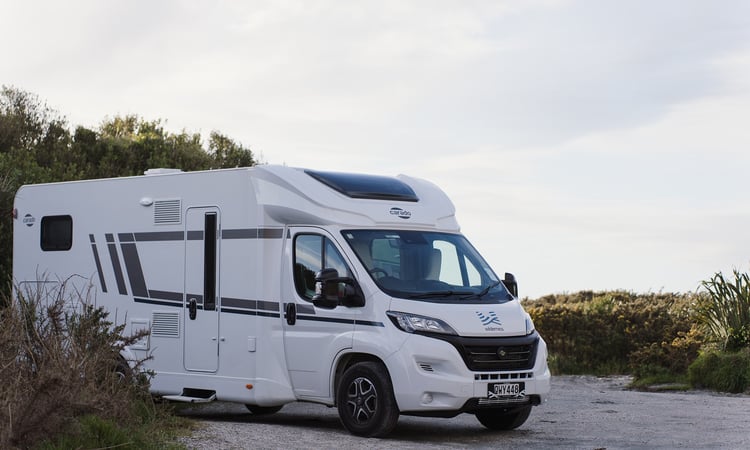
Sleek and aerodynamic, semi-integrated motorhomes have the driver’s cab partially integrated into the living area, with rotating driver and passenger seats. This means the driver and passenger seats can turn 180 degrees to become a part of your living area — meaning you can entertain your camp neighbours over dinner or spend an evening playing family card games.
These vehicles, also known as low-profile or C-class motorhomes, often feature drop-down and permanent beds — an innovation developed by Bürstner to solve the age-old space problem of motorhome living. The bed stays permanently made up but lifts to the ceiling during the day, freeing up the living area below. Combined with permanent beds for other occupants, they're ideal for couples or small families of up to four people.
Pros of renting a semi-integrated motorhome:
-
Their low profile makes them easy to drive, with great fuel efficiency
-
Often contain a separate toilet and shower, which you won’t find in a typical cabover
-
Permanent beds maximise living space, while also being ready to use without laboursome set up
-
Plenty of external storage space for bulky items like suitcases
-
Ideal for groups of up to 4 people
Cons of renting a semi-integrated motorhome:
-
Manoeuvring a larger vehicle may take some getting used to
-
Typically has space for a maximum of four people
-
Often has a smaller kitchen compared to a cabover
The right number of berths for your travel group
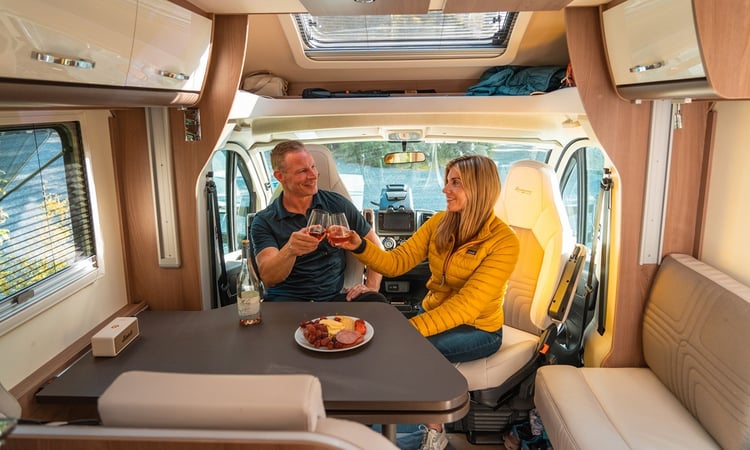
Choosing the right number of berths ensures everyone in your travel party has a seatbelt and a comfortable, dedicated space to sleep.
In recreational vehicle terms, a berth means a sleeping space inside a motorhome or campervan — so an RV with four berths can sleep up to four people. In New Zealand motorhomes, some berth numbers are more typical than others, with 6-berth motorhomes being relatively rare.
Two-berth motorhomes
If you’re a single traveller or a couple, a recreational vehicle with two berths is all you’ll need. However, not all two-berth RVs are equal, as:
-
A budget two-berth campervan will likely have a table that needs dismantling so you can make the bed every evening.
-
A premium two-berth motorhome will probably feature a fixed double bed, enabling you to rest or sleep without any work setting it up.
Two-berth RVs are also likely to be shorter in length than four or six-berth motorhomes, making them easier to drive and park.
Check out our Compact for 2 motorhome — the perfect one for couples.
Four-berth motorhomes
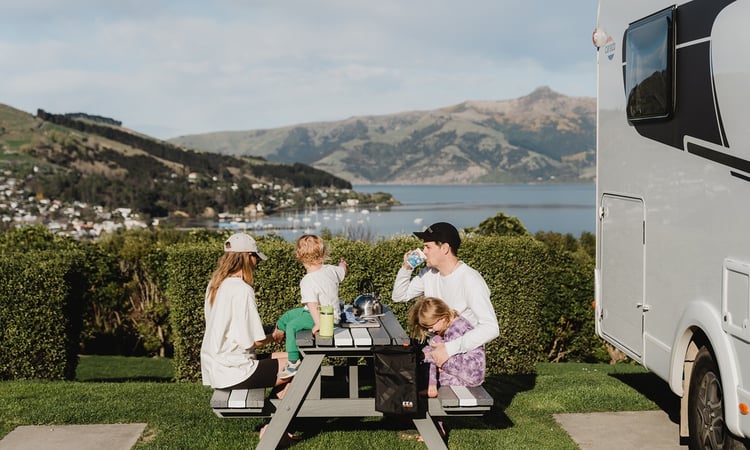
Often considered a versatile option for families, two couples or small groups, the four-berth motorhome typically has two double beds — or a king and a double.
You’ll enjoy a flexible layout with both sleeping and living spaces — whether that's a cabover bed paired with a convertible lounge or dinette, or a permanent bedroom with a privacy door separating the two spaces.
With a Wilderness motorhome, you'll benefit from the spaciousness of both a permanent bed and, in some models, a dedicated bedroom and a living area, with a privacy door to separate the two spaces.
Take a look at our Twin/King for 4, Double for 4 and The Suite options — each with space-saving drop-down beds.
Six-berth motorhomes
Six-berth motorhomes have extra interior capacity to safely and comfortably seat and sleep more people. They’re ideal for larger families, though require you to have more confidence parking, driving and reversing due to their greater size.
See our guide to choosing a Wilderness motorhome to find out about the entire range.
Premium versus budget motorhomes in New Zealand
Recreational hire vehicles come in all shapes and sizes, lengths and layouts — from budget campervans to premium motorhomes.
So, what are the key differences? Premium vehicles tend to be newer, with better heating, insulation, and onboard systems — all of which add up to a more comfortable experience on the road.
Budget RV operators
Budget operators typically offer lower daily rates by running older fleets — vehicles that are often five to ten years old or more — and by keeping onboard features to a minimum. They are built to be functional and easy to maintain, and comfort isn’t the top priority.
The beds tend to be convertible lounge seating – think similar levels of comfort to sleeping on a couch.
Budget campervans also often lack self-contained certification, which means freedom camping is either restricted or off the table entirely. In New Zealand, a self-contained vehicle must have enough drinking water storage and wastewater holding tanks for at least three days — requirements that cheaper campervans often don't meet.
The result is a narrower set of options for where you can park overnight, higher ongoing costs from paid campsites, and a less flexible trip overall.
Premium RV operators
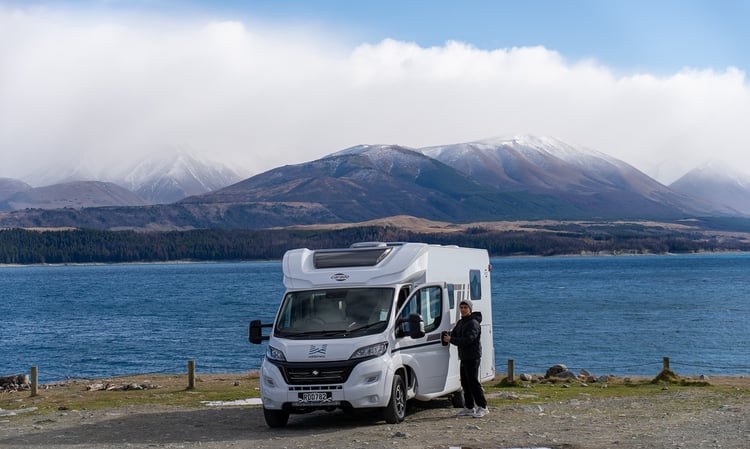
Premium operators like Wilderness focus on newer European-built models with average ages between zero and four years. These feature full insulation, double glazing and central heating systems that run on gas or diesel — meaning you can stay toasty warm in the middle of nowhere without a power cord in sight.
Premium motorhomes can also include inverters, allowing you to charge your phone, laptop and camera directly from the house battery while camping off-grid. You’ll also enjoy better entertainment options, including optional onboard Wi-Fi and Smart TVs.
Find out about luxury motorhome hires in New Zealand.
Certified self-contained motorhomes and freedom camping
In New Zealand, a non-self-contained recreational vehicle carries enough water, waste capacity, and sanitary facilities to be fully off-grid for at least three days.
Recent law changes mean portable toilets no longer meet self-containment standards — a permanently fixed toilet is now mandatory for legal freedom camping. Fines for illegal camping have increased to upwards of NZ$400, so be sure to check the CSC status of your rental RV before committing.
Understand NZ’s freedom camping regulations for CSC motorhomes.
What trade-offs should you consider when hiring a motorhome?
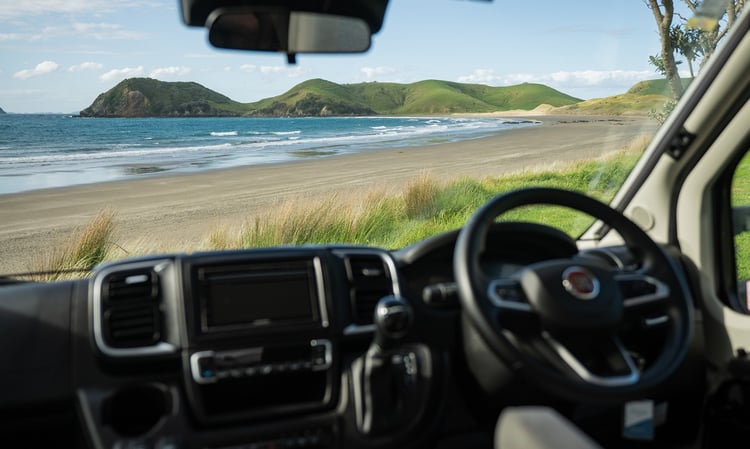
Selecting a motorhome involves balancing your desire for interior space and permanent beds against the vehicle's ease of manoeuvrability. Motorhomes have a variety of internal configurations, so the model you choose will be a trade-off between what you can and can’t have.
You’ll have to weigh up:
-
Permanent beds versus a nightly bed setup — a fixed bed takes up space all day, whereas converting dinette seating into a bed requires ten minutes of furniture Tetris every night.
-
The drop-down bed innovation — travelling with a drop-down bed that allows for four berths yet feels like a spacious two berth during the day, may appeal to you.
-
Better manoeuvrability or greater interior space — often a more compact two-berth motorhome is easier to drive but offers less room to move about inside compared to a four-berth.
-
Off-grid capability — your rental motorhome may come with gas heating for cold nights off-the-grid, or only have plug-in or central heating that needs powered campsites to operate.
-
A wet or dry bathroom — where the shower and toilet are combined but everything gets wet when you shower, or features a swivel door to protect the bathroom from getting wet during showers. Some larger motorhomes contain separate showers and toilets to avoid this issue while offering more space and storage for your bathroom utensils.
Learn more about motorhome layouts to help make a smarter decision.
Choosing the ideal motorhome for your travel group
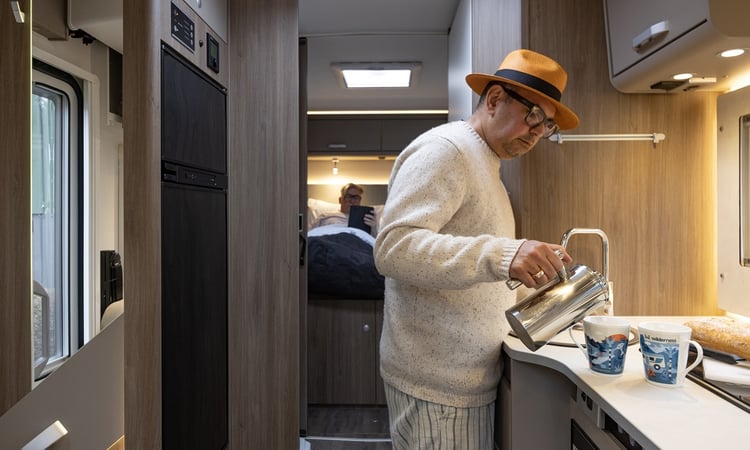
RV types, berths and trade-offs are all important aspects to think about when deciding which motorhome will best suit your family or group of friends. Also, keep in mind:
-
Sleeping arrangements — are you happy to share a bed, or does your group need individual sleeping spots to ensure everyone sleeps well?
-
Privacy — do you need separate living zones for kid naps or to enjoy some much-needed quiet space during the day?
-
Trip length — is a permanent bed and additional living space worth the extra vehicle length if you’re planning a longer holiday?
-
Driver confidence — how comfortable are you driving a longer vehicle on narrower roads?
-
Self-containment — does the campervan have a certificate that allows you to freedom camp in NZ?
-
Budget versus value — is the lowest daily rental rate your priority, or is it worth investing in a premium motorhome that offers superior insulation, heating and off-grid power?
New Zealand has an array of different campervans and motorhomes available to rent, offering different numbers of berths with a variety of layouts, on a scale of budget to premium quality.
Ultimately, the recreational vehicle that matches your finances, group size, travel lifestyle and holiday plans will be your best choice.
Check out our complete guide to finding your ideal motorhome rental in NZ.