If you’re booking a camper for your New Zealand road trip, you’ll probably come across something called “excess reduction” or “liability reduction”. These are some fancy words for extra insurance cover – but is it worth buying, and how is it different from regular travel insurance? What’s the risk if you skip it?
In this guide, we’ll cover all your options for insurance on your campervan road trip. We’ll explain the difference between liability reduction, which is offered directly by a rental company, and travel insurance, which you’d buy from a separate insurer.
We’ll compare coverage and benefits and explore which type of cover is worth it for peace of mind.
Do you need insurance to rent a camper in New Zealand?
No, you don't need to buy it separately. Every rental motorhome comes with comprehensive insurance included in the hire price. It covers accidental damage to the motorhome, theft and fire, and any damage you cause to other people's property.
However, this doesn’t mean you’re off the hook for all costs if your rental gets damaged. That’s where your excess (or deductible) comes in – this is the fixed amount you pay towards repairs if the motorhome is damaged.
Here's how that plays out with a $7,500 excess:
-
A scraped bumper costs $2,000 to fix. You pay $2,000.
-
A rollover costs $40,000 to repair. You pay $7,500, and the insurance pays the other $32,500.
Motorhome excesses are higher than for rental cars because motorhomes are expensive to repair, and replacing one can cost more than $100,000. In New Zealand, the standard excess on a rental motorhome is usually between about $5,000 and $7,500. At Wilderness, as with several of the larger operators, it's $7,500. You can lower it by paying a daily fee for a liability reduction option, which we explain further down.
Why your excess matters, even if you're a careful driver
You pay your excess whenever the motorhome is damaged, including when another driver causes the accident.
-
If the other driver is insured, their insurer pays for the repairs, and your excess is refunded.
-
If the other driver is uninsured, the rental company may try to recover the cost from them directly. This can take a long time and may not succeed, so you could end up paying your excess for damage you didn't cause.
The second situation is more likely than you might think. Insurance isn't compulsory for private vehicles in New Zealand, and a Ministry of Transport study estimated that around 7.6% of them are uninsured.
How do liability reduction options work, and what do they cost?
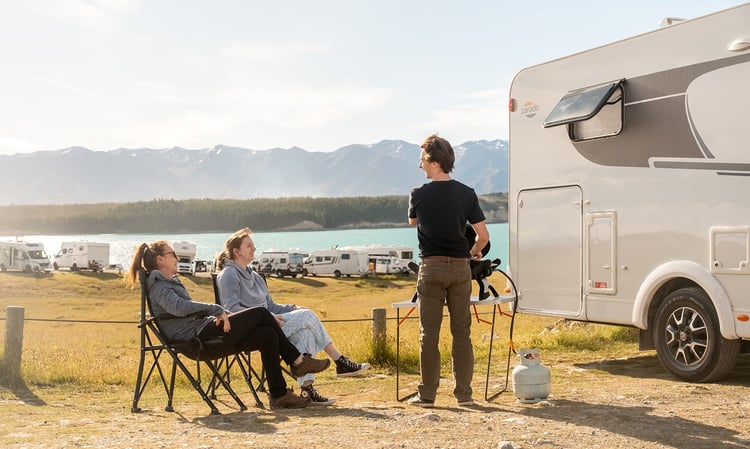
A liability reduction option is a daily fee you pay on top of your hire to lower your excess. The more you pay per day, the less you're on the hook for if something goes wrong. Most operators cap the fee after a set number of days, and the top-tier options often come with extras like camping chairs, a barbecue, or prepaid fees.
With Wilderness, you can choose or change your option when you book, or any time up to pick-up. Once you've driven away, it's locked in for the rest of your hire.
Wilderness cover options
Wilderness's comprehensive insurance also covers towing and recovery if the motorhome breaks down, overhead and underbody damage, and damage to other people's property up to $10 million per claim. On top of that, you can choose from three levels of cover.
|
|
Standard Cover |
Extra Cover |
Full Cover |
|
Daily cost |
Included |
$64 per day |
$84 per day, capped at $4,200 |
|
Your excess per incident |
$7,500 |
$500 |
$0 |
|
Roadside help for flat or damaged tyres |
Not included |
Not included |
Included |
|
Road user charges and toll road fees |
Not included |
Not included |
Included |
|
LPG refill at drop-off |
You refill |
You refill |
Included |
|
Outdoor table and chairs, barbecue, snow chains, child seat |
Extra cost |
Extra cost |
Included |
Around 95% of our guests choose Full Cover. With zero excess and the extras included, it means fewer surprises at drop-off and a little more holiday on your last day.
What's the difference between insurance, excess and a bond?
These three terms get used interchangeably, but they're different things. Insurance covers the motorhome. The excess is your share of any damage. The bond is how that share is secured during your hire.
|
Term |
What it means |
At Wilderness |
|
Comprehensive insurance |
Covers accidental damage, theft, fire and damage to the motorhome or other people's property |
Included in the daily rate |
|
Excess (or liability) |
The most you'll pay for each incident |
$7,500 on Standard Cover, $500 on Extra Cover, $0 on Full Cover |
|
Bond |
Money held so the excess can be paid in case of an incident |
Taken from your credit card if there's an incident, or paid upfront if you don't have a credit card |
What does comprehensive insurance cover?
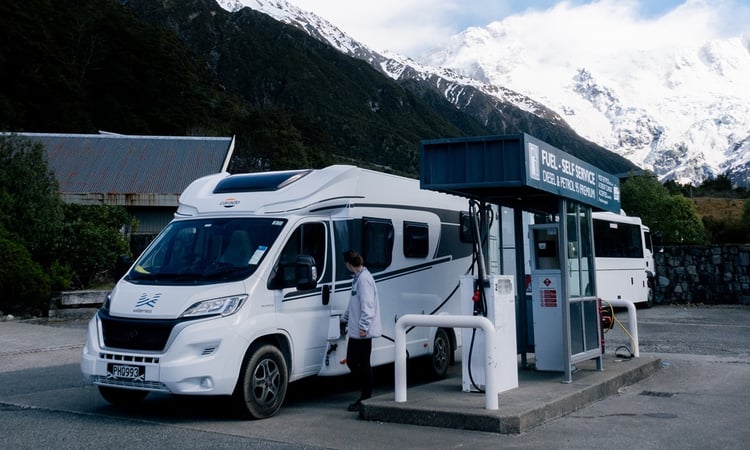
The rental company insures every motorhome in its fleet, and the cost of that insurance is built into your daily hire rate. If the motorhome is damaged or stolen while you have it, the insurance pays for the repairs or a replacement.
Rental insurance covers most of the things that can go wrong on the road. What it leaves out are mostly situations you can avoid with a bit of care.
Usually covered (your excess applies)
-
Accidental damage, including windscreens, tyres and panels
-
Single-vehicle accidents and rollovers
-
Damage to other people's vehicles and property
-
Theft, break-ins, fire and vandalism
Usually not covered (you pay in full)
-
Towing if you get stuck or bogged off a formed road
-
Lost keys and lockouts
-
Putting the wrong fuel in, or contaminating the water tank
-
Running out of fuel, or flat batteries from misuse
-
Your personal belongings
Possibly covered (varies by provider)
-
Damage from driving on gravel roads. Wilderness covers this with no road restrictions, but other providers may not.
-
Overhead and underbody damage. Some providers cover this as standard, but others only include it as part of their premium option.
To stay covered, you need to take reasonable care of the motorhome and follow the rental terms. Check the full Wilderness terms and conditions for the details.
What is single-vehicle rollover cover, and is it included?
A single-vehicle rollover is when the motorhome tips or rolls without hitting another vehicle. It's usually caused by strong wind, soft road edges or taking a corner too fast. Motorhomes are tall with high sides, so gusty days on exposed roads deserve extra respect.
Single-vehicle accidents are covered by Wilderness's comprehensive insurance, and your chosen excess applies. Recovery and repairs after a rollover usually run into the tens of thousands, so the full excess almost always kicks in.
Are windscreen and tyre damage covered?
Yes. Providers generally count this as accidental damage, so your excess will apply. On the Wilderness Standard Cover, that means you'd pay the full repair cost up to NZ$7,500.
Both happen more often than you'd think. A replacement windscreen can cost up to NZ$1,000, and stone chips from gravel and loose chip seal are common on rural roads. Tyres take a beating on those same roads, too.
Every Wilderness motorhome comes with 24-hour roadside assistance for mechanical faults. Roadside help for flat or damaged tyres, however, is only included with Full Cover. On other options, the callout cost is yours.
What are the driver requirements and exclusions?
Your cover only applies when the motorhome is being driven by someone who's allowed to drive it. To drive a Wilderness motorhome, each driver must:
-
be 21 or over
-
hold a current full driver's licence for the class of vehicle (learner and restricted licences don't count)
-
be named on the rental agreement
-
carry their original, physical licence
If your licence isn't in English, you'll also need an English translation from an NZTA-approved translator or an international driving permit, carried alongside your licence. Digital licences are only accepted if they're in English and can be verified with the NZ Verify app.
When is your cover void?
Certain situations cancel your liability reduction option entirely. If one of these causes or contributes to the damage, you could be responsible for the full repair cost.
-
An unlisted or unlicensed person was driving
-
The driver was over the legal alcohol limit or impaired by drugs
-
The driver didn't stop or stay at the scene of an accident
-
The motorhome was driven on a beach, through floodwater or a river crossing, or on a road signposted as unsuitable for motorhomes
-
The motorhome was overloaded, or carrying more people than it has seatbelts
-
It was driven in an unsafe condition, recklessly, or for racing or stunts
-
The fuel, oil or water tanks were contaminated, or the wrong fuel was used
-
Snow chains were fitted or used incorrectly
Unlike most rental companies, Wilderness lets you take its motorhomes on unsealed roads. The usual rules still apply, though. Take it slow, and steer clear of any road with a sign saying it's unsuitable for large vehicles.
What are the 6 most common types of motorhome rental damage, and how can you avoid them?
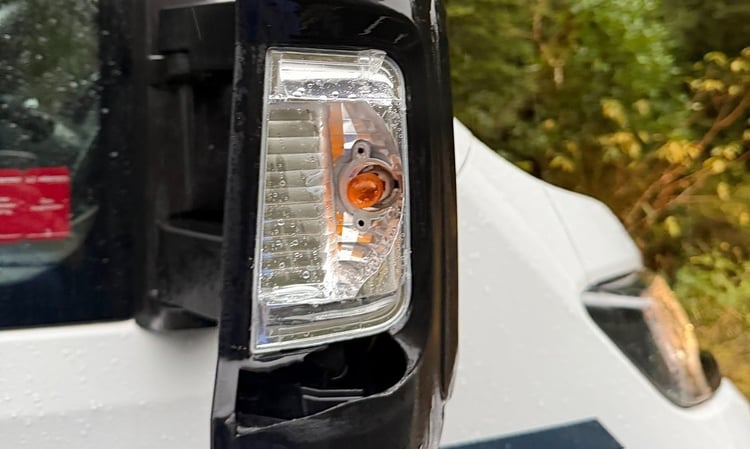
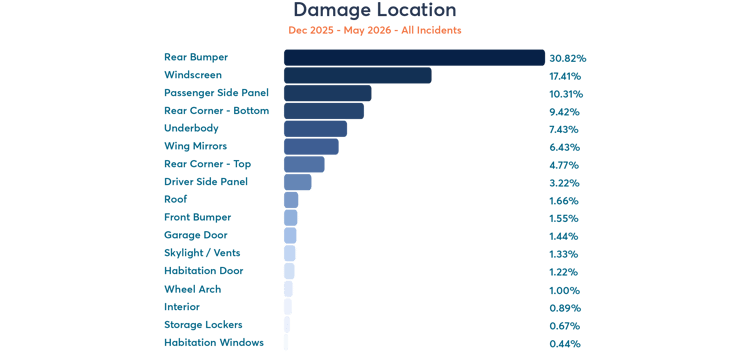
Most motorhome damage happens at walking pace, in campsites, car parks and petrol stations. We looked at incident data from the Wilderness rental fleet between December 2025 and May 2026, published in our motorhome owners' insurance guide.
The most common cause of damage, by far, is colliding with an object when parking – usually by drivers who aren’t used to manoeuvring a larger vehicle.
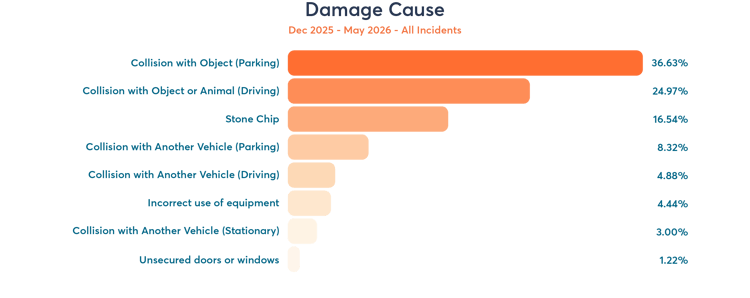
Collisions with an object (or animal) while driving and damage to glass (stone chips) are also common.
When it comes to location of damage, the back of the motorhome takes the brunt of it. The rear bumper and the top and bottom rear corners together account for close to half of all damage, and the rear bumper alone appears in 38% of incidents. Underbody damage makes up about 7% and is almost all grey water pipes, usually from steep kerbs or rough tracks.
Insurers see a similar picture.

As we head into winter, our biggest claims tend to be weather-related, particularly given the severe storms that New Zealand has experienced over the past few years. That said, our most common claim is for glass repairs.
1. Rear bumper damage
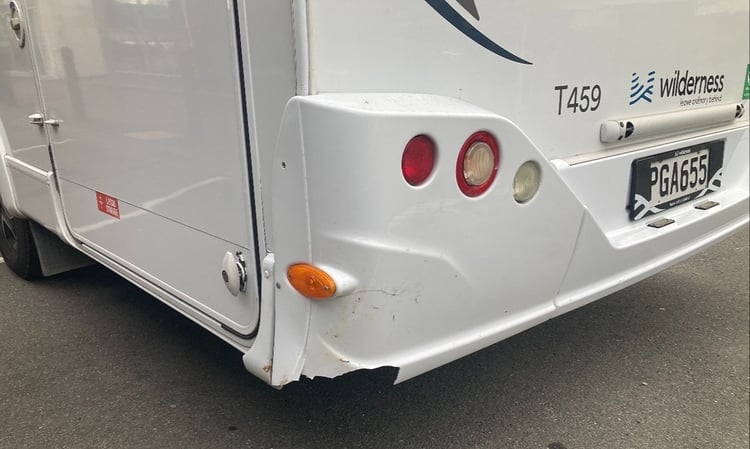
The single most common type of damage, usually from reversing into bollards, posts, bins or other cars. Repairing a bumper on a premium motorhome can cost $2,000 or more. Reversing cameras help, but most motorhomes don't have parking sensors, so ask a passenger to step out and guide you back.
For more tips, see our guide to parking your campervan in New Zealand.
2. Wing mirror damage
Narrow roads, hedges, and tight parking spots are hard on mirrors. A replacement can cost more than $1,000. Fold them in when you park close to other vehicles.
3. Side panel damage
Usually caused by cutting corners too tightly or brushing past trees and fences. A motorhome needs a much wider turn than a car, so swing out further than feels natural. If you hear scraping, stop straight away.
4. Overhead strikes
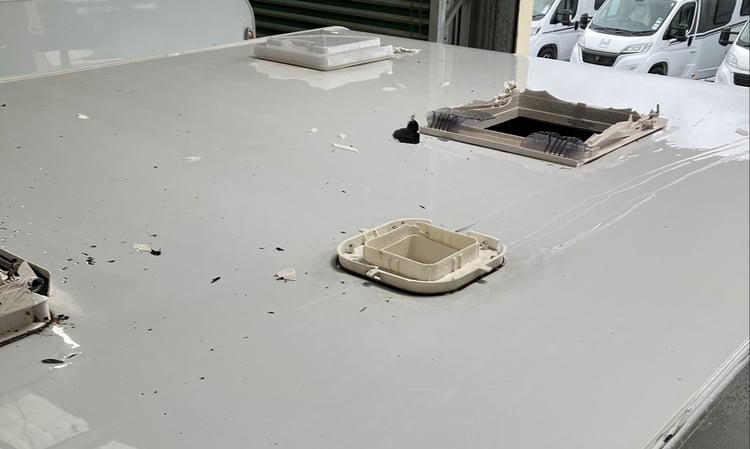
Low roofs, drive-through canopies and overhanging branches catch out plenty of drivers who are used to cars. Check your motorhome's height before you set off and watch for clearance signs.
5. Single-vehicle rollovers
They're rare, but they're among the most expensive incidents. If the wind picks up on an exposed road, pull over somewhere safe and wait for it to ease.
6. Fuel or water tank contamination
Putting diesel in the fresh water tank, or the wrong fuel in the engine, can mean replacing tanks and pipework. That can cost more than $10,000, and it isn't covered by insurance. Check the cap twice before you fill up.
What happens if your motorhome is damaged?

Here’s a step-by-step guide on what happens if you sustain some damage during your trip.
-
You let Wilderness know. Report any accident or damage within 24 hours, even if it seems minor. There's a full accident checklist further down this guide.
-
Your excess is charged. Wilderness takes your excess from your credit card or bond. That's up to $7,500 on Standard Cover, $500 on Extra Cover, or nothing on Full Cover.
-
The motorhome is repaired. Wilderness assesses the damage and arranges the repairs. Insurance pays the rest of the bill.
-
Any difference is refunded. If the repair costs less than your excess, you get the difference back once the work is done. This can take a few weeks.
Each incident is charged separately, so two scrapes on the same trip mean two excess charges.
Does travel insurance cover motorhome rental excess?
Often, yes. Most comprehensive travel insurance policies from major insurers include rental vehicle excess cover, which pays you back the excess the rental company charged you. We don’t recommend relying on it alone, though, and here’s why.
How claiming through travel insurance works
-
You pay the full excess straight away. If the motorhome is damaged, Wilderness charges your excess (up to $7,500 on Standard Cover), whatever travel insurance you have.
-
You wait for the repairs. The final cost is only known once the repairs are done, so that’s when the paperwork for your claim can be issued.
-
You make a claim. You send your insurer the paperwork, and check what you’re covered for under two sets of terms and conditions: ours and your insurer’s.
-
You wait again. Your insurer processes the claim and reimburses you, up to the limit on your policy.
From start to finish, that can take weeks or even months, with your money tied up the whole time.
Why we recommend Full Cover

Having an accident is stressful enough on its own. With Full Cover, there’s nothing to pay and no claim to chase. Our team handles the repairs and paperwork for you, so you can get back to your trip.
If you do plan to rely on travel insurance, check:
-
The limit. This varies a lot between policies and levels of cover. Some policies cover up to $10,000, such as AMI's domestic travel insurance, while cheaper levels can cover as little as $1,000, like Allianz Essentials. Make sure yours covers at least $7,500.
-
The size of the vehicle. Many policies only cover campervans and motorhomes up to 4.5 tonnes, so check the weight of the motorhome you're booking.
-
Where you're travelling. If you're a Kiwi on a domestic trip, some policies only apply once you're a set distance from home, often 50 km or more.
-
The rental terms. Your travel insurance follows the rules of your rental agreement. If something voids your rental cover, like driving on a beach, your travel insurance won't pay out either.
Travel insurance vs liability reduction
|
|
Travel insurance |
Wilderness Full Cover |
|
If the motorhome is damaged |
You pay the excess, then claim it back |
You pay nothing |
|
How much of the excess is covered |
Up to your policy limit |
All of it |
|
Cost |
Part of your travel insurance premium |
$84 per day |
|
Extras on the road |
None |
Road user charges, tolls, LPG refill, roadside help for tyres, camping gear |
|
Illness, cancellations, delays and lost luggage |
Covered |
Not covered |
You don't need to choose one over the other. Even with Full Cover, travel insurance is well worth having for illness, cancellations, delays and lost or damaged belongings, none of which Wilderness insurance covers. For injuries, New Zealand's ACC scheme covers everyone, including visitors, for accidental injury.
So, which cover is right for you?
Standard Cover suits you if a $7,500 bill wouldn’t faze you or your travel companions, should you sustain some serious damage. It keeps your daily cost down, but you’ll pay for any damage up to that amount, plus road user charges, tolls and an LPG refill at the end of your hire.
Extra Cover brings your excess down to $500 for $64 a day. It’s a good middle ground if you want protection from a big bill but don’t need the extras.
Full Cover takes your excess to zero and includes road user charges, tolls, an LPG refill, and camping gear. You can relax and enjoy the trip, knowing you’ll have nothing to pay when you get back to the depot. It’s the option around 95% of our guests choose.
For complete peace of mind, pair Full Cover with travel insurance. Full Cover looks after the motorhome, while your travel insurance takes care of everything else, from illness and cancellations to lost luggage.
Want more tips on how to avoid shelling out cash for driving mishaps? Check out our guide to avoiding parking and speeding fines.