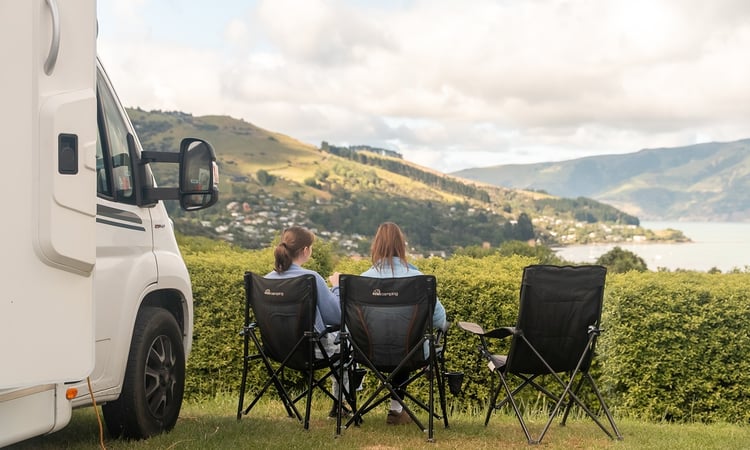
There's a version of a New Zealand road trip that looks impressive on the social media feed but feels exhausting in practice: five regions in ten days, a new campsite every night, a phone full of photos and not much memory of any of it.
Then there's the other version, where you wake up in the same spot for the third morning running, know which café does the good flat white, and can't quite remember what day it is. That second version has a name. It's called slow travel, and for a country like New Zealand, it's the way the place is meant to be seen.
What is slow travel, and why is it best suited for a New Zealand motorhome trip?
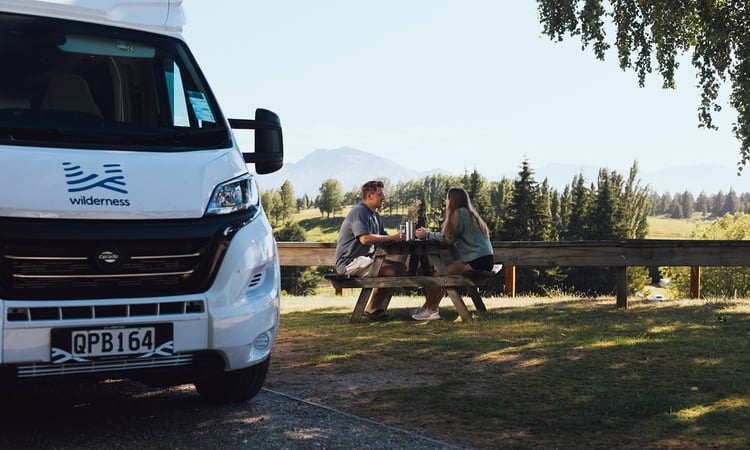
Slow travel means spending more time in fewer places. Instead of passing through a region on the way to somewhere else, you stay long enough to walk its trails, eat where the locals eat, and get a feel for the place.
New Zealand suits this style of travel because of the roads. The highways wind and climb, they hug the coast, and they pass one lookout after another that you'll want to stop at. Distances that look modest on a map take longer than expected once you account for the terrain and all those photo stops. The country asks you to slow down, and travelling at its pace is the easiest way to enjoy it.
Then, slow travel means spending more time on experiences. One of the biggest regrets our guests often have is rushing through a trip. Our advice is always the same – the longer you can linger, the better.

One of the biggest mistakes I see is people trying to fit far too much into one trip. New Zealand looks small on a map, but the roads are winding, there are plenty of mountain passes, and you'll constantly want to stop for the views. A drive that looks like three hours can easily turn into five or six once you factor in all of this. I also see a lot of people rushing from one famous destination to the next without allowing time to explore what's in between. If you can add even two or three extra days to your itinerary, it completely changes the pace of your trip.
As a foreigner, I understand the desire to pack it all in; but try not to. Come back again. Slow it down, enjoy all the beauty New Zealand has to offer at a relaxed pace. This is not the country to be in a hurry in.
How many days do you need for a slow travel motorhome itinerary?
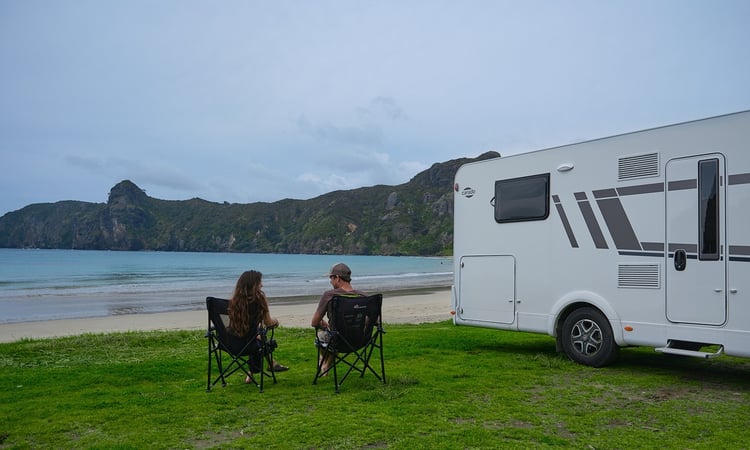
The best thing about slow travel is that it doesn’t really matter if you’re here for 7 days or for several months – you can still have the unhurried experience.
If you’re time-limited, we suggest choosing one region and exploring it properly. 7 days is a good amount of time to explore the best of regions like the Coromandel, Canterbury, or Northland. They’re drivable enough for a compact loop, but still have plenty to see and do. Our 7-day Coromandel itinerary is a great blueprint for exploring a beautiful region at a relaxed pace.
If you have plenty of time, though, you can make your journey truly rich. For a one-way trip from Auckland to Christchurch (or vice versa), we recommend a minimum of 21 days, and driving less than 150km per day.
Check out our South Island itinerary for some inspiration – it follows the slow travel philosophy with shorter driving distances.
What are the benefits of choosing slow travel over rushing through New Zealand?
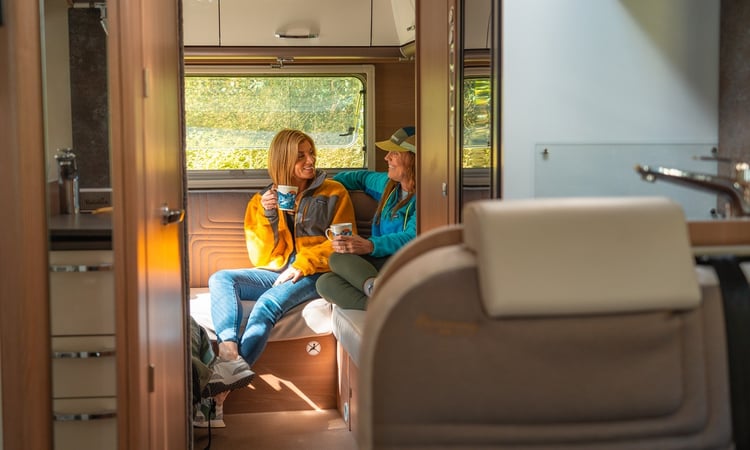
Slowing down leaves you less stressed, treads more lightly on the environment, and puts more into the communities you visit. The people who travel this way rarely go back.
It's better for your wellbeing
There's a growing body of research behind this. A 2026 study in the International Journal of Tourism Research examined how travelling slowly shapes travellers' sense of resilience and personal growth, largely because a slower pace lets you become fully absorbed in where you are, rather than being half-present and caught up in logistics.
The people who've done it tend to say the same thing. Adam Kubicek toured New Zealand with his partner in a Wilderness motorhome, dodging the crowds and finding the secluded spots, with a barista-style coffee brewed each morning.
From our own experience, we realised that even though you can technically drive very long distances in a day – as long as you have enough fuel – it often isn’t the best way to travel. On days when we planned too much driving, the journey started to feel rushed, and we ended up passing through places we would have loved to explore more. From the beginning, we knew that we didn't want to chase the number of places we visited, but rather enjoy the ones that really interest us along the way (which is actually very difficult in New Zealand, because there are so many places where it would be great to stay for more than one night!). So, giving ourselves time to slow down made the trip feel far more relaxed and rewarding.
Evan Cheung, a repeat Wilderness guest who recently took a trip from his native Singapore to the South Island, has the same view.
My biggest advice for anyone coming from Singapore or Asia is to take things slow and stay flexible. Weather and road conditions change, or you might decide on a whim to see penguins or eat fresh salmon by a riverside. This isn't 'The Amazing Race' where you just clock locations from point A to B. Take whatever travel time Google Maps gives you and double it—because you will want to stop by the roadside and take in the sights. With Wilderness, you get top-tier support, fantastic vehicles, and the freedom to truly slow down and experience the journey.
It’s easier to pivot if the unexpected happens
If you need to change your plans for whatever reason, not having fixed dates and prepaid hotels eases the financial toll by a lot. If someone feels tired, unwell, or just isn’t up for driving much that day, you can have a quiet night in without any trouble.
If bad weather rolls in, you can move on or wait it out. If you hear about a great local event, you can linger. Slow travel in a motorhome means it’s all in your hands.
Unexpected things happen on every journey, but when you have time and choice, it all just becomes so much easier. I spent 35 days travelling around the South Island in my old Honda, moving from campsite to campsite. At some point, I got very sick and couldn’t drive. If I’d been staying in hotels on a strict schedule, I’d have lost a lot of money and spent a lot of time stressing. As it was, I stayed put in one place for five nights and lost maybe $30 total in campsite bookings. If you’re in a motorhome, you have all of this freedom and flexibility – but also a comfortable bed and a well-equipped kitchen!
It's lighter on the planet
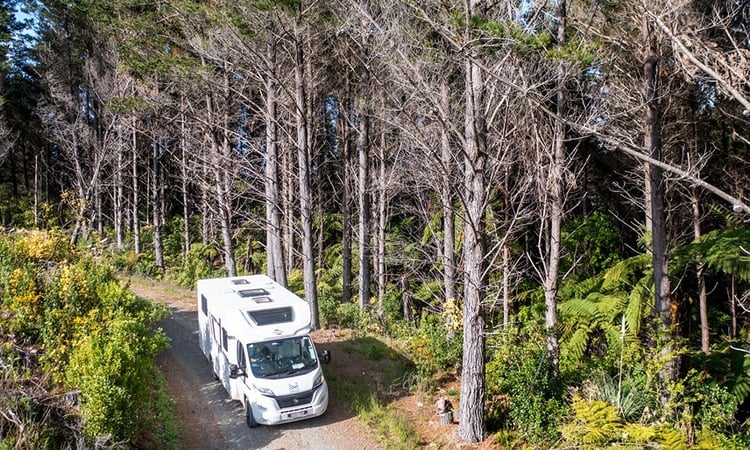
Staying longer in fewer places means less driving, which means less fuel burned and fewer emissions. A well-equipped motorhome also carries your accommodation with you, so you're not heating and staffing a hotel on top of that. Travel slowly and buy locally, and the footprint shrinks further still.
For more insight into why motorhome travel is a sustainable option, check out our blog.
It's better for the places you visit
Travellers are becoming more mindful of the impact of overtourism, and slow travel can be a great way to reduce it. As The Conversation recently explained, “Fast, hectic travel often leaves little positive impact. Slow immersive travel, on the other hand, fosters lasting memories and reduces overtourism, pollution and cultural damage.”
Communities gain far more from visitors who take their time and stick around. Slowing down puts more of your money into local cafés, producers and small-town businesses, and it makes room for the kind of connection a whistle-stop tour never allows — a conversation with a local, or a tip you'd never have found online.
It’s safer for the driver
Taking it slow reduces driving fatigue, which can be a silent killer on a road trip. This is particularly true if you’re driving on unfamiliar roads, and if you’re not used to driving on the left. The cognitive load adds up, so splitting driving into short, manageable chunks is much safer for everyone – you, your passengers, and the drivers around you.
How does a luxury motorhome support a slow travel lifestyle on the road?
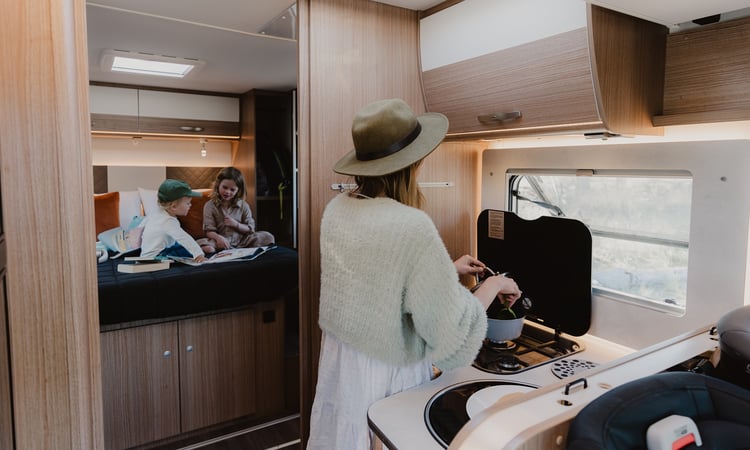
Slow travel is far more comfortable when you're not setting up and breaking down camp each time you move. With an onboard toilet, shower, kitchen and a permanent, made-up bed in your motorhome, you can arrive somewhere and just be there — nothing to set up, no gear to stow before you can drive off.
It also makes those longer, quieter stays comfortable, whatever the season. Heating and insulation earn their keep on parked-up evenings and slow mornings, especially in the cooler shoulder months from around May to October, when the crowds thin out and the rates drop.
The right motorhome makes it easier to travel lightly, too. Reusable cups and refillable products keep your waste down, and a properly self-contained vehicle can reach the scenic freedom-camping spots that a hotel guest couldn’t experience.
A well-equipped van also spares you the throwaway purchases — the bedding and cheap utensils you'd otherwise buy and then bin at the end of the trip. You arrive ready to go and leave barely a trace.
What are the best regions in New Zealand for a slow-paced motorhome holiday?
The best regions for slow travel are dense enough to keep you busy for days from a single base, so you're heading out and back rather than packing up each morning. Northland, Coromandel and Ashburton Lakes would suit shorter trips (7 days), while Mackenzie & Aoraki and Queenstown are great options for those with more time to spare (14–21+ days).
Northland
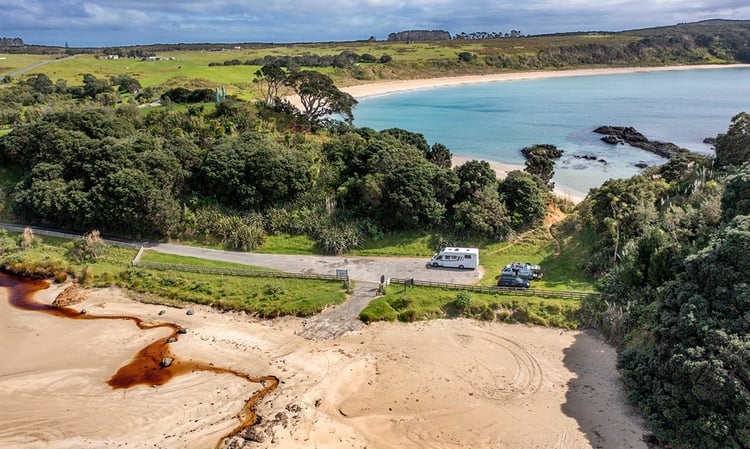
Why it works: The subtropical top of the country, with warm water, easy roads and short hops between beaches. This region is coastal touring at its most relaxed.
Best sights: The Bay of Islands and its 144 offshore islands, Russell (the country's oldest town), the Kai Iwi Lakes, and the giant kauri of Waipoua Forest.
Don't miss: A day cruise or kayak out among the islands, and a stretch of the Bay of Islands Coastal Walkway from Paihia toward Russell — part of the Te Araroa national trail.
Where to base yourself: Paihia, the main gateway, with the most tours and places to eat; Russell and Kerikeri are a short drive or ferry away.
The Coromandel Peninsula
Why it works: A North Island classic for slow coastal touring, with winding, hilly roads that suit a low daily distance and a string of beach towns for easy overnight stops.
Best sights: Hot Water Beach, Cathedral Cove, Hahei, and the Pinnacles.
Don't miss: Digging your own hot pool in the sand at Hot Water Beach within two hours either side of low tide (hire a spade from most campgrounds). To reach Cathedral Cove, walk in from the Grange Road entrance or take a boat or kayak tour. The track can close at short notice during bad weather, so check the DOC website for the day's status before you set out.
Where to base yourself: Hahei or Cooks Beach/Flaxmill Bay puts Hot Water Beach, Cathedral Cove and Hahei all within a 10–15 minute drive.
Ashburton Lakes (mid-Canterbury high country)
Why it works: High-country scenery to rival Aoraki, without the crowds — nearly 60,000 hectares of tussockland, beech forest and clear lakes between the Rakaia and Rangitata rivers.
Best sights: Lake Clearwater, Lake Heron, and Mount Sunday (a Lord of the Rings filming location, reached across a river creek).
Don't miss: The easy 90-minute return walk up Mount Sunday; steeper climbs like Mount Barrosa for the bigger views; an icy high-country lake swim in summer.
Where to base yourself: The DOC lakeside campgrounds at Lake Clearwater and Lake Heron — basic facilities, sites at the water's edge, open over summer. The roads in are gravel, and there's no fuel, shop or reception past Mount Somers, so fill up and stock up there first.
The Mackenzie & Aoraki (inland Canterbury)
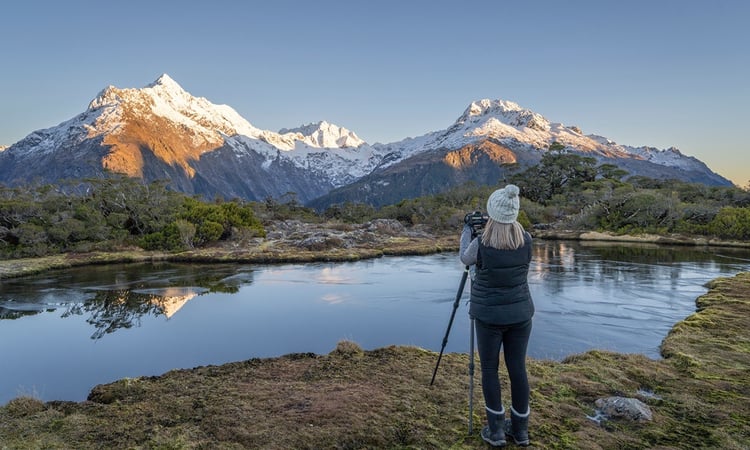
Why it works: High-country lakes and the country's tallest mountain on your doorstep, with days of walking reachable from one quiet base.
Best sights: Aoraki/Mount Cook, Lake Ōhau, Lake Pukaki, and the night sky — the whole area is the Aoraki Mackenzie International Dark Sky Reserve, the largest in the Southern Hemisphere.
Don't miss: The Hooker Valley Track, a near-flat 10km over three swing bridges to a glacial lake dotted with icebergs, best walked at sunrise before the tour buses; stargazing after dark; and the Alps 2 Ocean Cycle Trail from Lake Ōhau.
Where to base yourself: Lake Ōhau or Mount Cook Village for the quiet end of the region.
Queenstown's back roads (the Wakatipu Basin)
Why it works: You get all the scenery of the Queenstown area, but the quieter edges suit a slow pace far better than the town centre.
Best sights: Arrowtown, an 1860s gold-rush settlement with 60-plus original buildings and a historic Chinese settlement by the river; the drive out to Glenorchy, one of the most scenic in the country; the Gibbston wine valley.
Don't miss: The Glenorchy road and the trailheads beyond it for the Routeburn and the Rees-Dart Track; cellar-door tastings in Gibbston.
Where to base yourself: Arrowtown or the Wakatipu Basin, close to Queenstown without being in it. We suggest booking into a holiday park or a low-cost DOC site, as freedom camping spots are limited here.
How do you plan a stress-free, relaxed motorhome route in New Zealand?
Keep the daily drives short, travel one-way so you're never doubling back, and leave enough slack in the plan for the weather and the odd irresistible detour.
Keep travel days short — under 150km per day, and less wherever you can
Roughly speaking, that's under three hours behind the wheel. The less time you spend driving, the more of the day is left for exploring, seeing, tasting and experiencing. Wilderness's slow-travel itineraries are built around this ceiling for exactly that reason.
Check some of our itineraries out – we have plenty for both the North and South Islands.
Use a one-way hire
In a country this long and narrow, one-way travel lets you cover a lot of ground without ever backtracking, which is the easiest way to cut out driving you don't need to do.
Wilderness does not charge extra for one-way hires, though other rental operators might. Always check the fine print carefully.
Build in slack
Leave rest stops and a few spare days in your plan so a change in the weather or an unexpected find can shape the trip rather than derail it. A day held in reserve is a day you can spend somewhere you didn't want to leave.
Pick a handful of your absolute must-visit destinations and book those in as your spaced-out anchor points, but allow for some flexibility around those dates to really immerse and explore. You don't want your entire trip to feel like a rush and come home feeling like you need a holiday from your holiday.
Plan your campsites, but hold the plan loosely
It's a good idea to know where you intend to park up each night — free apps like CamperMate are made for this — but treat it as a rough sketch. The best moments on a slow trip are usually the extra nights you didn't book in advance. Also, if you end up in an unexpected situation and need to re-route, you can do so much more easily.
That said, things do get busy during the peak summer season of December – February. It’s worth having advance bookings if you’re travelling during that time.
Ready to start planning your trip, but don’t know which motorhome to book? Check out our handy guide to motorhome layouts.